


Here's how to do heatless curls: let washed hair dry to about 80 to 90%, smooth in a light mousse, then wrap even sections around flexi rods, a satin ribbon, socks, or braids. Leave the set for five hours or overnight, unwrap only once hair is completely dry, and separate the curls with your fingers, not a brush.
How Do Heatless Curls Work?
Heatless curls work by resetting hydrogen bonds, the weak links in hair's keratin that break when hair is wet and re-form as it dries. Wrap damp hair around a rod, sock or ribbon and let it dry completely, and those bonds hold the curved shape until your hair gets wet again.
Try to wait until your hair is about 80 to 90% dry before wrapping your hair. Heatless curls with wet hair will take significantly longer to dry. They are also more likely to drop by midday, as a wet strand of hair unfolds before it has a chance to create a new shape.
A curling iron breaks those same hydrogen bonds, just with heat instead of water. The difference is what else the heat does on the way through: temperatures high enough to set a curl in seconds also lift the cuticle and degrade the keratin underneath, and that part does not reverse. Heatless methods reach the same result through the only mechanism that leaves the strand intact: water, tension, and time.
How to Do Heatless Curls: Top 9 No-Heat Methods (Step-by-Step)
When you understand how to use heatless curlers, rods, rollers, ribbons, socks, or even nothing more than a few bobby pins, the method behind each doesn't change much: work with damp hair, apply consistent tension, and wait.
GK Hair stylists suggest starting with even sections before you twist, wrap, or pin anything. One big chunk of hair rolled up in a hurry will fare far less curly than a few smaller, uniform sections.
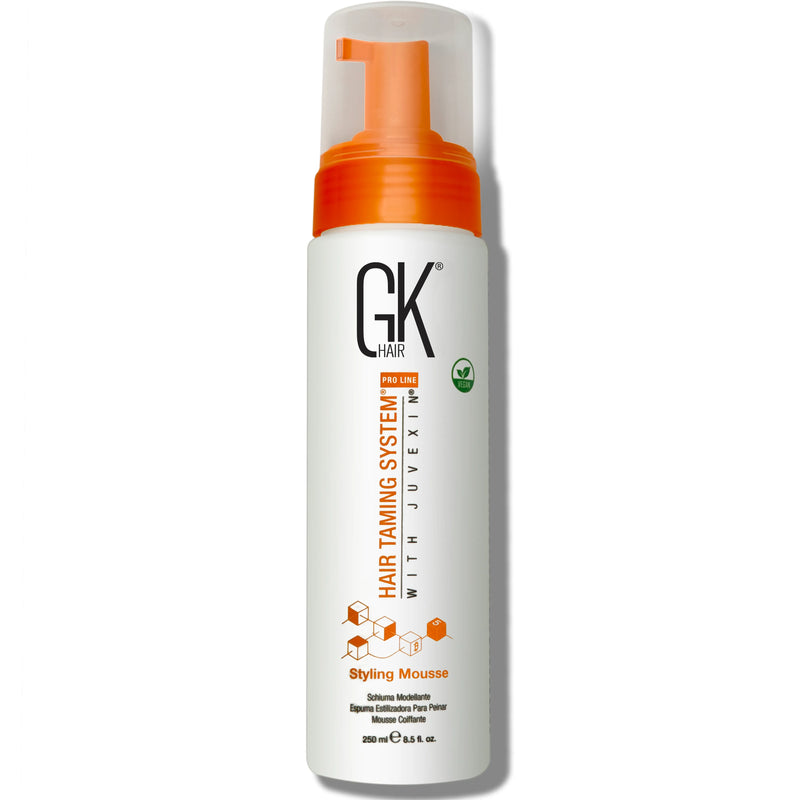
Before trying any of the nine styles below, gently detangle damp hair, then pump our Styling Mousse into your hands and smooth it through from roots to ends. It suits every hair type, leaves a soft, voluminous finish rather than a crunchy one, and it's built on Juvexin V2, our plant-based protein made from quinoa and pea.
| Method | Best For | Curl Type | Set Time |
|---|---|---|---|
| Flexi Rods | Medium to long hair, most textures | Springy, defined curls | 5-8 hrs or overnight |
| Foam Rollers | Fine to medium hair wanting body | Soft, voluminous waves | 5-8 hrs or overnight |
| Satin Ribbons (Heatless Headband Curls) | Long to medium hair | Glossy, elongated curls | Overnight |
| Sock Curls | Short to medium hair, beginners | Loose, bouncy curls | 5-8 hrs or overnight |
| Self-Grip Velcro Rollers | Medium hair, faster sets | Loose waves | 2-4 hrs on near-dry hair |
| Paper Towel Curls | Any length, zero-cost option | Soft ringlets | Overnight |
| Twist and Pin | Short to medium hair | Spiral curls | Overnight |
| Braiding | Long, thick hair | Beachy waves | Overnight |
| Pin Curls | Short hair, vintage styles | Defined, structured curls | 5-8 hrs or overnight |
Flexi Rods
- Take a section of damp hair about an inch wide and clamp the flexi rod onto the ends.
- Roll the rod up toward the root, keeping the section flat and the tension even.
- Bend both ends of the rod down so it stays against your head, then repeat around your head.
- Sleep with the rods in, or leave them in for at least 5 hours, then unbend each rod and slide it out carefully.
Smaller rods create tighter curls, and larger rods create loose, bouncy waves.
Foam Rollers
Foam rollers operate similarly to flexi rods, except they are larger and typically have a clip already attached in place of the flexible rod.
- Starting at the ends, coil a section of damp hair around the roller and roll it toward your scalp.
- Click the clip into place to secure the roller, then repeat section by section.
- Allow your hair to dry fully before unrolling.
- Unclip each roller and unroll it gently.
Foam rollers create heatless waves with more volume than you'll get from a rod. This makes them a great option when volume is more important to you than crispness.
Satin Ribbons (Heatless Headband Curls)
Satin ribbon curlers are basically long fabric tubes you wear like a headband, which is why the method has another name.
- Lay the ribbon across the top of your head like a headband.
- Take a section of damp hair and wrap it tightly around the ribbon from the roots to the ends, adding new sections as you work down.
- Tie the ends of the ribbon to secure the wrap and go to sleep.
- When your hair is dry, unwrap each section slowly.
You should have shiny, stretched-out curls with minimal frizz because satin produces much less friction than cotton.
Sock Curls: How to Do Heatless Curls With Socks
Sock curls are just like they sound: all you need is two clean socks.
- Lay the ends of a damp section across the middle of a clean sock.
- Roll the sock up toward your scalp, wrapping the hair as you go.
- Knot the sock's ends to secure it, then repeat around your head.
- Once hair is completely dry, untie and unroll each section gently.
Self-Grip Velcro Rollers
Velcro rollers grip on their own, so once a nearly dry section is wound on, you usually don't need a clip.
- Take a nearly dry section and, beginning at the ends, roll it up to your scalp for the nicest result.
- Press the roller lightly against the hair so the grip catches, then repeat around your head.
- Allow your hair to dry completely before unraveling the set. Since Velcro rollers hold best on nearly dry hair, some sets can be finished in as little as 2-4 hours.
- Shake out your curls after unraveling the rollers, rather than brushing them out right away. They'll lose their shape much quicker if you brush them immediately.
Paper Towel Curls
- Fold paper towels into strips about two inches wide.
- Place a strip beneath a small section of damp hair at the ends, and roll upward toward your scalp, wrapping the paper towel around the hair as you go.
- Tie the ends of the paper towel together when you reach the scalp to secure it, and repeat for the remaining sections.
- In the morning, simply unwrap and slide each paper towel out.
Twist and Pin
- Section hair while it's still damp.
- Hold one section horizontally and twist it tightly from root to end.
- Roll the twist into a small bun against your scalp and secure it with a bobby pin, then repeat for all sections.
- Allow the twists to dry overnight, then remove the pins for tight spiral curls with some volume.
Braiding
As you can probably guess, braids offer a looser, beachier wave than most methods listed here.
- Choose your pattern. One or two thick French or Dutch braids along the back of your head will yield soft, wide waves, while several smaller three-strand braids sprinkled throughout your hair will give you a tighter pattern.
- Braid damp hair from the roots down, keeping the tension even. The tighter you braid and the more braids you create, the more defined your waves will be.
- Secure the ends with a soft tie and leave the braids in overnight.
- Unravel them carefully in the morning and separate the waves with your fingers.
Pin Curls
- Take a small section of damp hair and wrap it around two fingers into a tight circle.
- Pin the circle flat against your head with a bobby pin or hair clip.
- Continue section by section until you've pinned your entire head.
- Allow hair to dry, then remove the pins.
Pin curls will provide you with the tightest and most sculpted curl compared to any method listed here, and they will last you days if you treat them gently at night.
Stylist's Corner
Before unwrapping anything, whichever tool you used, press a section between two fingers. Cool and slightly tacky means there's still moisture in there, and unwrapping now will let the curl relax before it's set. Room temperature and dry to the touch means it's ready. If you're unsure, unwrap one section at the nape first, since hair dries slowest there; if that section holds, the rest will too.
Still tacky? Wait another hour and check again.
Benefits of Going Heat-Free
GK Hair stylists routinely recommend cutting back on hot tools for clients who are seeing breakage, because it removes the cause rather than treating the result. GK Hair, now in more than 75 countries, fortifies its styling range with Juvexin V2, so products like the Styling Mousse help hair hold a shape whether you set it with heat or without. Since heatless styles skip heat damage altogether, your hair retains its natural strength and shine longer.
If years of hot tools have left your ends split, treat that heat damage first: a 20-minute treatment with our Deep Conditioner every two weeks helps them take tension without snapping.

Are Heatless Curls Bad for Your Hair?
No, not when it's done right, but it isn't entirely risk-free, and pretending otherwise sets people up to make the same three mistakes.
- Tension. Wrapping tightly enough to hurt puts steady pull on the follicle for hours at a time. Repeated nightly at the hairline, that's traction, and the American Academy of Dermatology warns it can cause permanent hair loss. If it's sore, it's too tight.
- Going to bed soaking wet. Hair is at its weakest when fully saturated, and a wet scalp under a wrap all night invites both breakage and irritation. A 2011 Annals of Dermatology study found hair left to dry slowly for hours showed damage to the cell membrane complex that holds strands together. This is the practical reason for the 80 to 90% dry rule.
- Material. Cotton socks and paper towel strips work, but they create friction against the cuticle for hours. Satin and silk don't. If you're wrapping several nights a week, the material upgrade is worth it.
Best Hair Types for Heatless Curls
Not all hair responds to this technique the same way. Texture, thickness, and porosity all alter how long to wrap, how much product to apply, and what method will work.
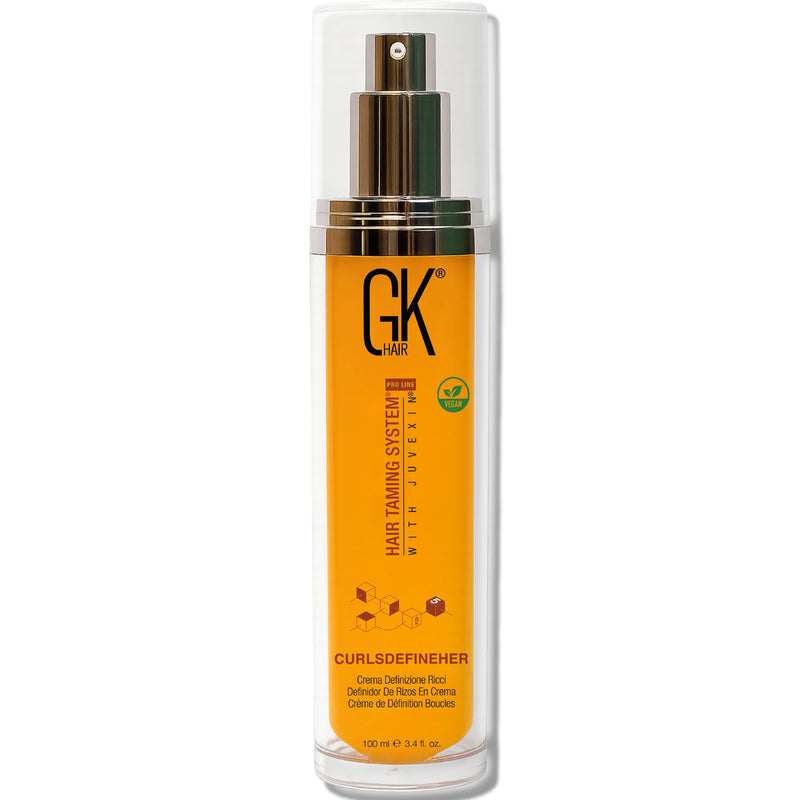
Fine or straight hair holds a curl least, so use thin rods, small sections and a little mousse. Thick hair needs bigger rods or braids and more drying time. Wavy and curly hair needs little coaxing; a set mainly redefines the pattern. Low-porosity hair needs the lightest product, while high-porosity hair sets fast but drops in humidity, so seal the mid-lengths with CurlsDefineHer.
How Long Do Heatless Curls Take to Set?
Heatless curls take two to four hours for a soft wave and five hours to overnight for a defined curl, as long as hair was 80 to 90% dry when you wrapped it. Starting closer to soaking, you need the full overnight, up to eight hours, and the result is still less reliable.
Heatless Curls by Length: Long Hair vs. Short Hair
Heatless Curls for Long Hair
Long hair, anything below the shoulders, has more length, and more length equals more weight. The weight will stretch the curls out before they've fully formed. Work with larger sections and use thicker flexi rods, rollers, or a satin ribbon so the curl has more strength to battle gravity.
Since there is more length to curl, your set time should be closer to the overnight amount of time. Braiding or ribbon styles will hold especially well since you can wrap around a section more than once.
Heatless Curls for Short Hair
Hair that is short, or chin to collarbone length, holds a curl less tightly simply due to there being less length for the material to wrap around. Small flexi rods, satin ribbons, or even the sock method work better than bulky foam rollers, which tend to make short hair look crunchy rather than curly.
Use small sections, as short hair will curl quicker and tighter than you might think. For a looser curl, use a larger rod rather than unwrapping early; hair that is still damp when released drops fast. Pixie cuts and cuts that fall higher than chin length typically will not have enough length to wrap around; small flexi rods or pin curls placed near the scalp are your best bets.
How to Make Heatless Curls Last
Wrapping your hair into curls is only half the battle. Maintaining your curls all day long is the other half, and that's where prep, sleep, and a few post-wrap habits come into play.
Before You Wrap
- Start on clean hair. Wash with our Moisturizing Shampoo, built for normal to dry and coarse textures. Sulfate-free matters more here than it does for a blow-dry, since a stripped cuticle won't hold a curl shape overnight.
- Condition with our Moisturizing Conditioner, best for dry, coarse, or color-treated hair, then towel-dry down to damp. If your hair is fine and gets weighed down easily, swap in our Leave-In Cream instead.
- Section hair into clean, even parts. Smaller sections mean tighter, more defined curls.
How to Sleep in Heatless Curls Without Ruining Them
The set survives the night or it doesn't, and most of that gets decided in the first ten minutes after you lie down. Gather the wrapped sections loosely on top of your head rather than letting them fan out behind you, so you're not lying directly on the curl. A wide silk or satin scrunchie holds them there without denting.
A satin pillowcase or bonnet matters more than the wrap itself if you have fine or high-porosity hair, since cotton drags on the cuticle every time you turn, and that friction is what shows up as frizz by morning. If the wrap is uncomfortable enough to keep you awake, it's too tight; loosen the sections nearest the crown first, since that's where tension is felt most. Sock curls and satin ribbons tend to be the two methods people find easiest to actually sleep through.
After You Unwrap
- Don't brush. Separate the curls with your fingers from the ends upward, or shake them out at the root. A brush turns a defined set into loose volume in about four strokes.
- Leave them alone for the first hour. Curls keep tightening slightly as the last of the moisture leaves, and handling them during that window is what makes a set fall flat by lunchtime.
- Resist adding more product. If you want shine or a flyaway fix, one drop of our Argan Oil Serum on just the ends is the one addition worth making; anything heavier at the root pulls the curl straight.
Refreshing Heatless Curls on Day Two
Don't re-wet your whole head to refresh a set that has dropped. Mist only the sections that have dropped, twist each one around two fingers, and pin it flat to the scalp for 15 to 20 minutes while you get ready. Finish with a small amount of CurlsDefineHer through the mid-lengths to bring the definition back, or a single drop of Argan Oil Serum on the ends if the issue is dullness rather than shape.
Set It Tonight and Wake Up Curled
The secret to learning how to do heatless curls isn't one perfect method. It's matching the method to your hair length and texture. Choose your wrapping style, apply a touch of GK Hair Styling Mousse, and sleep. Set yourself up with the right products from our Styling & Protection range and wake up with curls you didn't have to sweat to create.
FAQs
What Is the Easiest Way to Do Heatless Curls?
Sock curls are the simplest method for most people to learn how to do heatless curls. Take sections of damp hair, wrap them around a clean sock, and knot them. Then simply go to bed with it overnight. There's no curling rod to hold straight and no ribbon to twist uniformly, just a soft, forgiving shape that's hard to get wrong.
Is It Best to Do Heatless Curls With Wet or Dry Hair?
Neither extreme is ideal. Hair that is dripping wet takes hours longer to set, and may relax flat before fully drying. Completely dry hair won't set into a new shape after you release it. Somewhere around 80 to 90% dry is ideal: wet enough to manipulate into a shape, dry enough to stay that way.
Is 2 Hours Enough for Heatless Curls?
Yes, but only for loose waves, and only if your hair was already 80 to 90% dry when you wrapped it. If you started with soaking hair, two hours won't set anything, since the strands are still drying and will fall straight the moment you unwrap. For a defined curl that holds all day, give it five hours or leave it overnight.
What Is the Best Product to Set Heatless Curls Overnight?
A lightweight mousse is the right call here. Our Styling Mousse gives a soft hold that keeps the shape without turning the curl stiff, and it works through damp hair so you can apply it right before you start sectioning. For wavy or curly textures that want more definition, many people layer CurlsDefineHer through the mid-lengths for extra bounce.
How Long Do Heatless Curls Last?
Most heatless sets hold for one to three days. Day one is the tightest, and the curl relaxes into a softer wave after that. Thick or low-porosity hair holds longest; fine or high-porosity hair drops fastest, especially in humidity. Sleeping on satin and skipping the brush both help the set last longer.


Leave a comment