


Pineapple hair is an overnight technique: you gather your curls loosely at the very top of your head before bed, leave the ends free, and sleep on the back of your head instead of on your curl pattern. Anyone who has gone to bed on a good curl day and woken up to a flat crown and a halo of frizz already knows why that matters. Your curls did not misbehave overnight. They spent eight hours compressed under your skull and dragged across cotton, and this is the cheapest way to stop both.
Quick answer: Pineapple hair means gathering your curls loosely at the top of your head before bed, secured with a silk scrunchie and left to spill forward. It lifts the curl pattern off the pillow, cutting the friction that causes overnight frizz and flattened roots. Most curls hold two to four nights, depending on curl type.
What is pineapple hair?
Pineapple hair is a loose, high gather sitting at the very top of the head, named for the way the ends fan out over the tie like the leafy crown of the fruit. It is a silhouette that "high loose ponytail" never quite described. The gather is the whole method. You are not building a ponytail for looks; you are moving your curls out of the contact zone between your head and the mattress, which is where the damage happens.
Curl forums and stylists also call it the pineapple method. It fits naturally alongside the curly girl method and most other low-manipulation routines, though it predates almost every product now sold to support it.

Why the pineapple protects curls while you sleep
Curly hair starts the night at a structural disadvantage. The American Academy of Dermatology notes that thick, curly hair is more prone to breakage and dryness than other hair types. The structural reason is the shape itself: the twists along the shaft give sebum nowhere easy to travel, and give a pillowcase plenty to catch on. Now add eight hours of body weight. The result is the two complaints everyone with curls recognizes.
This is not only a curl-forum habit. Under its own advice for sleeping, the Academy suggests a loose ponytail gathered on top of the head, which it explicitly compares to a pineapple, or else a loose braid, as a way to hold curl definition and cut the pillowcase friction that leaves hair frizzy and quicker to snap. Board-certified dermatologists are recommending the technique curl forums named.
What friction and compression do to a curl pattern overnight
Two separate things go wrong while you sleep, and they need different fixes. Friction is the first. Every time you turn your head, strands drag across the fabric, the overlapping scales along the shaft lift, and lifted scales catch on each other and scatter light. That is your frizz halo, and it is mechanical, not cosmetic.
Compression is the second. Your head weighs roughly ten pounds and it spends the night resting on the exact curls you spent the longest defining. A spiral pressed flat for six hours does not spring back on its own. So why does the same curl cream look perfect at 6pm and gone by 7am? The product never failed. The pattern was crushed while you slept, and no formula survives that. Pineappling moves the hair off the pressure point, which is why it works where product changes have not.
How to pineapple your hair, step by step
Learning how to pineapple hair takes about thirty seconds once the sequence is familiar. Do it as the last thing before bed, after any product has fully dried down.
- Flip forward. Bend at the waist or tip your head toward your knees so everything falls toward your face. Gravity does the gathering.
- Scoop at the very top. Collect it all into one loose handful sitting forward of the crown, close to the hairline. Test it before you settle in: lie down, turn your head both ways, and check that nothing but scalp touches the pillow.
- Loop, do not tie. Wrap a silk or satin scrunchie twice. Never three times.
- Leave the ends free. Let them spill forward over the tie. Tucking the ends in creates a bend you will still be looking at over lunch.
- Shake out the underneath layer. Loosen the hair at your nape so it is not pinned flat beneath your neck all night.
- Cover it if you want to. A satin bonnet or scarf goes over the whole thing, loosely, and adds an extra layer of protection.
What to gather it with
Silk or satin, always. A standard elastic grips individual strands and pins them in one fixed position for hours. A scrunchie's fabric sleeve spreads the same tension across a much wider band. Spiral coil ties work well too, and in a pinch, a strip cut from an old cotton T-shirt beats a snapping elastic every time.
How to secure it without a crease
Two loops of a wide scrunchie, and no third loop. Creases form where tension concentrates in one narrow spot, so the fix is spreading the pressure and leaving enough slack for the hair to shift. If you can rotate the scrunchie with one finger, you are fine. If it snaps straight back, you will see the line in the morning.
Pineapple hair products: what to apply before bed
Your curls do not need more product at night. Most morning frizz traces back to a pattern that was never fully set when it hit the pillow, and cream applied at 11pm cannot repair a set that failed at 6pm. It has nowhere to absorb, so it transfers to the pillowcase instead. The sequence that works is the boring one: apply on wash day, to soaking wet hair, let it dry down, then gather.
Before bed
On wash night, you want clumps that hold their shape without setting into a hard cast. GK Hair CurlsDefineHer is built for that. It carries Juvexin V2, our plant-based protein derived from quinoa and pea, alongside pro-vitamin B5 and natural seed oils, so curls set soft rather than crunchy. Best For: 2C to 3C curls that lose definition by day two.
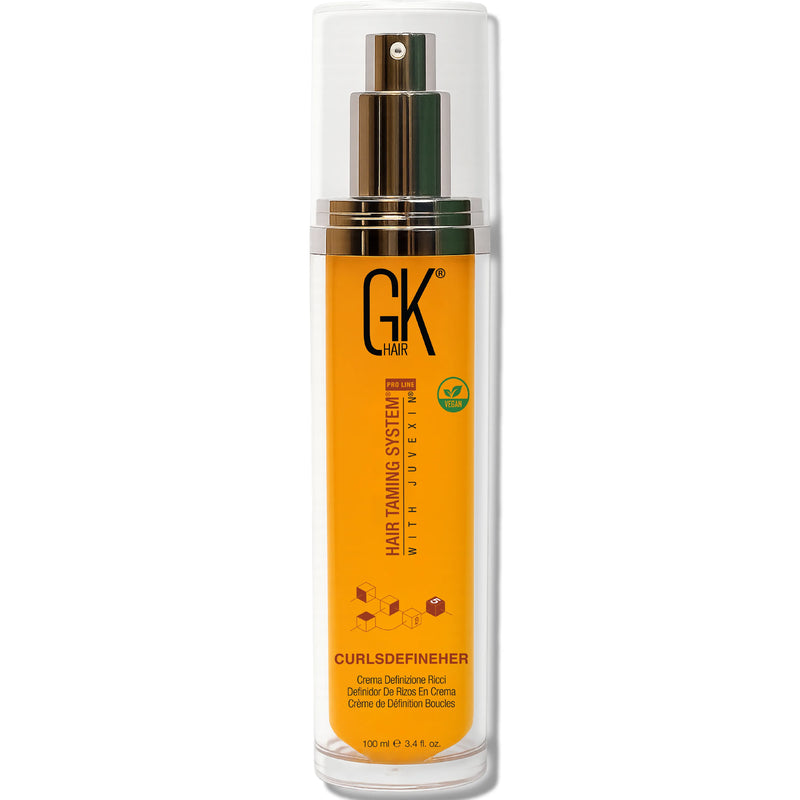
How to use:
- Emulsify a small amount between your palms
- Smooth through damp hair, mid-lengths first, then ends
- Scrunch upward toward the scalp
- Let it dry completely before you gather it up
On non-wash nights, apply nothing at all. The biggest mistake here is usually overdoing it.
Morning refresh
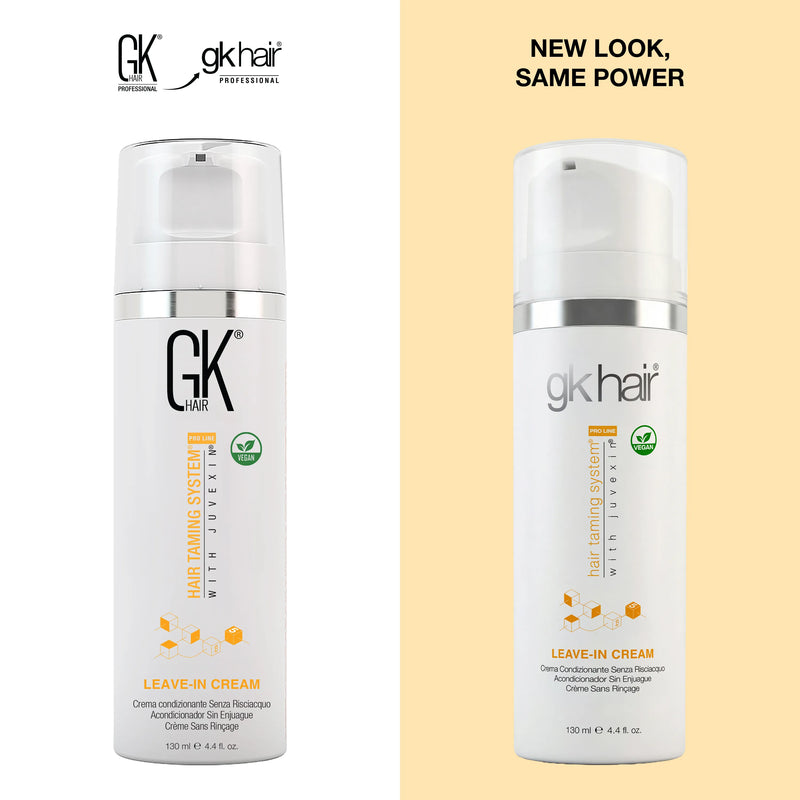
Curls that have been gathered for eight hours want water, not more cream. Mist the roots and the flattest sections, shake at the scalp, and only then reach for anything else. Our Leave-In Conditioner Cream works through the ends with damp hands. Best For: dry or coily hair that needs slip on takedown. If a frizz halo has formed, a few drops of Argan Oil Serum smooths it, though use less than feels right. The Moisture & Hydration collection covers the wash-day half.
Pineapple hair for sleep: making it hold all night
Pineapple hair sleep routines only work if the gather survives the first two hours. Plenty do not. Built too tight, they migrate down the back of the head as you move and take your roots with them. A gather that starts loose stays put, which is the part most people get backward. If you rotate styles across the week, our guide to other protective styles to sleep in covers the alternatives.
How to pineapple hair with a scarf, bonnet or silk pillowcase
A scarf goes over the pineapple, not around it. Lay a satin scarf across the back of your head, bring both ends up over your forehead, and tie them in front of the gather so the fabric cups the hair without flattening it. A bonnet does the same job faster. A silk pillowcase is the passive version, and it earns its place on the nights the gather slips.
Taking it down in the morning
Take it down upside down. Flip forward, slide the scrunchie off without dragging it through the length, and shake at the roots with your fingertips. Do not comb. Do not brush. Leave the mid-lengths alone, because that is where your definition lives. If the crown reads flat, shake at the scalp only, then dampen your fingertips and reshape the front pieces.
Does pineapple hair work better on wet or dry hair?
Dry, or close to it. Hair is at its weakest when wet, and gathering it into a tie for eight hours stacks tension onto a shaft that is already stretched past its normal limits. Damp is the working compromise: dry enough that the pattern has set, soft enough that it has not gone brittle. Roughly 80 percent dry is the mark to aim for. Anyone reaching for heatless curl methods is working with the same principle.
Sleeping with wet curly hair in a pineapple
Sleeping with wet curly hair in a pineapple is the version to avoid when you have a choice. Water weakens the protein structure of the hair, making it more elastic and easier to stretch and snap, says Timothy Schmidt, MD, a dermatologist at University of Utah Health.
Worth knowing before you do it anyway: the dermatologist quoted in that Healthline guidance recommends leaving wet hair down rather than tied, precisely because an updo stacks tension onto a shaft already at its weakest. If your schedule leaves you no choice, gather far looser than usual, leave the ends completely free, and expect the pattern to set unevenly in places. Skip the bonnet too. A scalp left damp for hours is a warm environment for fungus and bacteria, which University of Utah Health links to dandruff and seborrheic dermatitis, so airflow matters more than coverage on a wet night.
How to pineapple short hair
Short hair pineapples fine. It just takes more than one. Anything sitting above the shoulders usually will not fit into a single gather, so split the hair into two or three smaller ones spaced across the top of your head. The curl community calls these pineapplettes. Small claw clips and bobby pins hold better than scrunchies at this length, since there is less bulk for a scrunchie to grip. For a chin-length bob or shorter, a satin bonnet on its own sometimes outperforms the gather entirely.
How to pineapple long hair
Long hair has the opposite problem, and it is weight. Past the shoulder blades, the length pulls the gather backward and downward all night, which flattens the exact roots the technique was supposed to protect and presses a crease into the tie line. Why does long hair collapse when the method is identical? Leverage. There is simply more hair hanging off a single point.
Two fixes work. Place the gather further forward than feels natural, close to the hairline, so gravity has less to pull against. Then split the length between a loose top gather and a second lower one, so no single tie carries the whole load.
Pineappling by curl type
The technique is the same everywhere. The tension, placement, and number of gathers are not.
Pineapple wavy hair
Waves flatten under anything with grip. Gather higher and looser than a curly friend would, use a wide scrunchie rather than a coil tie, and skip any product with real hold. A loose S-wave will not survive being pressed into a bend, so for 2A to 2C hair the priority is a gather that is barely there.
Pineapple curly hair
Pineapple curly hair is the default case the whole technique was built around. One gather, silk scrunchie, ends forward, done. The one adjustment: 3C spirals tighten as they dry and can pull the gather taut overnight, so leave more slack than seems necessary. A compressed crown in the morning almost always means the tie was one loop too tight.
Pineapple natural hair
Coily and 4C textures rarely fit into one gather without pulling at the edges. That matters more than comfort does. The American Academy of Dermatology lists tightly pulled buns, ponytails and updos among the hairstyles that cause traction alopecia, a hair loss that shows at the hairline first and can stop being reversible if the pulling carries on unaddressed. A style you wear every night is exactly the kind that has to stay loose.
Section into four to six gathers across the head instead, each secured just enough to hold its shape. The Academy's own test is the simplest one there is: if the style hurts, it is too tight. Stinging, or scalp that tents up where it is pulled, means undo it and start again. A satin bonnet over the top keeps the sections from separating, and satin or silk is gentler against hair than other fabrics. By day three or four, plenty of people with 4C hair find the bonnet alone does more than the gather.
Pineapple bun vs pineapple ponytail
Pineapple bun hair holds better for anyone with real length. The ponytail form leaves the ends free, which is gentler on the pattern. The bun tucks them, trading a little definition for a lot more stability through the night.
| Pineapple ponytail | Pineapple bun | |
|---|---|---|
| Form | Loose gather, ends spilling forward | Loose gather, ends coiled and tucked |
| Overnight hold | Slips if you move a lot | Holds through most sleep positions |
| Best hair length | Chin to shoulder blade | Shoulder blade and longer |
| Crease risk | Low at the ends, moderate at the tie | Higher, since the ends sit bent |
| Morning takedown | Shake and go | Unwind slowly, expect to reset the ends |
Mistakes that flatten a pineapple overnight
- Gathering too tight. Tension does not hold curls in place. It holds them in one bent position until morning.
- Using a snapping elastic. A thin elastic concentrates the whole load into one narrow band and grips individual strands rather than the bundle. That is the crease you find at breakfast, and it is where strands give way. A wide silk or satin scrunchie holds the same hair without the pinch point.
- Pineappling soaking wet hair. Wet hair stretches under tension and dries into whatever shape you left it in, so a wet gather sets unevenly and takes the pattern down with it.
- Tucking the ends in. Free ends keep their pattern. Bent ends do not.
- Skipping it on night two because the curls still look fine. Night two is when most of the definition quietly disappears, and it is far harder to win back than to protect.
Stylist's Corner
Move the tie forward. Most people place a pineapple exactly where a ponytail goes, which sets the scrunchie on the crown, the one spot where flatness shows most. Slide it an inch or two toward your hairline and the compression lands on hair that was lying flat anyway. It is the first adjustment our stylists make when a client says their curl cream has stopped working, because placement fails far more often than formula does.
Before bed tonight
Flip your head forward, gather everything loosely at the very top, and loop a silk scrunchie twice. That is the entire technique. Pineapple hair asks nothing of you that you have to build up to, and it costs nothing to test for a single night. If your curls still come out flat in the morning, move the tie forward before you change a single product. When you want to give the pattern something better to hold onto, the GK Hair curl range, used in salons across more than 75 countries, starts with CurlsDefineHe
Frequently asked questions
Is pineapple good for hair?
Yes, though only one of the two things sharing this name belongs here. Pineapple hair is a sleep technique, not a treatment involving fruit. Eating pineapple will not change your curl pattern, and pineapple juice on the scalp has no evidence behind it. The technique helps your hair in one specific way: it reduces the mechanical friction that drives overnight breakage and frizz.
Can you pineapple straight hair?
You can, though the payoff is smaller. Straight hair has no curl pattern to preserve, so the benefit is limited to fewer tangles and less friction along the lengths. Fine straight hair that knots overnight does well with a loose high gather. Thick straight hair usually ends up with fewer bends in a loose braid.
Does the pineapple leave a dent or crease at the hairline?
Only when the tie is too tight or made of the wrong material. A crease is tension held in one narrow band for hours on end. Loop a wide silk scrunchie twice, never three times, and place it forward of the crown. If a dent still shows up, dampen that spot and shake at the root.
How many nights can one pineapple last before you need to re-wash?
Two to four nights for most curl types, and the pineapple is precisely what buys you those extra days. 3A and 3B curls typically hold three nights before the pattern loosens past the point a refresh can save. 4C hair often stretches to five or more on a lower wash frequency. When water stops reviving the shape, it is time.
Does pineappling help your hair grow longer?
Not directly. Growth happens at the follicle, and no scrunchie changes that rate. What the pineapple changes is how much length survives. Breakage at the ends is a common reason curly hair seems to stall at one length, so removing eight hours of nightly friction lets the ends you already have stay attached.
Is a pineapple better than a bonnet or a silk pillowcase?
They address different pieces of the same problem, so combining them beats choosing. The pineapple lifts your curls off the pillow, a bonnet contains the ends, and a silk pillowcase catches whatever escapes both. If you only do one thing, do the pineapple: compression flattens curls faster than friction frizzes them.




Leave a comment