


Type 3 hair gets misidentified more often than any other curl pattern, usually by the person who has it. You buy the curl cream everyone swears by and your roots go flat by noon. Someone tells you that you are 3b, but the crown of your head is clearly doing something looser than the rest. Type 3 hair means curly hair that forms a defined spiral or corkscrew, sitting between wavy type 2 and coily type 4. Working out which subtype you actually have is the thing that makes every product decision after it easier.
Quick answer
Type 3 hair is curly hair that forms defined spirals, ranging from loose 3a ringlets about an inch wide to tight 3c corkscrews the width of a pencil. It grows from an oval follicle, which bends the shaft and leaves the strand prone to dryness. Identify your subtype by curl width.
What Is Type 3 Hair?
Type 3 hair is curly hair with a visible, repeating spiral. Pull a strand straight and let it go: if it springs back into a loop rather than a soft S-bend, you are in type 3 territory. The curls hold their shape without product, they have real volume, and they run dry at the ends more than the roots.
That last part is not a care failure. It is structural, and it explains most of what people find frustrating about this texture.
Where Type 3 Sits in the Type 1, 2, 3, 4 Hair System
The type 1, 2, 3, 4 hair system came out of hairstylist Andre Walker's classification work, and it sorts hair by curl shape alone. Type 1 is straight. Type 2 is wavy. Type 3 is curly. Type 4 is coily. Each number splits into a, b and c, moving from loosest to tightest inside that number.
The system says nothing about porosity, density or thickness, which is why two people with identical 3b curls can need completely different products. Curl pattern is one variable out of several. Useful, but not the whole picture.
How to Determine Your Curly Hair Type
Wash your hair, apply nothing, and let it air dry completely. Then take one dry curl and compare its width to a household object. That single comparison places you faster than any online quiz, because curl diameter is the actual dividing line between the subtypes.
Check a few spots while you are at it. Most heads carry more than one pattern.
Reading Your Curl Pattern on Wet vs Dry Hair
Wet hair lies. Water weighs the curl down and stretches it, so a 3c strand can look like a loose 3a wave hanging in the shower. Your true curl pattern only shows once the hair is fully dry and has been left alone to form. Judge the pattern dry, judge the length wet, and never let a stylist cut to your wet length without a conversation about shrinkage first.
If you want to work through density and porosity as well as pattern, our guide on how to work out your hair type from scratch covers the full set of tests.
The 3a, 3b and 3c Hair Types Compared
All three sit inside type 3, and all three form a spiral. What separates them is how tight that spiral winds, and every problem downstream follows from it.
3a Hair Type: Loose Ringlets
3a curls are the widest in the family, roughly the width of a piece of sidewalk chalk or a wine cork, about an inch across. The texture is fine to medium and the curls carry a natural shine, because a looser bend lets the cuticle sit flatter and reflect light.
The 3a problem is weight. As the hair grows longer, the length pulls the coil open and the curl loses definition, starting at the crown. Heavy creams accelerate that. For the full routine, see the full 3a hair guide.
3b Hair Type: Springy Spirals
3b curls are about the width of a Sharpie marker, tighter and denser than 3a, with a springy ringlet that holds its shape well. Texture runs medium to coarse and the volume is substantial.
This is the most frizz-prone subtype of the three. The bend is tight enough to lift the cuticle, but the curls are not packed densely enough to shield each other, so humidity gets in from every direction. Anyone who has watched a defined wash-and-go turn into a cloud on a July afternoon in Houston knows the pattern. There is more on managing it in our guide to everything on caring for 3b curls.
3c Hair Type: Tight Corkscrews
3c curls are about the width of a pencil or a drinking straw, packed tightly together, with a coarse feel and the most volume in the category. The spiral is still defined and traceable, which is what keeps 3c inside type 3 rather than type 4.
3c is the driest and the most tangle-prone of the three. Tighter turns mean more places for strands to catch on each other, and more distance for oil to travel. Our complete 3c hair care guide goes deeper on the moisture layering these curls need.
Type 3 Curly Hair Chart: 3a 3b 3c Hair at a Glance
Here is the whole 3a 3b 3c hair comparison in one place.
| 3a | 3b | 3c | |
|---|---|---|---|
| Curl shape | Loose, open ringlet | Springy, defined spiral | Tight corkscrew |
| Curl width | Sidewalk chalk or wine cork, about 1 inch | Sharpie marker | Pencil or drinking straw |
| Texture | Fine to medium | Medium to coarse | Coarse |
| Volume | Moderate | High | Highest, densely packed |
| Shrinkage | Lowest in the category | Moderate | Highest in the category |
| Most common problem | Falls flat, loses definition with length | Frizz | Tangling and dryness |
| Product weight | Light. Sprays and mousses | Medium. Creams and gels | Rich. Layered creams, used together |
2c vs 3a Hair: Where Wavy Ends and Curly Begins
2c forms a long S shape that lies against the head; 3a forms a closed spiral that stands away from it. That is the whole test. Look at one dry strand: if it makes a wave you could trace with a pen without lifting it off the paper, it is 2c, and if it wraps into a loop, it is 3a.
The boundary matters because product weight sits differently on each. We compare the two side by side in the 3a hair guide, including where each pattern starts on the head.
Type 3 vs Type 4 Hair: Curl Shape, Density and Shrinkage
Type 3 forms S-shaped and corkscrew curls you can follow with your eye; type 4 forms tight Z-shaped coils with sharp angles and a far less consistent pattern. Type 3 shrinks noticeably. Type 4 shrinks dramatically, often to a fraction of its stretched length.
3c and 4a get confused constantly, and the tell is definition rather than tightness. Stretch a 3c strand and you see a clean spiral. Stretch a 4a strand and you see a coil that changes direction on itself. Density adds to the confusion, since a dense head of 3c hair reads as coily from a distance even when every individual curl is a textbook type 3 spiral.
Why Type 3 Hair Runs Dry, and What Actually Fixes It
Your curls are not dry because you have been careless with them. They are dry because of the shape of the follicle they grew out of.
Straight hair grows from a round follicle that sits perpendicular to the scalp. Curly hair grows from a follicle that is oval in cross-section and curved along its length, and that geometry bends the shaft as it forms. Research on curly fiber development describes the follicle as asymmetrical along its length, producing a fiber with an elliptical rather than round cross-section (National Library of Medicine). Scalp biopsy work found the curly follicle bulb itself is bent, with cell division running faster on the outer side of the curve (PubMed). Curl tightness tracks with how pronounced that curvature is, which is why 3a and 3c behave so differently despite being the same type. The exact causal chain is still open in the research, but the correlation between follicle shape and curl shape is well established.
That same bend is the dryness mechanism. Sebum travels down a straight shaft easily and coats it evenly. On a spiral it has to negotiate every turn, so it collects near the roots and never reaches the ends. The American Academy of Dermatology puts thick, curly hair at greater risk of dryness and breakage than any other hair type. Your scalp can be producing plenty of oil while your last two inches stay parched.
So the fix is not more washing or a different shampoo. It is putting moisture where sebum cannot reach, and sealing it there.
A Type 3 Hair Care Routine That Holds Curl Definition
Good type 3 hair care is mostly about sequence. The same three products in the wrong order give you frizz; in the right order they give you definition.
Washing
Wash frequency tracks with curl tightness. 3a can usually take 2 to 3 washes a week. 3b sits around twice. 3c often does better at once a week, with a co-wash in between if the hair feels heavy. Use lukewarm water rather than hot, and cleanse at the scalp only, letting the runoff do the lengths.
Sulfates strip the limited oil these curls have. A sulfate-free formula cleans without taking the ends down with it.
Conditioning
Detangle in the shower, with conditioner still in, on soaking wet hair. Fingers first, then a wide-tooth comb, working from the ends upward. Never detangle dry. A dry type 3 curl has no slip, and combing through it snaps the strand at the weakest point of every bend.
Deep condition once a week if you are 3b or 3c, every other week for 3a. Apply from mid-length down and leave the roots alone.
Styling and Drying Without Frizz
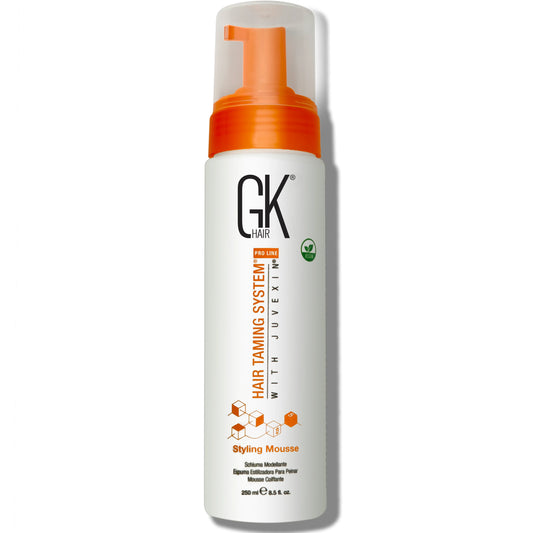
Apply your styler to soaking wet hair, not damp. Water is what lets the product spread evenly across every turn of the curl; on damp hair it sits in patches and you get definition in some sections and frizz in others.
Then stop touching it. Blot with a microfiber towel or a cotton t-shirt, never terry cloth, which snags the cuticle and lifts it. Air dry if you have the time, or diffuse on low heat and low speed with the hair cupped rather than pushed around.
Protecting Curls Overnight and Refreshing Day Two
Most of the definition you build on wash day is lost to your pillow, not to the product. Cotton pulls moisture out of the hair and drags against the cuticle every time you move, which is why curls that looked defined at midnight read as frizz by morning.
Two options work. Pineapple the hair by gathering it loosely at the very top of the head with a soft scrunchie, which keeps the curls off the pillow and the roots uncrushed. Or wrap in a satin or silk scarf and sleep on a satin pillowcase, which cuts friction without asking you to restyle anything. Dermatologists at the American Academy of Dermatology recommend both the loose top-of-head ponytail and satin or silk pillowcases and bonnets for exactly this reason.
To refresh on day two, do not re-wet the whole head. Mist the sections that have dropped with water or a leave-in spray, cup each one in your palm and press upward toward the scalp, then leave it alone to air dry. Adding fresh styler over yesterday's product is what causes buildup and stringy ends.
A co-wash, mentioned earlier, is simply washing with conditioner instead of shampoo. It rinses out sweat and light product without stripping oil, which is why it works as a midweek reset for 3b and 3c between full washes.
Stylist's Corner
The gel cast is the part everyone gets wrong, and it only applies if you are using a firm-hold gel rather than a flexible cream like ours. When a hard-hold gel dries, it forms a shell around the curl, and that shell is doing a job: it holds the spiral in place while the water evaporates. Scrunch it out while the hair is still even slightly damp and the curl collapses into frizz. Wait until the hair is bone dry, then scrunch the cast out with a drop of oil on your palms. GK Hair stylists find that most clients who think they have 3b hair are actually 3a at the crown and 3b underneath, so check more than one section before you decide a product failed.
The Best Type 3 Hair Products by Subtype
Product weight should match curl tightness. Too heavy on 3a and the curls drop. Too light on 3c, used on its own, and nothing holds. GK Hair products are used by professional stylists in more than 75 countries, and the formulas below are all built around Juvexin, our non-hydrolyzed keratin protein blend. Because the keratin stays intact rather than broken into fragments, the smaller molecules penetrate the cortex while the larger ones wrap the cuticle. On curly hair the relevant part is where it lands: the bend of each turn, which is where the shaft is structurally weakest.
Most of what follows sits in our Moisture & Hydration collection.
Best Shampoo for Type 3 Hair
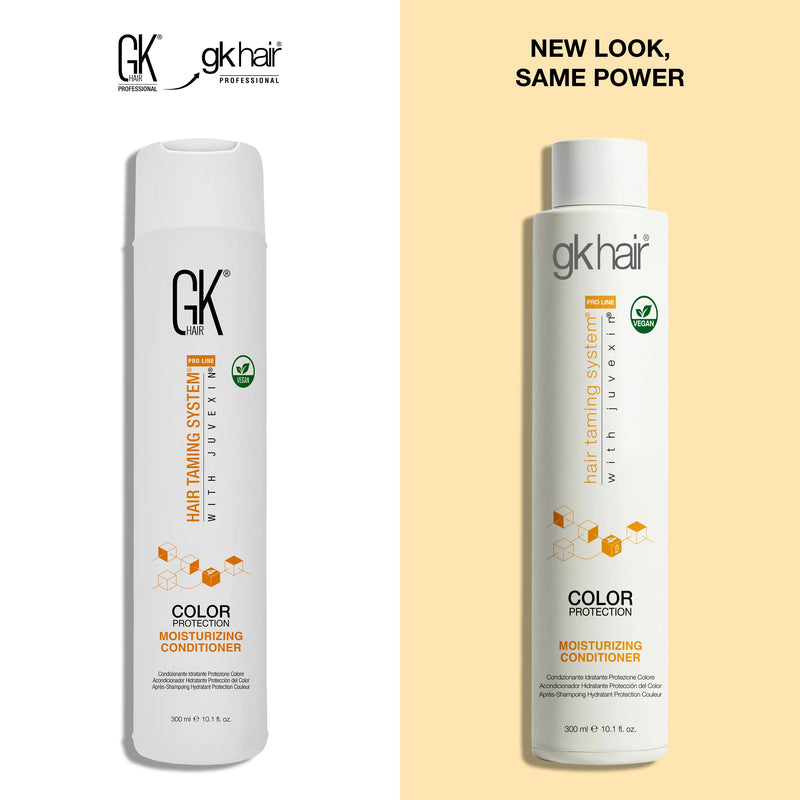
Sulfate cleansers pull oil indiscriminately, and type 3 hair does not have oil to spare at the ends. That leaves the cuticle raised and the strand rough, which reads as frizz within a day of washing. A gentle, sulfate-free wash cleans the scalp and leaves the lengths intact. Our moisturizing shampoo is formulated for exactly this. Best for: dry, coarse curls across all three subtypes.

Follow it with the matching moisturizing conditioner, and add a weekly deep conditioner if you are 3c. Best for: high-porosity and tightly wound curls that lose moisture fastest.
Best Curl Cream for Type 3 Hair
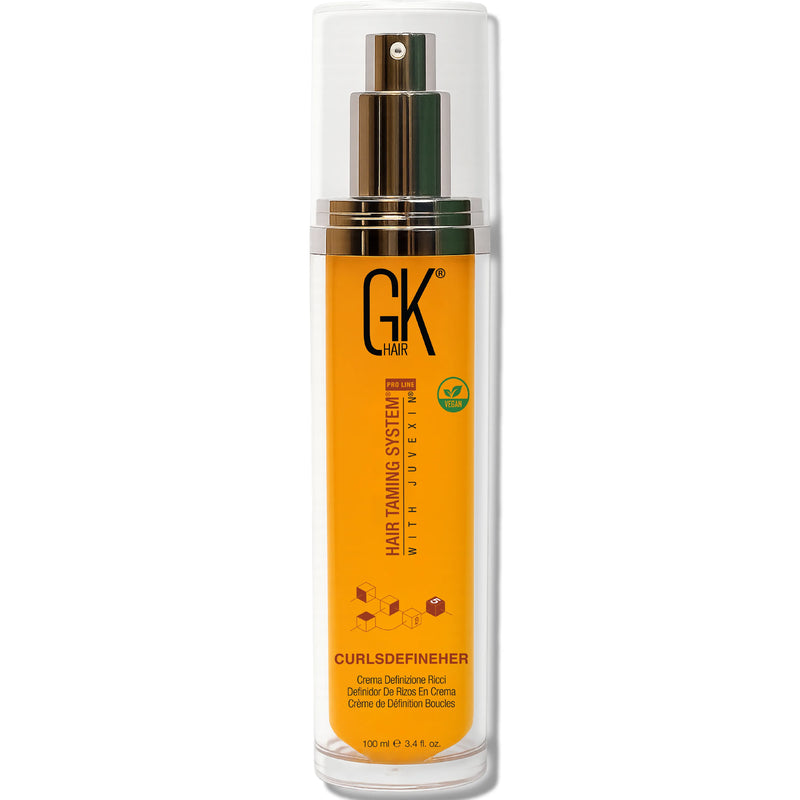
A curl needs something to hold its shape against while it dries, or it dries however it happens to fall. CurlsDefineHer gives a light, flexible hold that clumps the spiral without setting hard, so there is no crunch to break afterwards. Best for: 3a and 3b curls that want definition and softness in one step. On 3c, apply it to soaking wet hair in small sections and layer it over a leave-in rather than using it alone, since a light hold on dense hair needs something underneath it to work against.

Leave In Conditioner for Type 3 Hair
Ends dry out first because sebum never gets there, so a leave-in is not optional on this texture. It is the layer that replaces what your scalp cannot deliver. Our leave-in conditioning spray is light enough that it will not weigh down a 3a ringlet. Best for: 3a and fine 3b curls, and refreshing day-two hair.

Tighter 3c curls need more weight than a spray delivers on its own. Use the richer leave-in conditioner cream on soaking wet hair section by section, layer the curl cream over the top while the hair is still dripping, then seal the last two inches with a few drops of argan oil serum. Best for: dense 3c lengths that lose moisture faster than one product can replace.

Type 3 Curly Hair Male Hairstyles and Grooming
Type 3 curly hair male hairstyles work best when the cut respects the shrinkage. A curl that measures four inches wet might sit at two and a half dry, so a barber cutting to wet length will hand you something much shorter than you asked for. Ask for a dry cut, or at minimum a dry check before the final pass.
Length choices that suit the pattern: a tapered side with the top left long enough to spiral, a short crop that keeps two to three inches of curl on top, or a grown-out shape with the weight removed from underneath rather than off the surface. Fades read cleanly against type 3 volume. What does not work is trying to force uniform length across a head where the curl pattern is not uniform.
Type 3 Curly Hair Male Products
Most men overload the top and leave the rest untouched. One lightweight product, applied to soaking wet hair and left alone, beats three products layered on damp hair. Start with a sulfate-free wash two or three times a week, a leave-in spray after every shower, and a small amount of curl cream only on the sections that need shape. Skip the pomade. Wax-based products flatten a spiral and take a clarifying wash to remove.
The Real Strengths of Type 3 Hair
Curl structure gives this texture built-in elasticity, so it recovers from styling and weather better than its reputation suggests. Volume comes free, without backcombing or product. The pattern also holds a set beautifully, which is why twist-outs and braid-outs read so well on type 3 hair.
Versatility is the real advantage, and it costs nothing but a night. A twist-out is two-strand twists on damp, conditioned hair, taken down once completely dry, and it stretches the pattern into a looser, fuller wave. A braid-out is the same idea with three-strand braids, which gives a softer S rather than a spiral. Both read best on 3b and 3c, where there is enough curl to hold the new shape. On 3a, keep the sections large or the result reads as crimp rather than wave.
None of this needs heat, and none of it needs a second product. A wash-and-go on Monday and a twist-out on Thursday come from the same head of hair and the same routine.
Frequently Asked Questions
How often should you wash type 3 hair?
Wash 2 to 3 times a week for 3a, about twice for 3b, and once a week for 3c. Tighter curls hold onto less of their natural oil at the ends, so they tolerate less frequent cleansing. If your scalp feels heavy between washes but your ends feel dry, add a co-wash rather than a second shampoo.
How do I know if my hair is 3b or 3c?
Compare one dry curl to a Sharpie marker and a pencil. If the spiral is about as wide as the marker and springs back with visible bounce, it is 3b. If it matches the pencil or a drinking straw and the curls sit densely packed against each other, it is 3c. Check the crown and the nape separately, because most heads carry both.
Can your type 3 curl pattern change over time?
Yes. Hormonal shifts around pregnancy and menopause, some medications, and chemical services can all alter curl pattern, sometimes permanently. Age changes it too, as follicle shape shifts over decades. Heat damage is the version people cause themselves: repeated high-temperature styling can relax a curl into a permanently looser or straighter section that no product will bring back.
Is type 3 hair the same as 3c hair?
No. 3c is one of three subtypes inside type 3, alongside 3a and 3b. Type 3 is the whole curly category; 3c is specifically the tightest corkscrew pattern within it.
How much does type 3 hair shrink?
Type 3 hair typically shrinks somewhere in the range of 20 to 50 percent of its wet length, with 3c at the high end and 3a at the low end. Figures vary between sources and no clinical standard exists, so treat it as a rough guide. Shrinkage is a sign of a healthy, elastic curl, not damage.
Can you straighten type 3 hair without losing the curl pattern?
Occasionally, with care. Use a heat protectant, keep the iron at the lowest temperature that works, and limit straightening to a few times a year rather than a weekly habit. Curl pattern is set by follicle shape, so the curl should return after a wash. Repeated high heat is what breaks that, and heat-damaged sections do not recover; they have to grow out.
Final Thoughts
Identify your subtype first, then match product weight to it, and most of the frustration with type 3 hair resolves itself. Start with the Moisture & Hydration collection from GK Hair for the wash-day base, and the Styling & Protection collection for the curl cream that holds it all together.


Leave a Comment