


Ash blonde delivers a cool, luxe tone that suits more skin types than its icy reputation suggests, if you choose the right depth and undertone. It swaps golden highlights for blue-violet ones, creating anything from a pale, icy beige to smoky silver depending on your starting hair color. Achieving it requires bleach and careful toning; keeping it requires weekly maintenance. Here's how to pick your shade, apply it safely, and maintain the cool tone without damage.
What Is Ash Blonde Hair Color?
Ash blonde is a cool-toned blonde that ranges from pale, icy beige to smoky silver-gray. Blue and violet pigments neutralize the yellow and orange tones that appear when hair is lightened, so the same ash formula can look like soft beige on one person and near-silver on another, depending on your starting color, skin tone, and how much toner is applied.
Ash blonde hair contains blue and violet pigments that give it a grayish or beige cast rather than a yellow one, a color-correction principle rooted in complementary color theory: blue and violet sit opposite yellow and orange on the color wheel, which is why they cancel each other out. As such, ash tones are usually the standard recommendation after bleaching your hair. Based on your natural base color, that same formula can create anything from a muted beige to almost silver.
Ash looks different from honey, caramel, or golden blonde because it doesn't contain any warm undertones. Some shades of ash will appear subtle, like beige. Others will appear more obvious, like platinum. The main difference is how light your hair is to begin with. Darker hair requires more bleach to lighten enough for that cool, ashy color. Light hair requires less processing to achieve that ash color.
Understanding the Cool-Toned Shades of Ash Blonde
Ash blonde refers to a hair color based on tone, not level. Colorists determine this by looking at the hair's lightness, which they call the level (typically a 6 to 10 on the scale, with a shade chart later in this guide showing the exact mapping to each ash tone), and the coolness of the pigment added over that base.
If you have an ashy level 8 but gold undertones are still visible, you need a different ash mixture than if you had a yellow-tone level 8. This is why boxed hair dye almost never looks like what you see in salon magazines.
Different Shades of Ash Blonde Hair
Ash hair colors come in every tone from see-through blonde to major smoky gray. Here's a guide to the major shades, and what skin tones they work best on.
Light Ash Blonde Hair
Light ash blonde is best for hair that's already been lightened to a natural blonde or very light brown, since it has the least amount of color lift and will appear brightest, not muddy. It's a pale, cool color with very few yellow tones remaining.
Fair skin with neutral undertones suits light ash blonde best. Opting for a color that allows your roots to be a shade or two darker than your ends will make the hair appear intentionally grown out, rather than patchy.

Medium Ash Blonde Hair
Medium ash blonde is right in the middle: it's cool-toned enough to be considered ash but has enough warmth in it that it won't wash out olive or neutral skin tones.
Dark Ash Blonde Hair
Dark ash blonde is closer to a muted dirty blonde, making it the best first step for brunettes that want lighter hair but aren't ready to go full-on platinum. It also masks root regrowth longer than any other ash shade. To avoid looking flat next to your natural hair color, ask your colorist for soft face-framing pieces and dimensions throughout.
Silver Ash Blonde Hair
Silver ash blonde hair takes you even further into gray and metallic than a traditional ash does. It also requires more maintenance to prevent fading. Highlights or balayage woven throughout with fine silver threads will brighten your color without leaving you with a single flat cool tone.
Use purple shampoo once a week, get a gloss once a week, and deep condition to prevent brassiness from occurring. This color is the most likely to become brassy out of all the ones we talked about.
Icy Ash Blonde Hair
Icy ash blonde is the lightest and coolest tone. It typically requires the most lifting of all ash tones, so be sure to leave that to a professional. Icy blonde looks best on those with very fair, cool-toned complexions. Olive and warmer skin tones will most likely find that icy blonde washes them out.
If you have chemically treated hair already, make sure your colorist evaluates the condition of your hair before going any lighter. Going from virgin hair to icy blonde without taking those in-between steps can cause serious damage and breakage.
Quick Shade Guide: Which ash blonde suits your skin?
- Fair + cool skin → Icy or Silver ash
- Neutral skin → Medium ash
- Warm or olive skin → Beige-leaning Medium or Dark ash
- Deeper skin tones → Dark ash with dimensional placement
How Ash Blonde Compares to Blonde Hair Colors
Ash blonde is only one hair color in a vast blonde family tree. Knowing where ash falls on the spectrum amongst its cousins will help you better determine exactly what you want when you're sitting in the stylist's chair. See how ash measures up next to its warmer (and way more popular) blonde counterparts. Ash tones also shift the most under warm indoor lighting, where a cool ash blonde can briefly read beige, while daylight and camera flash bring out the gray-violet base most true to life.
Ash Blonde vs. Traditional Blonde and Warm Blonde Hair
Blonde hair comes in warm and cool tones at every single level of lightness, so understanding the different types of blonde hair is key to wrapping your head around why the same lightening process can look drastically different on two people. Golden and honey hues are visibly warm; caramel and bronde are warm neutrals; and ash is on the cool end of the spectrum, alongside beige, blonde, and platinum.
We rank these blonde hair colors by maintenance and fade speed in our breakdown. Ash will fade into warmer colors as the toner fades out, while golden and honey shades will fade into a pale, washed-out blonde. Keep that in mind if you're trying to choose between the two!
Below is a color-by-color breakdown of where each blonde hue falls:
- Golden blonde is warm and buttery, and it fades the least out of the colors on this list.
- Honey blonde has warm undertones and fades into something close to natural light brown.
- Caramel blonde is warm-neutral and works best as a highlight or over a darker base color.
- Beige blonde is another warm-neutral, like caramel, that fades into ash.
- Ash blonde ranges from grayish-beige to smoky gray and neutralizes yellow and orange tones.
- Platinum blonde is the lightest and coolest tone of blonde hair. It is typically achieved with an ash or violet-toned pigment.
Ash Blonde Hair Color Ideas and Trends
Once you've landed on a shade, placement decides if your finish will look bold, soft, or somewhere in between. Two techniques do most of that work, and each color grows out differently.
Ash Blonde Balayage, Highlights, and Dimensional Looks
Going full-head ash blonde is a bold move. Balayage and foil highlights are a gentler way to dip your toe into ash. Ash blonde balayage keeps depth around the root area and applies cooler blonde onto the mid-lengths and ends by hand.
In turn, your regrowth isn't as noticeable as a harsh contrast line. Grow-out will be less of an issue with balayage because your roots will usually remain closest to your natural shade for a longer period of time, versus if you'd gone all-over ash blonde.
Ash blonde highlights are spread throughout the head more evenly than balayage. That makes them ideal for those who want to brighten their complexion without changing their overall dimension. The foil highlights process is quicker than balayage and lifts more evenly from strand to strand. That's why most colorists will suggest foils when their clients are looking to add uniform brightness instead of a subtle ombré.
Fine, closely placed highlights around your face frame look soft and seamless. Heavier foils through the crown read as bold when hit with direct sunlight. Regrowth will be more apparent with foils because your hair lifts evenly, so you'll likely need to get roots done closer to six weeks rather than stretching your hair appointment to three or four months.
The more ash you introduce to your highlights, the closer your hair will get to looking solid ash blonde. No matter how many pieces you incorporate into your hair color, make sure you're getting dimensional placement. Flat, solid ash can be heavier and flatter than if it's built with layers.
How to Achieve and Maintain Ash Blonde Hair
Now that you have the color, half the battle is won. How you maintain your hair for the next few weeks at home and in the salon will decide if it stays fab or turns brassy.
Using Ash Blonde Dye and Toner to Maintain Cool Tones
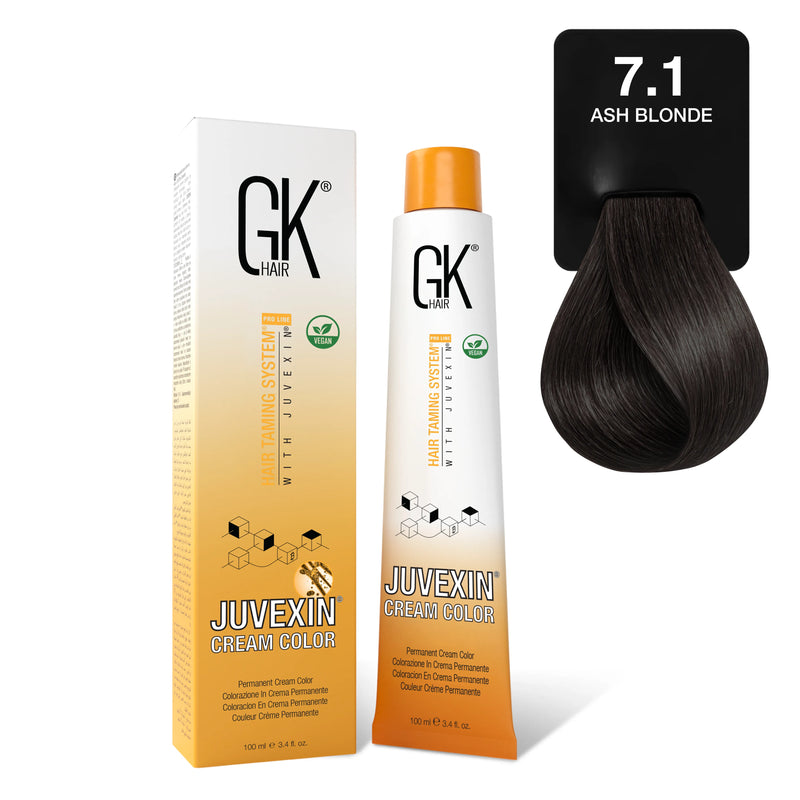
Ash blonde requires bleaching your hair first before toning it with a blue-violet or purple-based dye. Ash colors counteract brassy yellow and orange molecules in your hair. Since toner doesn't have bleaching properties, your base color needs to be lightened enough for the cool tone to register. For most light-to-medium ash shades that means level 8 or lighter, though the deeper, taupe-leaning Dark Ash Blonde shown in the chart below can register cool as early as level 6, since it's designed to read as a muted, cooler brunette rather than a true blonde.
To accomplish this, your colorist will bleach your hair to the proper level, tone it according to how warm your hair color appears, and time how long they leave the toner in so they don't turn your hair gray. After that, they will apply a bond-repairing treatment or conditioner.
Ash tones are usually semi-permanent, typically lasting four to six weeks with proper maintenance. However, timeline varies: highly porous hair may fade in three to four weeks, while denser hair can hold color six to eight weeks. Weekly purple shampoo, cooler water rinses, and minimal heat extend longevity significantly.
GK Hair colorists, who train stylists across a professional network in 75+ countries, treat toning as a timed chemical service, not a guess. They gauge your hair's warmth level first, then time the toner so it neutralizes brass without tipping into gray.
Hair porosity affects toner uptake differently across texture types. Coily and tightly curled hair, which tends to be more porous at the ends, processes bleach less evenly along the strand because product is harder to distribute by hand, so ask your colorist about a technique that saturates spirals fully. Once toned, curl tips also release cool pigment faster than straighter, denser hair, which is why maintenance schedules vary by hair type, so plan on refreshing gloss or purple conditioner a little more often than the standard four-to-six-week window.
Ash Blonde Hair Dye: Salon Formula vs. Box Dye
Whether it's mixed by a colorist or purchased in a box, this works the same way as any other hair color. Bleach lifts the color of the natural dye, then a blue or violet color or dye neutralizer is applied to neutralize the yellow or orange tones left behind.
While DIY box ash blonde hair dye can be quite effective at home, it doesn't lift the hair as evenly as would be achieved in the salon, and boxed toners can leave warm tones in places where they cannot. When a dark or existing coloured base is used, the bleach step is generally enough to warrant a salon visit, even if additional color is to be used to touch up the area later on.
If your ends already feel compromised from a previous lightening service, ask your colorist to fold a bond-repairing treatment into the appointment before any new bleach goes on.
Most colorists insert a natural break in their chemical services around the four to six-week mark anyway, and the American Academy of Dermatology recommends staying within three shades of your natural color when coloring hair at all, since lightening further requires higher-volume peroxide and causes more damage. That's a rule worth doubling down on if you're doing it yourself without a colorist's help.
The bleach will be rinsed off, and the toner will need to be refreshed in as little as 20 minutes. When a large color service is ordered, it is frequently done in more than one appointment to prevent over-processing the hair.
Salon pricing for ash blonde services varies significantly by location and colorist experience. Below are typical 2024–2026 price ranges for U.S. salons; your actual cost may be higher or lower depending on your market and the salon's positioning. Expect to pay roughly $75–$150 for single-process highlights over already-light hair, and $150–$350+ for a full bleach-and-tone on darker bases. Urban and high-end salons often charge 20–50% more. Always get a consultation quote before booking. Budget for a touch-up every four to six weeks to make sure the tone doesn't get warm, and a weekly purple shampoo and gloss treatment between touch-ups.
According to Healthline's research on hair porosity, highly porous hair absorbs toner faster than denser hair with a tighter cuticle, since previous bleaching tends to open the cuticle further. Which could mean that your colorist ends up coloring your hair in a cooler tone than you desired, or may end up coloring your roots cooler than your ends.
The American Academy of Dermatology advises avoiding sun exposure on color-treated hair because it can further dry out the hair shaft, making it brittle, as does the lightening of the cuticle to deposit the toner. But make sure that you keep your hair moist before and after your appointment, as well as use a UV-protective leave-in if you're going outside your salon between visits.
And if you've had chemical service and your hair is feeling dry or breaking too much, here's what Healthline says you can do to keep your locks moisturized: try deep conditioning or limit the heat as much as possible.
A violet-toned shampoo, such as GK Hair's Silver Bombshell Shampoo, is built for exactly this kind of touch-up. Best for: excessive warm blonde tones that may be going into a yellowish or orange shade. This will be left in for 5 minutes once a week.
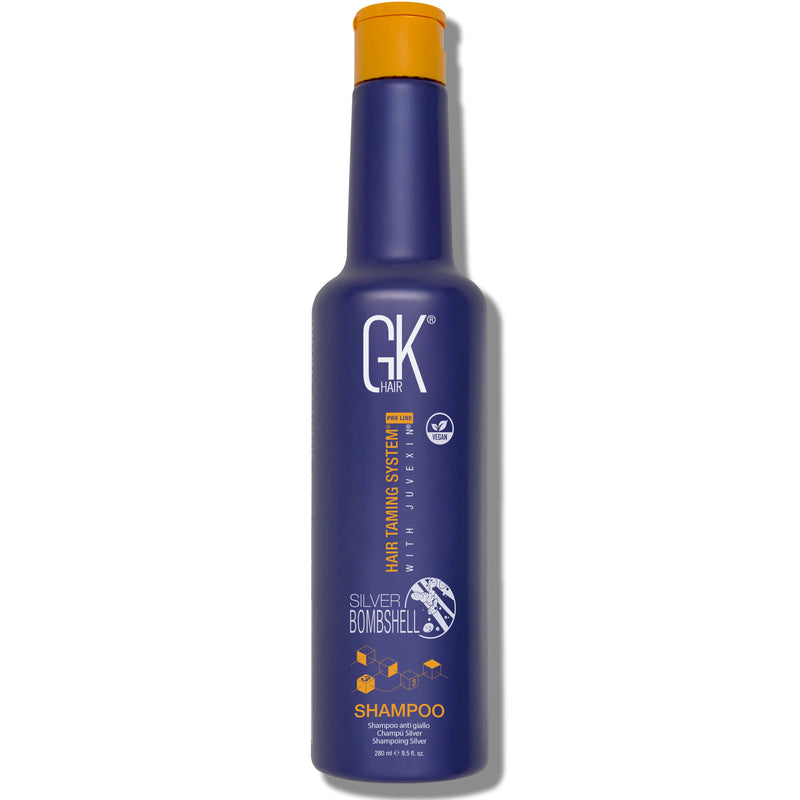
Massage into warm areas only; you don't need to slather Silver Bombshell onto your entire head. Rinse after two to three minutes. Follow up with conditioner as you normally would. Silver Bombshell works well as a moisturizing purple shampoo since it doesn't dry hair out further, but you should still take the extra steps to hydrate bleached hair.

Stylist's Corner
Pro Application Tip: The key to longevity isn't more time in the toner, it's strategic saturation. Porous ends absorb product faster than roots, so GK Hair colorists recommend saturating mid-lengths and ends first with shampoo or toner, then working product through roots last. This staggered timing prevents over-toning at the ends while ensuring roots receive enough violet pigment to stay cool.
Why ash blonde fades faster than warm blonde
Violet pigments sit on the outer hair cuticle, not deep inside. Heat, chlorine, hard water, and frequent washing strip the toner faster than they strip warm tones. Result: 4–6 week touch-up cycles vs. 8–10 weeks for golden blonde.
Ash blonde toner will fade quicker than a permanent dye because its molecules cling closer to the outer edges of the hair shaft. Heat, hard water, chlorine, and washing your hair often can make it fade even quicker.
One thing that surprises most first-time ash blonde clients: right after toning, hair can look almost lavender-gray under salon lighting. That's the violet base doing its job before it settles over the next day or two into the cooler, more neutral shade you actually asked for.
The chemistry used to cancel brassiness in a salon toning service is the same thing purple shampoo delivers in concentrated doses every time you wash your hair. We help keep your tone filled in between salon visits.
A few simple things can fade out your ash blonde quicker than anything:
- Not rinsing purple shampoo out of your hair in time can leave lightened areas looking dull or with a slight lavender tint.
- Not conditioning hair after the toning treatment. This will leave your hair feeling dry and brittle.
- Heat-styling your hair above 400°F without using a heat protectant product.
- Bleaching ends that have already been lightened instead of toning them.
- Swimming in a chlorinated pool, or swimming in hard water without rinsing your hair first.
Stick to using purple shampoo once a week. Try to use a hydrating mask on the days you skip purple shampoo. And if your color fades fast, try booking a gloss every few weeks. That way, you can maintain your ash blonde without drying out your hair.
Choosing the Right Ash Blonde Shade
By now, you know whether to go cool or warm, pale or deep, two-dimensional or multi-dimensional. Now it's time to assign a level and name to your instincts so you walk into your next salon visit (or pull from the shelf) knowing exactly what you want to ask for.
Using an Ash Blonde Hair Color Chart to Find Your Ideal Shade
Choosing a shade becomes a lot easier when you can see all the levels together rather than trying to choose from a single photo. Use the color chart below as your starting point, then let your colorist adjust based on your natural level and the amount of warmth that needs to be neutralized.
| Ash Blonde Shade | Typical Level | Undertone | Best Suited For |
|---|---|---|---|
| Light Ash Blonde | 9–10 | Pale, icy beige | Fair skin; already-blonde or light-brown hair |
| Medium Ash Blonde | 7–8 | Balanced, smoky beige | Neutral or olive skin tones |
| Dark Ash Blonde | 6–7 | Cool, taupe-brown | Deeper skin tones; brunettes lightening gradually |
| Silver Ash Blonde | 9–10 | Metallic gray-violet | Fair to medium skin wanting a bold finish |
| Icy Ash Blonde | 10 | Ultra-pale, blue-white | Fair skin; previously bleached or already-light hair |
Skin tone is more important than skin depth in this instance. Cool or neutral complexions tend to fare better with the coolest ash tones. Those with warm or golden skin tones tend to fare better with an ash that leans toward beige, so the color doesn't appear flat.
Though eye color has less impact on your decision, blue, gray, and green eyes tend to stand out best with a cool blonde. Brown and hazel eyes often appear softer when there is still some dimension near the roots.
If you're not ready to commit to a full bleach-and-tone service, ask your colorist about a semi-permanent gloss over your natural level first. A gloss won't lift your hair, so it can only nudge existing blonde or light brown a shade or two cooler, but it lets you preview how an ash cast reads against your skin tone before booking a lightening appointment.
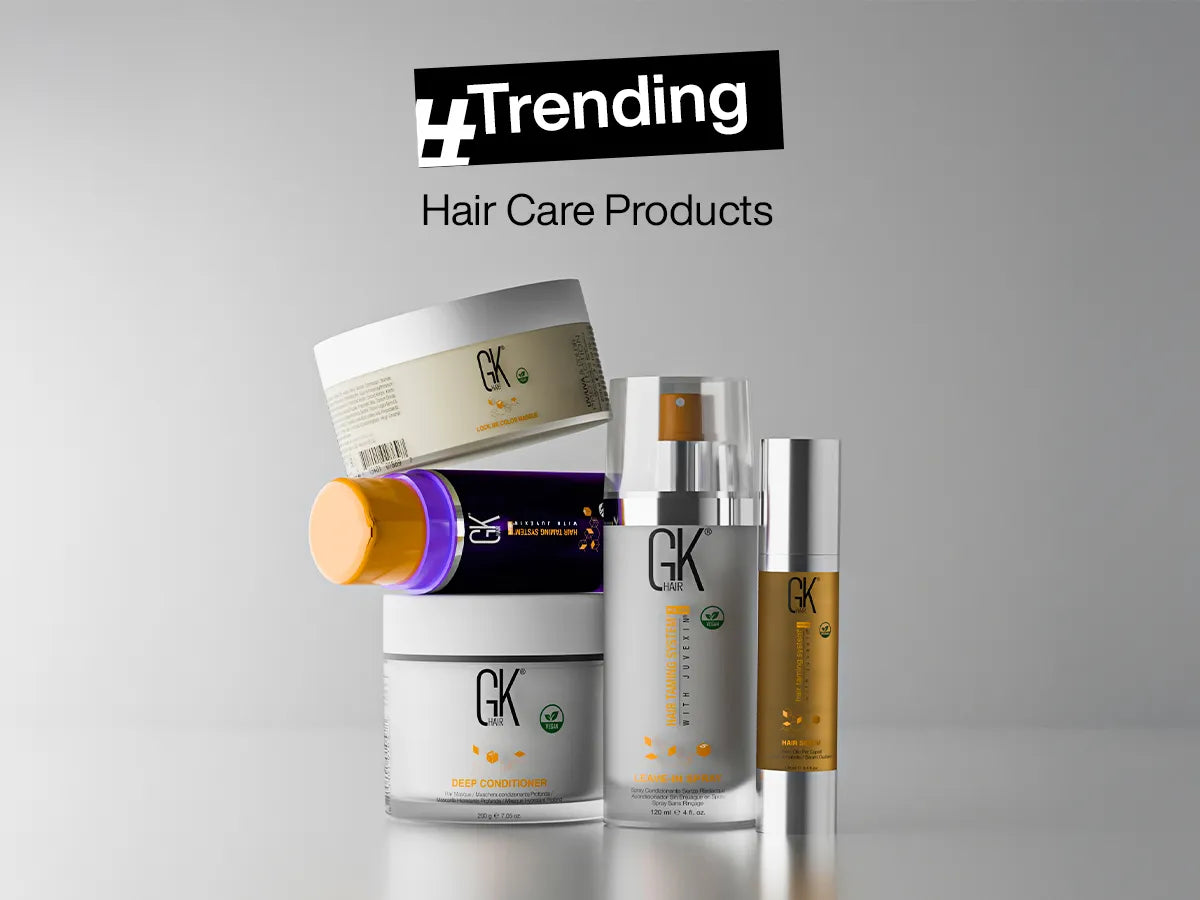
Whichever tint you choose, texture will make it look chic instead of dull or damaged. Try adding Argan Oil Serum to your routine. Formulated with lightweight argan oil and Juvexin, GK Hair's signature keratin-protein complex, it's great for any hair type that needs lightweight frizz control without weighing hair down. Best for color-treated hair.

Apply 1 to 2 drops to damp or dry ends after your hair is styled, just as our stylists finish styling clients in over 75 countries, to keep color-treated hair looking fresh.
FAQs
Quick, direct answers to what people ask us most before booking an ash blonde appointment:
What color is ash blonde hair?
As explained above, ash neutralizes the yellow and orange that lightened hair naturally shows. How much neutralizing it takes depends on how warm your natural base color runs, which is why the same toner formula can read beige on one person and near-silver on another.
Who does ash blonde hair suit best?
Ash tones can work with most skin tones, though the particular shade of ash should vary according to your undertone. Cool, fair skin often carries icy or silver-toned ash shades best. Medium skin and darker tend to prefer beige-leaning ash with messy, dimensional roots instead of one flat, solid color throughout.
What is the difference between ash blonde and platinum blonde?
Ash refers only to tone, not how light the hair actually is. So an ash blonde can range from a smoky mid-tone to nearly platinum, depending on how much the hair was lifted before toning. Platinum is the lightest level hair can safely reach, and can itself run warm, neutral, or ash-toned.
How do you keep ash blonde hair from turning brassy?
Attack brassiness with a violet-colored purple shampoo about once a week. Daily use can over-tone your hair, making it look dull or slightly purple. Use it alongside weekly deep conditioning, cooler water rinses after washing, and a heat protectant before styling. And if your color fades in less than a few weeks, book regular salon visits for a gloss.
Can you get ash blonde hair without bleaching?
No, not in most cases. Brunettes and even darker blondes will usually require at least one dye-lightening service before an ash toner can be deposited. Toners do not lift pigment like bleach does; they merely shift the tone of pigments that are already there. Balayage creates a softer regrowth line by painting color away from your roots and working the lightening toward the ends of your hair.
How long does an ash blonde appointment take?
A full bleach-and-tone typically takes 2.5 to 4 hours depending on your starting color, hair length, and how many sessions your colorist recommends. Virgin, unbleached hair on first lightening may be split into two appointments one to two weeks apart to minimize damage. Toner-only touch-ups on pre-lightened hair take 45 minutes to an hour.
When does ash blonde reach its final color?
Right after toning, hair often looks lavender or too-cool under salon lighting. That's the violet base at full strength; it settles into the true ash shade you wanted within 24 to 48 hours as the pigment oxidizes and blends with your hair. Avoid washing in that window if possible to let the tone set fully.
Your Perfect Ash Blonde Game Plan
Keeping ash blonde comes down to two things: a shade that complements your skin tone, and at-home care that mirrors what your colorist does in the chair. Preventative habits like weekly toning and real hydration matter more long-term than any single salon visit. GK Hair's Blonde collection covers both fronts, so browse it and build a routine that keeps your color cool.


Leave a Comment