


Okay, let's be real for a second. When you search "best hair straightener," you are hoping for one clear winner, right? One flat iron, everybody buys it, problem solved. We wish it worked that way too! But here is the tea: the best straightener is not a single product, it is the one that matches your hair type, your texture, and how you actually style. A flat iron that is perfect for thick, coarse curls can absolutely fry fine hair. So instead of just handing you a name, we are going to show you how to pick the right one for you... because that is the version that actually leaves you with smooth, healthy, gorgeous hair.
Quick answer: The best hair straightener is the flat iron matched to your hair type. Fine or fragile hair does best with ceramic plates at lower heat, while thick, coarse, or curly hair needs titanium plates that get hotter and straighten in fewer passes. Look for adjustable temperature control, the right plate size, and always use a heat protectant, whatever you choose.
First Things First: Straightener and Flat Iron Are the Same Thing
Quick clarification, because the words get used interchangeably and it can get confusing. A hair straightener and a flat iron are the same tool: two heated plates you glide your hair between to smooth and straighten it. "Straightener" is just the everyday name, "flat iron" is the same thing with a more technical ring to it. So when you see both words sprinkled through this guide, we are talking about the same gorgeous little tool.
What separates a so-so flat iron from the best one for you really comes down to a few things: the plates, the temperature control, and the size. Let's break each one down like we are shopping together.
Ceramic vs Titanium: The Plates Are Everything
Here is the single most important choice, and it is the one most people skip right past. The material of the plates changes how the heat hits your hair, and that changes everything about your result and your hair's health.
Ceramic plates heat more gently and evenly, warming the hair from the inside out. They top out at lower temperatures, which sounds like a downside but is actually a gift if your hair is on the finer or more fragile side... less aggressive heat means less risk of damage. The catch: a lot of “ceramic” irons are just ceramic-coated over a cheaper base, and that coating can chip and heat unevenly. If you go ceramic, you want solid ceramic plates. Best for: fine, thin, fragile, or color-treated hair that needs a gentler touch.
Titanium plates are the powerhouses. They heat up fast, reach higher temperatures, and hold that heat steadily, so they straighten stubborn strands in fewer passes. They are also lightweight and glide beautifully. Best for: thick, coarse, or curly hair that needs more heat to actually relax.
A quick side-by-side, since this is the decision that matters most:
GK Hair's professional stylist network — active in salons across 75+ countries — consistently comes back to the same rule: match the plate to the texture first, then dial in temperature. That order rarely fails.
Now... here is where we have to be your honest big sister for a second, because you will see titanium described as “safer” or “less damaging” all over the internet. The truth is more nuanced. Titanium is not magically gentle, it actually gets hotter, faster, which means more potential for damage if you crank it up and go to town. What makes titanium kinder to your hair is that it straightens in fewer passes, and fewer passes means less repeated heat. So the safety is real, but it comes from how you use it, not from the metal itself. Titanium's heat is intense and can cause serious, even irreversible damage if used improperly. Translation: titanium is fantastic, just respect the heat and do not blast fine hair at 450 degrees. Heat exposure breaks down the protein bonds and moisture balance inside the hair shaft, which is exactly why over-styling shows up later as dryness and breakage — how repeated heat breaks down the hair cuticle.
Stylist's Corner
The material gets all the attention, but the real damage lever is temperature plus passes. A titanium iron at a sensible temp with one clean pass is gentler than a ceramic iron you crank to max and drag over the same section five times. Set the lowest heat that actually straightens your hair, and resist the urge to keep going over a section. Patience genuinely beats power here. For more on keeping any hot tool from doing more harm than good, see our guide to heat styling without hair damage.
Best Flat Iron for Fine Hair
Fine hair, this section is for you, because you have the most to lose from the wrong tool and the most to gain from the right one. Your hair straightens easily, which means you do not need much heat, and high heat is exactly what leaves fine hair looking thin, frizzy, and fried over time.
What you want: ceramic plates (or a titanium iron with a genuinely low temperature setting), a heat range you can keep around 250 to 300 degrees, and a narrower plate so you have control. The golden rule for fine hair is low and slow-ish, lowest effective heat, one confident pass, done. Skip the "more heat equals better" mindset entirely. Best for: anyone whose hair feels thin, soft, or breaks easily.
What About Plate Size?
Plate size is the detail people forget, and it quietly makes a big difference. Wider plates (around 1.5 inches and up) cover more hair per pass, so they are faster and ideal for thick, long, or curly hair. Narrower plates (around 1 inch or less) give you precision, which is what you want for short hair, bangs, pixies, or getting right up to the root. If your hair is long and dense, wide plates will save your arms and your morning. If you have a shorter cut or you want versatility for curls and waves too, a narrower plate is your friend. Either way, matching the plate to your flat iron hair routine is what keeps styling quick and low-stress.
Hair Straightening Brush: A Different Tool for a Different Goal
You have probably seen hair straightening brushes everywhere and wondered if you should get one instead. Great question! A straightening brush is a brush with heated bristles, you brush it through like a regular brush and it smooths as it goes. It is genuinely easier and faster to use than a flat iron, and it is more forgiving for beginners.
Here is the honest trade-off, though: a straightening brush gives you a smoother, more voluminous, blow-dry kind of straight, not the sleek, pin-straight, glassy finish you get from a flat iron. So it really comes down to your goal. Want effortless, soft, everyday straightening with less fuss? A brush is wonderful. Want that polished, sleek, salon-flat look? You will still want a true flat iron. We do not make a straightening brush ourselves, so we will tell you straight: if sleek is the goal, reach for the flat iron. Best for: quick, low-effort, soft-straight days and straightening newbies.
A Quick Word on Brand Shopping (Yes, Including T3)
If you have been comparing straighteners, you have run into the big tool brands — a T3 straightener is one people search by name constantly. And honestly? There are lots of good irons out there. But brand-name shopping is where people overpay for a logo and underthink the fundamentals. Whatever brand you are eyeing, T3 or anyone else, judge it on the same checklist: solid (not coated) plates in the right material for your hair, real adjustable temperature control, the plate size that fits your length, and ideally ionic plates plus an auto-off feature for safety. Nail those, and you have got a great straightener... the name on it matters way less than the spec sheet.
Our Picks: GK Hair Titanium Flat Irons
Since you are here, here is what we bring to the table, and we will keep it honest. Our flat irons are titanium, so they shine brightest for thick, coarse, wavy, and curly hair that wants power and fewer passes. But thanks to wide temperature control, they are more versatile than that sounds.
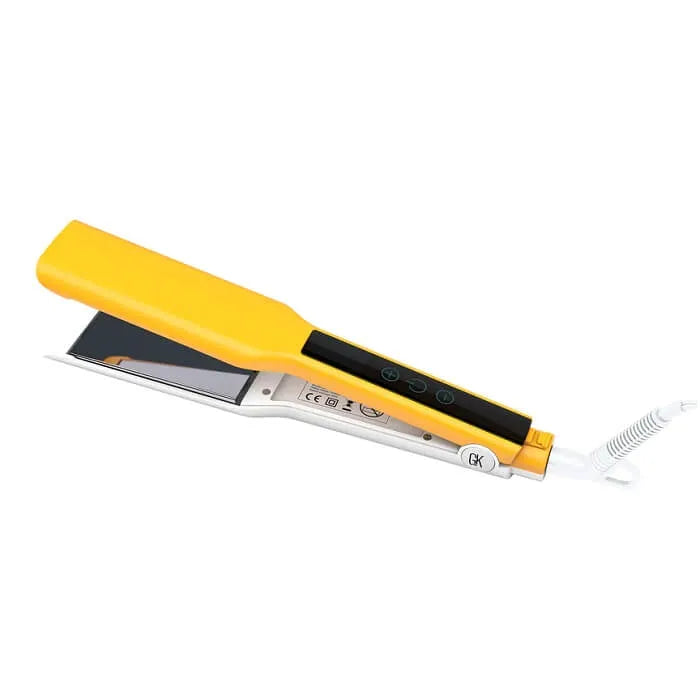
The GK Hair One Control Titanium Flat Iron has extra-large plates (about 4.7 by 2.4 inches) and a wide heat range from 248 all the way to 450 degrees, with one-button temperature control and an anti-static, frizz-smoothing finish. The big plates make it a dream for long, thick, or curly hair, and that low 248-degree end means fine-haired folks can use it too, as long as you keep it low. Best for: thick, long, or curly hair, and anyone who wants one iron with the range to cover most hair types.

Prefer something more compact and precise? The GK Hair Easy Control Titanium Flat Iron has slimmer 1.7-inch plates and a digital touch display for dialing in your exact temperature, lovely for medium hair, shorter cuts, and anyone who likes precise control. Best for: medium hair, shorter styles, and detail control.
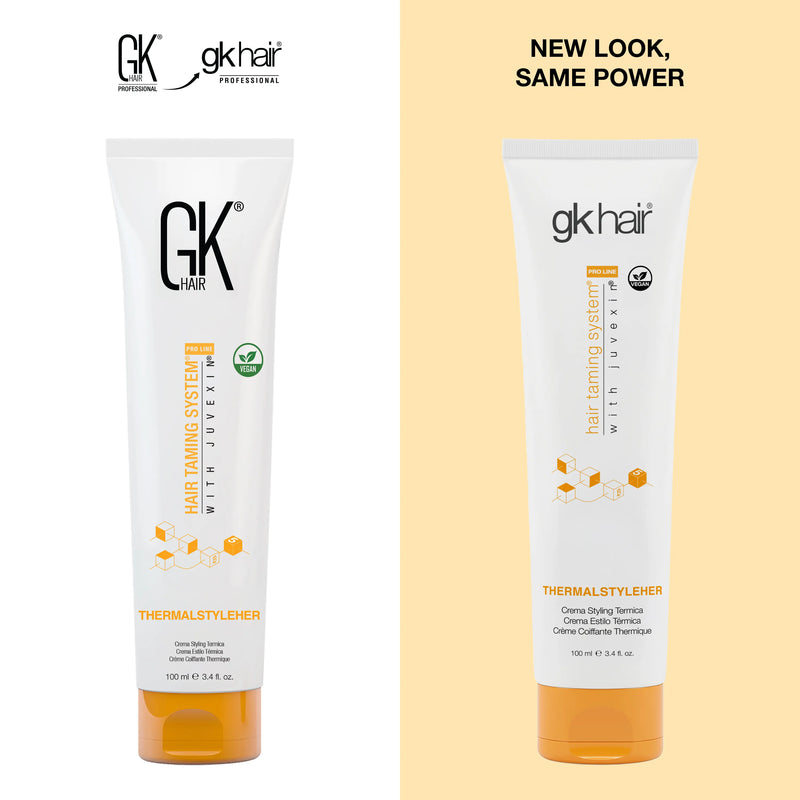
Whichever you choose, the non-negotiable, and we mean non-negotiable, is a heat protectant first. The GK Hair ThermalStyleHer Cream shields your hair up to 450 degrees while it smooths and adds shine, so you get the style without paying for it in damage. Best for: Anyone using a hot tool above 300 degrees who wants shine and damage protection in one step. Smooth it through damp hair before you ever pick up a hot tool. Already dealing with some heat damage from styling? Our guide on how to repair heat damaged hair walks through the recovery routine.
The Bottom Line
So, what is the best hair straightener? The one that fits your hair, not the one with the loudest name. Match your plate material to your texture, ceramic and lower heat for fine and fragile, titanium and more power for thick and curly, get the plate size that suits your length, control your temperature, and protect with a heat protectant every single time. Do that, and any solid flat iron becomes the best one for you. Ready to find yours? Have a look through our Hair Tools collection and pick the titanium iron that fits your hair best.


Leave a Comment