


You booked the appointment with a photo saved on your phone, and what came back was warmer, brighter, or blockier than the picture. Black hair with blonde highlights is one of the hardest color services to get right, and the reason is almost never the stylist's hand. It is the base. Lightened sections inside a very dark base means every choice about shade and placement shows immediately, because there is nowhere for a mistake to hide. So it is really two decisions: which blonde, and where it sits.
Black hair with blonde highlights means lightened sections placed through a dark base, anywhere from fine ribbons to wide streaks. Reaching a true blonde on a black base usually takes more than one lightening session. Cool skin tones suit ash and platinum, warm skin tones suit honey and caramel. Expect a toning refresh every few weeks.
What the contrast actually does
Black hair with blonde highlights does one thing above everything else: it creates depth where a solid dark color reads flat. Wavy and curly texture shows this best, since every bend catches the lighter piece and throws a shadow beside it. Black and blonde highlights also pull light toward the face, which is why face-framing placement became the default salon request.
Who do blonde highlights on black hair suit? Anyone willing to keep up with them. This is not a low-maintenance color. You may have read that highlights grow out invisibly against dark roots, and the root line does forgive you. The tone does not. Lifted hair drifts warm on its own schedule.
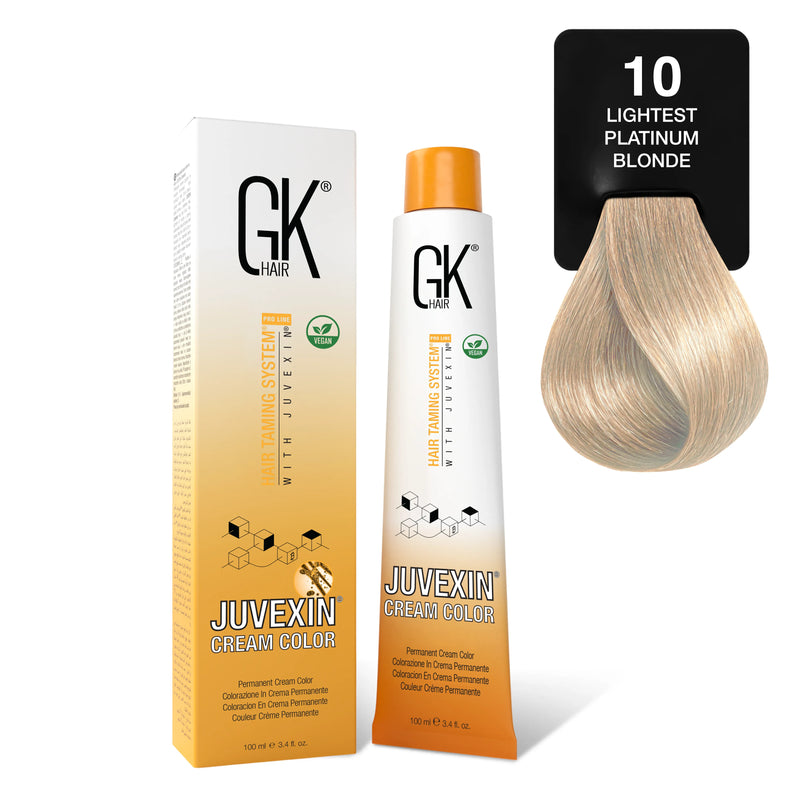
Choosing your blonde shade for black hair
Pick the shade before the technique. Your skin undertone decides which blonde looks intentional and which looks accidental, and the contrast you are willing to carry decides the rest. Browse our Blonde collection once you know your family.
Ash blonde
Black hair with ash blonde highlights suits cool undertones, the blue or pink cast in the veins at your wrist. Its gray-violet base cancels the orange a dark base throws during lifting, so the result stays crisp rather than muddy. Contrast runs high, upkeep mid-range, because ash fades toward yellow before it fades away. We cover the ash blonde shades in detail separately.

Honey blonde
Warm and olive undertones are where black hair with honey blonde highlights belongs. Golden depth sits close enough to a dark base that the transition reads soft instead of striped, which makes it the most forgiving first attempt on this page. It also needs the least lift. Our honey blonde care guide covers styling it.

Platinum blonde
Highest contrast, highest maintenance, no exceptions. Black hair with platinum blonde highlights means lifting to the palest levels, so the most processing and the most fragile ends of anything here. It suits cool undertones and real tolerance for salon visits. Toning every two to three weeks is the realistic schedule, not the worst case. The platinum blonde guide covers the upkeep.

Caramel
Caramel highlights on black hair are the warm, low-contrast option, sitting a few levels up from the base rather than at the far end of the scale. Deep golden brown reads as dimension rather than color, which is why it works so reliably on olive and deeper skin. Fewer lifts means less damage, and warm fading warmer barely registers.

Multi-tone blends
Two lighter tones through one dark base give dimension a single shade cannot. Black hair with red and blonde highlights layers copper or auburn against gold, rich under warm light. Black hair with brown and blonde highlights, the bronde blend, stays within a few levels of the base and is the softest version here.
| Shade | Best skin undertone | Contrast against black | Maintenance level |
|---|---|---|---|
| Ash blonde | Cool | High | Medium to high |
| Honey blonde | Warm, olive | Medium | Medium |
| Platinum blonde | Cool | Very high | High |
| Caramel | Warm, olive, deep | Low to medium | Low |
| Bronde | Neutral, warm | Low | Low |
Where to place the highlights
Placement is the decision most people skip, and it changes the result more than shade does. Black hair with blonde streaks and finely woven highlights can share an identical toner and look nothing alike. Section width, where the lightener starts, and how the pieces sit are what separate them.
Balayage
Blonde balayage on black hair is hand-painted, applied freehand and started away from the root. No hard line at the scalp means it grows out gradually and buys months between appointments instead of weeks. Foils work the opposite way: they start at the root, giving a sharper result and a stricter retouch schedule.
Chunky streaks
Wide sections, high drama. Black hair with chunky blonde highlights means fewer, thicker pieces, so the eye reads the blonde as its own shape rather than an overall lightening. Thick sections process more evenly on coarse hair too. The trade-off: a badly placed chunk stays badly placed until it grows out.
Face-framing pieces at the front
Black hair with blonde highlights in front, the money piece, is the highest-impact and lowest-commitment version. Two lightened sections either side of the part, brightening everything near your jaw and cheekbones. Easiest to test, easiest to tone down later.
Peekaboo panels
Black hair with blonde peekaboo highlights hides the color in the under-layer, so the top stays solid and the blonde shows only when you move or wear it up. Good for a workplace with opinions about hair color, and for testing blonde without meeting it in the mirror every morning.
Blonde tips
Black hair with blonde tips puts all the lift at the ends, which is both the appeal and the risk. Ends are the oldest, most porous part of the strand and take lightener fastest. Ask for a lower developer on the last few inches.
Whatever placement you choose, wave and texture show dimension far better than a flat, pressed finish.
The reverse deserves a mention too. Blonde hair with black highlights runs dark panels through a light base, and it is the lower-damage direction, since adding dark pigment deposits color instead of stripping it. It suits anyone already light who wants depth back without another lift.
What lifting black hair to blonde highlights actually involves
Here is the part most articles skip. Black sits at the darkest end of the level scale, so a genuine blonde is not one appointment. It is a sequence. The American Academy of Dermatology notes that lightening more than three shades needs higher volumes of peroxide, which causes more damage. Black to pale blonde is far more than three, which is why the lift gets split across sessions.
Jet black hair with blonde highlights is the hardest version, and box-dyed black is harder still, since deposited pigment lifts unevenly and surfaces orange before yellow. Your colorist is not being slow. They are avoiding the version where you hit the target shade and it snaps two weeks later.
Three things happen before any lightener touches your head:
- A consultation covering porosity, elasticity, and your full color history. Mention every box dye, henna and relaxer, including the one from four years ago.
- A strand test on a hidden section. It shows how your hair actually lifts, not how it should in theory.
- A gradual lifting plan, usually two to four sessions spaced weeks apart.
Five things to avoid, in order of how much damage they cause:
- Bleaching a dark base at home. Patchy color is the mild outcome; scalp burns and breakage are the other one.
- Expecting platinum in one sitting. Nearly all breakage starts here.
- Skipping maintenance, then arriving too compromised to lift further.
- Ignoring roots and scalp while you focus on the ends.
- Copying a celebrity result strand for strand. Face shape, texture and starting level all change where the same placement lands.
Can you bleach black hair to blonde at home?
For highlights on a black base, no. At-home kits are built for a broad range of starting colors and cannot vary developer strength section by section, which is exactly what a dark base needs. A root touch-up or a gloss between salon visits is reasonable. Multi-session lifting is not.
What it costs and how long it takes
A multi-session lift is the expensive part, and salons price it by how much lightener and how many hours your hair needs rather than off a flat menu rate. Budget several hours per appointment on a dark base, with the consultation and strand test booked separately. Toner is charged on top and repeats every four to six weeks, so the real number is the maintenance schedule, not the first visit. Face-framing pieces and peekaboo panels cost a fraction of a full head, which is why they are the sensible way to test the look. Ask for a written quote covering the whole plan.
How the look changes with your hair type and length
Same shade, same placement, different result. Texture and length change how much blonde you actually see.
Curly and textured hair
Black curly hair with blonde highlights reads best with wider pieces. Fine highlights vanish into a curl pattern because the coil folds them out of sight. Textured hair is also weakest at the bend of each turn, which is where lightener does the most damage, so stretch the rest periods between sessions further than you would on straight hair.
Straight hair
Straight black hair with blonde highlights shows every placement decision clearly, because the strand lies flat and nothing breaks the contrast line. That is the appeal and the pressure. Spacing a curl would hide is plainly visible here, so ask for a fine weave unless a graphic look is the goal.
Short hair
Short black hair with blonde highlights needs restraint. Less canvas on a bob or pixie means a full head tips quickly from dimensional into two-tone. Face-framing pieces plus a scatter through the top layer do more than an all-over application.
Long hair
Long black hair with blonde highlights can carry a gradient shorter cuts cannot, the blonde building over ten or twelve inches. Length is also age. Your ends survived years of washing and heat before any lightener arrived, and they need the most repair afterward.
Black hair with blonde highlights for men
Shorter cuts change the math. On a fade or a crop, most visible hair sits in the top section, so anything placed elsewhere is effectively invisible. Chunkier pieces read better at short lengths, because there is not enough length for a subtle weave to register. Curly and coily texture takes this well, since the pattern makes its own light and shadow. Keep sections generous, near the crown and hairline, and expect a refresh every six to eight weeks alongside the cut.
Keeping the blonde from turning brassy
Black hair with blonde highlights turns warm for a reason worth knowing. Lifting strips pigment in a fixed order, cool tones first and warm last, and a dark base holds a lot of red and orange underneath. Your colorist neutralizes the rest with a toner, and that toner washes out over the following weeks. Nothing has gone wrong when the warmth returns. The neutralizer ran out.
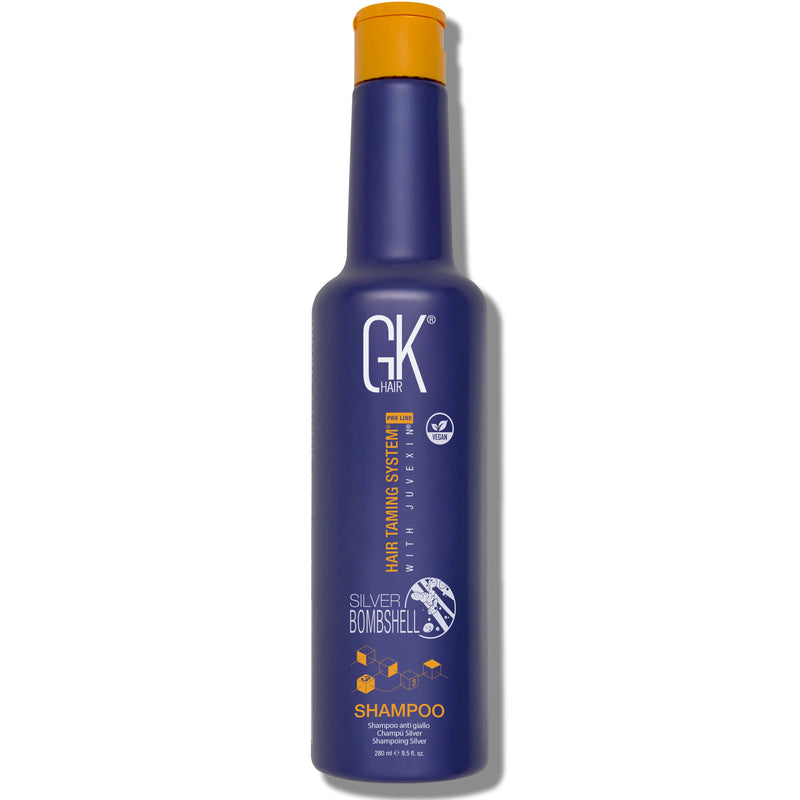
Violet cancels yellow, since the two sit opposite on the color wheel. That is the mechanism behind purple shampoo for highlights: a small violet deposit at every wash, so warmth never gets ahead of you. On a dark base, work it through the lightened sections only.
This purple shampoo counteracts yellow and orange with deep violet pigment, carrying Juvexin V2, a plant-based protein from quinoa and pea, so toning is not also stripping. Best For: lifted sections drifting warm between salon visits.
How to use:
- Massage into wet hair, concentrating on the blonde pieces.
- Leave on for one to two minutes, no longer on very porous ends.
- Rinse and follow with conditioner.
- Use once or twice a week, or whenever brass appears. Daily use over-tones and can leave a purple cast.
The full ingredient list, including the violet pigment system and the seed oils that offset it, sits on the product page. Our user panel there reports 98 percent noticing brass-free hair, which is customer feedback rather than a clinical measure.
How to care for bleached hair after highlighting
Lightened sections behave like a different hair type from the rest of your head. The cuticle was lifted to let the lightener in and never fully closes, so those pieces drink water fast and lose it just as fast. That is why your ends feel soft on Tuesday and like straw by Thursday while your roots are fine.
Protein is the other half. Bleach breaks keratin structure inside the cortex, and moisture alone does not rebuild what broke. Juvexin is our protein technology, built to penetrate the cortex and coat the cuticle rather than sit on top of it, which is the argument for using it on chemically lifted hair. The plant-based Juvexin V2 version, from quinoa and pea, is what carries that into the at-home range.
A deep conditioning treatment is where this lands at home. Our Deep Conditioner is built as a damage reconstructor for hair weakened by chemical services, pairing Juvexin V2 with jojoba seed oil so the strand gets protein and hydration in one twenty-minute step, then closing the cuticle behind them. Best For: hair lifted several levels that feels stretchy when wet.
Moisture is the rest of it. Wash with a sulfate-free moisturizing duo built for porous, chemically serviced hair. Between washes, a few drops of Argan Oil Serum on mid-lengths and ends smooths the cuticle without weighing the lift down.
The rest matters more than any single product, and the American Academy of Dermatology's guidance on caring for Black hair backs most of it:
- Wash every four to seven days, lukewarm rather than hot.
- Skip washing entirely for 48 to 72 hours after lifting.
- Trim every eight to twelve weeks. Lightened ends split first.
- Heat protectant before every hot tool, without negotiation.
GK Hair stylists see one pattern repeat across the salons we work with in more than 75 countries: the clients whose highlights still look good at three months are rarely the ones with the biggest product shelf. They stretched their washes and stopped flat-ironing daily.
Stylist's Corner: Wait a full 48 hours after lifting before your first purple shampoo. A freshly processed cuticle sits wide open and grabs violet unevenly, which is how you end up with lilac patches on the most porous pieces while the rest stays yellow. Give it two days, then tone. Over-toned anyway? A clarifying wash pulls most of it back out.
Frequently asked questions
What highlights look good on black hair?
Match the shade to your undertone first. Cool undertones take ash and platinum without turning muddy, while warm and olive undertones look best in honey, caramel, or a bronde blend. Then choose contrast level: face-framing pieces and balayage read soft and grow out gently, while chunky streaks and platinum make a deliberate statement and ask for more upkeep.
Can you put blonde highlights on black hair?
Yes, though it takes more than one appointment. A black base has to be lightened through orange and yellow stages before it reaches a true blonde, and doing that in a single sitting is what causes breakage. Two to four spaced sessions is normal.
How long do highlights last on black hair?
The lift is permanent, but the tone is not. Expect the toner to fade over four to eight weeks, at which point warmth returns and the blonde needs refreshing. Root regrowth shows on a separate schedule: painted balayage can go three or four months, while foiled highlights starting at the root usually need attention every six to eight weeks.
Do blonde highlights damage black hair?
Some damage is unavoidable, because a dark base only reaches blonde at peroxide strengths high enough to break protein bonds inside the strand. Manage it rather than chase zero: spaced sessions instead of one long one, protein and moisture between appointments, less heat. Textured hair needs the longest gaps, since the bend of each coil is where the strand is already weakest.
How often do blonde highlights on black hair need retouching?
Tone first, roots second. Most people tone every four to six weeks and book a root or placement refresh every two to three months, with balayage stretching furthest and platinum needing the most frequent attention.
The part that decides it
Choose the shade your undertone can carry, choose placement you can live with growing out, and give the lift the sessions it needs. Black hair with blonde highlights holds up when those three line up, and fails predictably when they do not. For keeping lifted sections bright through a dark base, the GK Hair blonde range is built for that job.


Leave a comment