


Dry hair is not just rough but brittle and more likely to break. However, most moisturizing methods make the hair flat or greasy.
Clearly, your hair needs moisture for health, but the challenge is how to hydrate each day without turning your tresses oily. Achieving this is possible, and we’ll show you how, but first, let’s talk about the shortcomings of the usual moisturizing methods.
Why Traditional Moisturizing Fails
You may have been slathering your hair in heavy oils or creams only to end up with flat, greasy locks. It helps to understand some hair biology. When the cuticle lies flat and sealed, your hair has a smooth and shiny appearance and retains moisture.
However, many traditional moisturizers actually raise or damage these cuticles. An open cuticle means your hair’s internal moisture keeps leaking out. So you get that parched, frizzy look even after using a conditioner.
Ironically, a very humid climate can turn out to be a disaster: the cuticles are left open, and the excess moisture swells the hair and forms frizz. That is to say that regular moisturizing cannot work since, in many cases, there is no sealing of the cuticle.
So, you might be coating your hair in oils, but if the cuticle is not closed, the real water-based hydration just evaporates away, leaving a greasy film on dry hair beneath. Hence, to truly moisturize without grease, you need a way to keep the cuticles closed.
Signs Your Hair Needs Moisture
Start by feeling and observing your hair. Does it appear dull or feel rough to the touch? Does it frizz easily? These are classic hallmarks of moisture-deprived hair. You might notice your brush snagging on tangles more often. Dry hair knots up because the cuticles are raised and catch on each other.
The next tip-off is when your hair does not give you that extra bounce or elasticity that it normally should. Well-moisturized hair is radiant and bouncy. On the other hand, dry hair tends to be lifeless regardless of what a person tries to do. So, in case you observe many short broken ends or split ends, then that is an indication of dryness.

You can also perform the “stretch test” to gauge your hair’s moisture levels. Take a single strand of hair and wet it. Hold it at the root end with one hand and the tip with your other hand, then gently stretch it.
If it hardly stretches at all and breaks immediately, your hair might be either limp or severely damaged. But if it stretches and won't return to its original size, that is a sign of dryness.
For the record, dry hair is not the same as damaged hair, though the two can go hand in hand. Dry hair means a lack of moisture, but damaged hair typically means broken cuticle and structural breakdown. That said, prolonged dryness can dry cuticles down so badly that they split, and much damage makes it difficult for hair to retain moisture.
If your hair is damaged, increased moisture can immediately soften and improve the quality of your hair.
Nevertheless, you can read How to Repair Damaged Hair Fast: Pro Tips That Actually Work for a more focused approach.


Common Moisturizing Mistakes That Create Greasiness
If your solution to dry hair has been to apply a glob of rich mask or soak your ends in oil, you might be unintentionally causing the greasy look you dread. Let’s unpack some common moisturizing mistakes that leave your hair greasy:
Overusing Heavy Products
More isn’t always better. Your hair can only absorb so much at a time: excess products just sit on the surface, making the hair appear oily. Instead of applying too much of a product, get a quality product, use a modest amount, and focus it where you truly need it (more on that in the next point).
Moisturizing the Wrong Places
Your scalp does not need additional oils or heavy creams. It produces its own natural oils. The correct approach is to moisturize from the mid-lengths down. The ends of your hair, especially the last 2-3 inches, are the oldest and driest, so they crave rich stuff. The roots, in contrast, have the most sebum.
So, instead of instinctively rubbing the conditioner all over, including the scalp, focus on the ends and do not forget to rinse out thoroughly—unless you’re using leave-in treatments.
Using the Wrong Products
Hair products are not one-size-fits-all. If you have fine or medium-textured hair and you are using a heavy mask meant for coarse hair, chances are it will overpower your strands. A mismatched product can lead to grease because it’s too heavy to penetrate your hair—it just coats it.
Conversely, using a very light conditioner on coarse, extremely dry hair might not hydrate enough, prompting you to use more and more products, inadvertently creating buildup.
Bad Timing
Even with good products, timing matters. Applying a heavy leave-in cream when your hair is soaking wet can sometimes prevent absorption. It may just sit on the wet hair until you blow-dry, at which point it turns into grease.
Another timing issue is not allowing each product to settle before adding another. If you layer hair products without giving each product time, your hair will likely become overwhelmed, and the residue will turn greasy.
Morning Routine
Step 1: Start With Damp Hair
Moisture needs water. Therefore, try to towel-dry your hair lightly so that it is not wet but damp. Dampness causes the cuticles to open and be ready to receive moisture. Also, switch out harsh, stripping shampoos for a gentle, hydrating formula. GK Hair’s Moisturizing Shampoo is an excellent choice, as it contains ingredients that work together to soften and moisturize your hair while cleansing.
Step 2: Apply a Moisturizing Conditioner
GK Hair’s Moisturizing Conditioner is a great option here. It is designed to hydrate and smooth the hair without stickiness. Squeeze out a small amount of the cream, rub it in your palms to lather, then massage it into your hair. If you have colored hair, this treatment preserves your color well, so you have nothing to worry about.

Step 3: Sealing With a Serum
Next, reach for a lightweight serum like GK Hair’s Argan Oil to seal the hair’s cuticle. It also adds shine and body to your hair without greasiness. Take a pump of the serum and rub it between your palms. Then, work it into the ends of your hair, moving upward but stopping around mid-length.
By sealing, we refer to the serum's ingredients (natural silicones and oils) coating the hair shaft. This seals the moisture in and forms a protection against frizz and other environmental factors.
Step 4: Style as Usual
Now your hair is moisturized and prepped. You can air-dry or blow-dry as per your preference. If blow-drying, you’ll find the hair is more manageable—requires less brushing and snags less—because the leave-in and serum provide slip and protection.
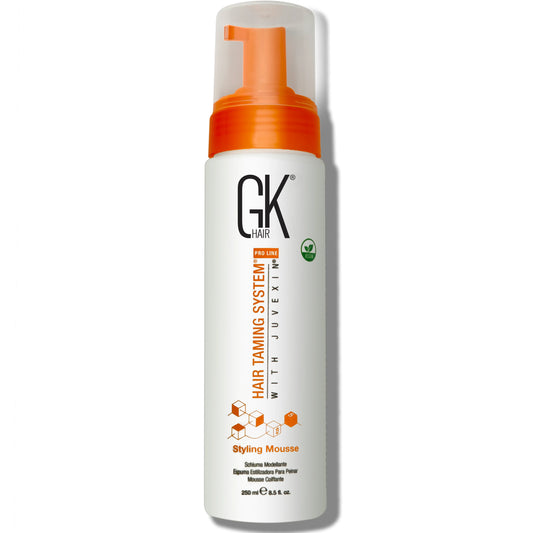
You can also use GK Hair’s Hair Styling Mousse for a smooth, effortless styling session.
Ditch Dry Hair Forever
You do not have to sacrifice moisture for non-greasy hair. You can have both soft and supple hair with proper levels of hydration every single day. With the right information and products, you can keep your hair moisturized.
We have a discount for you if you order all three products of the grease-proof moisturizing system through our Intense Moisture Pack. So, go ahead and pamper your hair; it will thank you with shine and softness, not grease.


Leave a Comment