


People call brown the safe choice. It is actually the widest one. Brunette runs from the palest light brown to near-black espresso, with honey, caramel, chestnut, chocolate, and ash all living in between. So when a shade looks flat or turns brassy on someone, it is almost never because brown is boring. It is because they picked a name instead of picking the two things that actually decide how brown reads on you: how deep it is and which undertone it carries. Get those two right and brown becomes the most dimensional color you can wear.
Quick answer: The shades of brown hair run from light brown to dark brunette, in warm tones like honey and caramel, cool tones like ash and mocha, and neutral browns between. Pick your shade by two things: depth, how light or dark, and undertone, warm, cool, or neutral. Match the undertone to your skin and the color flatters you.
Why Brown Hair Color Shades Are Timeless
Here is the framework that makes every shade below make sense, and it comes down to pigment. Your natural hair color is set by melanin, and brown and black hair specifically come from a pigment called eumelanin, which exists in brown and black forms. How much of it you have decides how dark your hair is, light brown means less, dark brown means more. That is the depth axis.
Underneath that depth sits a tone. A little of the red-and-yellow pigment called pheomelanin, peeking through the brown, is what makes one brown look warm and golden while another looks cool and smoky. That is the undertone axis. Every brown shade is just a point on those two axes: a depth plus an undertone.
This is why the same "dark brown" box can look rich on one person and muddy on another. The depth was right, but the undertone clashed. Once you think in depth plus undertone instead of shade names, you stop guessing.
The Shades of Brown Hair, From Light to Dark
Here is the spectrum, sorted the way it actually lives on your head. Each one notes its undertone and who it tends to flatter most.

Light Brown
The most wearable entry point. Light brown hair sits just below dark blonde and reads soft and natural, with enough depth to look rich but enough lightness to brighten the face. It leans warm to neutral and suits a wide range of people, which is part of why "light brown hair color" is one of the most searched browns there is.
Best for: anyone easing out of blonde or wanting low-contrast, natural-looking depth.
Honey Brown
Warm, golden, and lit-from-within. Honey brown hair carries an obvious gold undertone that catches the light, so it flatters warm and olive skin beautifully and reads sun-kissed without going blonde.
Best for: warm or olive undertones who want glow and warmth.
Caramel Brown
Honey's richer cousin. Caramel hair color brings a deeper golden-amber warmth, a little more saturated and luxe than honey, gorgeous woven through darker hair as dimension or worn all over.
Best for: medium to deep skin tones and anyone wanting warmth with more richness than honey.
Chestnut and Golden Brown
The warm-neutral middle. Chestnut is a reddish-warm medium brown; golden brown is its softer, sunnier sibling. Both sit in the most flattering depth range for the widest set of skin tones, warm enough to feel alive without tipping into obvious red or gold.
Best for: most warm-to-neutral undertones wanting a true, dimensional brown.
Chocolate Brown
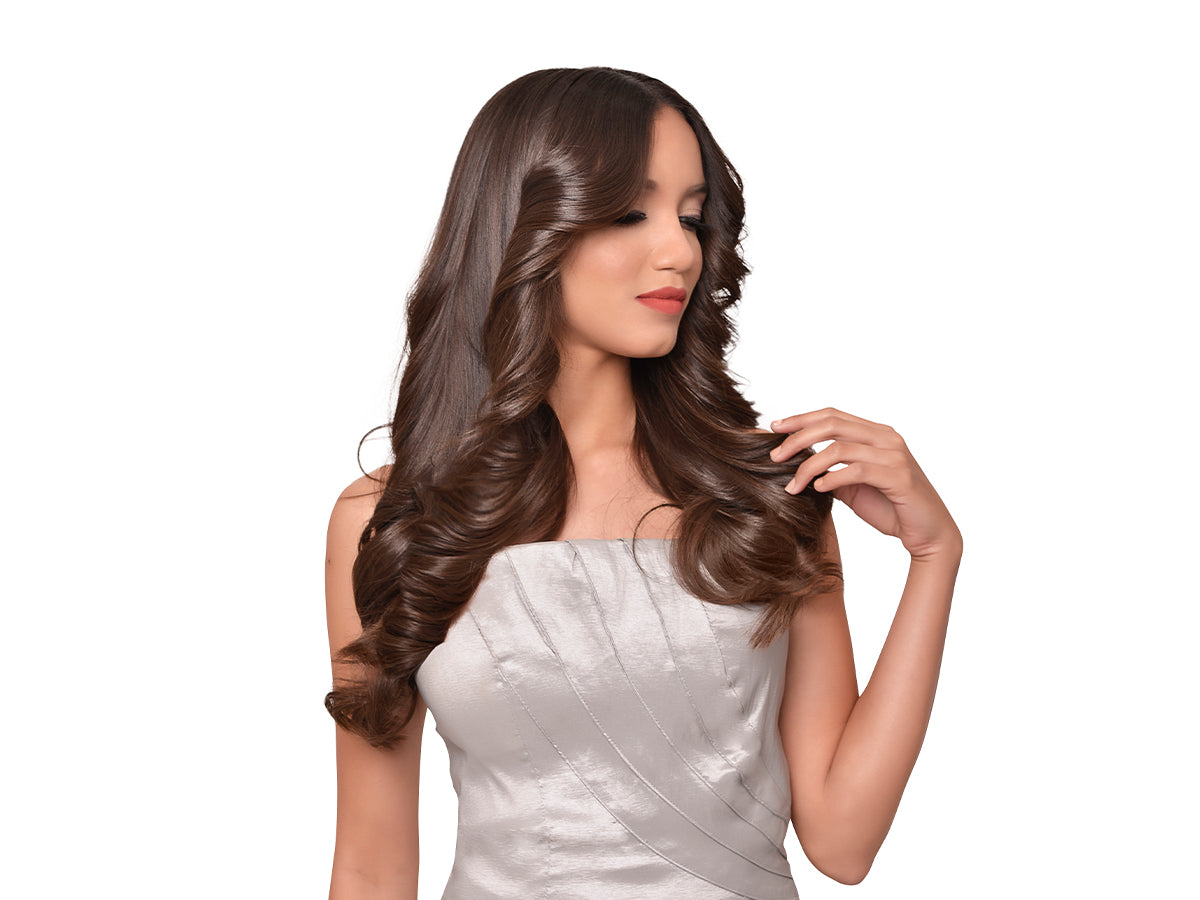
Rich, deep, and mostly neutral-to-cool. Chocolate brown hair is the shade people picture when they think "glossy brunette", deep without being black, polished without being flat. It is endlessly flattering and easy to maintain.
Best for: neutral and cool undertones, and anyone who wants depth with shine.
Ash and Mocha Brown
The cool, smoky end. Ash brown and mocha pull cool, with no warmth showing, which is exactly what makes them read modern and sleek, and what makes them the fix for hair that tends to go brassy. Their cool deposits counter red and orange tones.
Best for: cool undertones, and warm-prone hair that needs the brass pulled down.
Dark Brown and Espresso
The deepest browns short of black. Dark brown hair and espresso deliver maximum richness and dimension, with that expensive, glossy depth, and they cover grey cleanly. They flatter cool and neutral undertones especially and read luxurious on almost everyone.
Best for: deeper levels, grey coverage, and anyone wanting intensity without going jet black.
How to Match a Brown to Your Skin Tone
The shade name is the easy part. The match is the part that decides whether it looks expensive or off, and it comes down to lining up your hair's undertone with your skin's.
The quick read on your own undertone: look at the veins on your inner wrist in natural light. If they look greenish, you most likely lean warm. If they look blue or purple, you lean cool. If you genuinely cannot tell, you are probably neutral, which is the easiest case of all. It is a rough guide, not a lab test, but it points you the right way.
From there it is simple. Warm undertones glow under warm browns: honey, caramel, golden, chestnut. Cool undertones come alive under cool browns: ash, mocha, cool chocolate. Neutral undertones get to cheat and wear almost anything, which is why neutral browns are recommended so often. The one combination to be careful with is putting a strongly warm color on cool skin or vice versa, that is the clash that reads "off" even when you cannot name why.
Stylist's Corner
If past brown dye jobs have turned brassy on you, the answer is not a darker brown, it is a cooler one. Brassiness is warm pigment showing through as the color fades. Choosing a shade one step cooler than the brown you want, or maintaining with a cool-toned shampoo, counters it before it starts. A lot of people keep going darker to fix brass and just end up with flat, muddy hair.
The Right Formula Makes the Shade Last
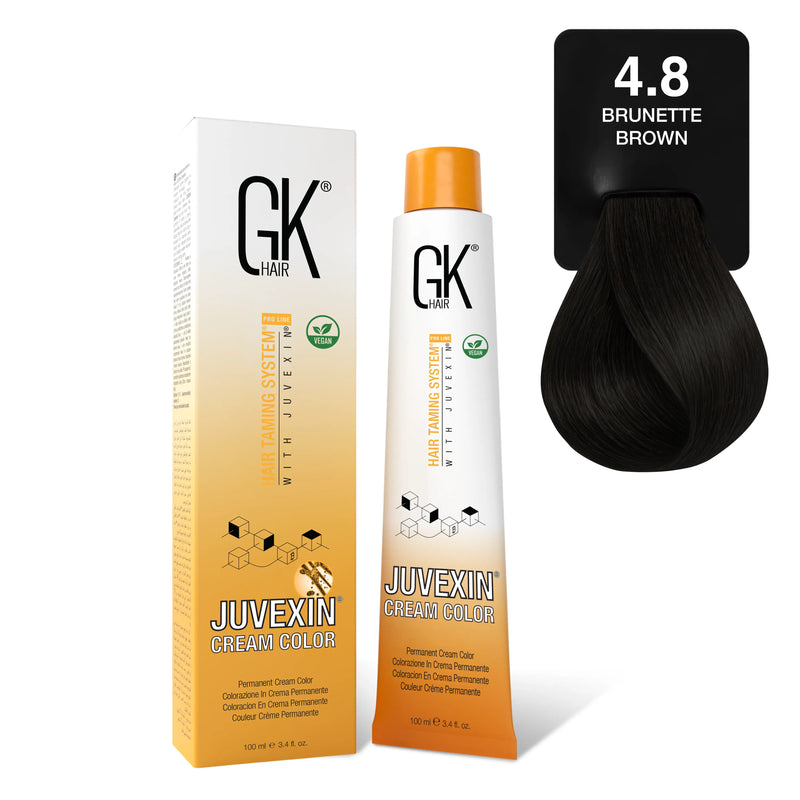
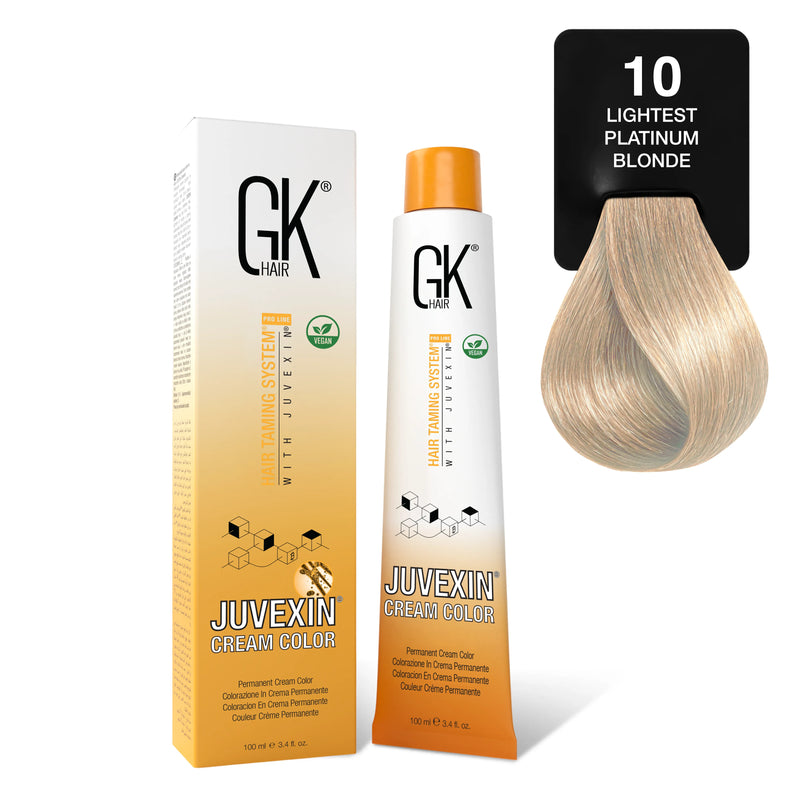
A brown is only as good as the formula holding it, which is where a salon-quality color earns its keep over a generic box. The GK Hair Juvexin Cream Color in Brown is built around Juvexin V2, a plant-based keratin protein, and ceramides, and the ceramides matter more than they sound: they help seal the cuticle as the color processes, which locks pigment in and lowers porosity, so the color fades more evenly and the hair stays conditioned instead of fried. It runs across a deep range of brunette shades and gives full grey coverage. Best for: rich, long-lasting brown with the depth and undertone control a flat box color cannot give you.
One honest note: this is a professional cream color used with a developer, not a grab-and-go drugstore kit. That is the point, it is customizable to your exact depth and undertone, which is what gets you a brown that suits you rather than an average. If you are not coloring with a stylist, do a patch test first, and for any big change from your current color, a colorist is the safe call. You can explore the full range in the Color and Masque collection.
The Bottom Line
Brown is not one color, it is a whole spectrum, and finding your shade is less about the name on the box and more about two things: the depth you want and the undertone that flatters your skin. Pin those down and everything from honey to espresso opens up to you. Match the undertone, hold the tone with color-safe care, and use a formula that fades evenly instead of brassy. Ready to find your brown? Start with the Color and Masque collection.




Leave a Comment