


You wake up with fabulous hair at 8 am only to have limp hair by noon. By tomorrow, your hairline is greasy, and your ends are dry and brittle. Having an oily scalp is frustrating, but it's mostly genetic and hormonal. The way you shampoo can help or hinder.
Quick answer: An oily scalp happens when the sebaceous glands make more sebum than your hair needs. It could be because of genetics, hormones, or shampooing habits. Wash as often as your roots need, apply a gentle balancing shampoo, and leave the conditioner only on your ends. Clarify once a week and avoid using oil on your roots.
What is an oily scalp?
An oily scalp produces more sebum than it needs. Sebum is oil made naturally by the skin to protect hair. Your roots feel oily and limp within 24-48 hours of washing your hair. You may even notice hair clumping at your part. Your scalp makes the oil, and your hair shows it.
Oily scalp vs. dry scalp
| Oily scalp | Dry scalp | |
|---|---|---|
| Feels | Slick, sometimes heavy | Tight and itchy |
| Flakes | Yellowish and greasy | Small, white, powdery |
| Looks greasy | Within a day or two | Rarely |
| What helps | Balancing Shampoo, weekly clarify | Gentle moisturizing wash |
Why is my scalp so oily?
For the most part, having an oily scalp is determined by your genetics and hormones. Your washing routine can either improve or exacerbate the situation. Healthline shares that your genes determine how much oil your glands will produce. Here are the seven most prevalent causes:
- Family history
- Your hormones from puberty, your menstrual cycle, pregnancy, or stress
- Using shampoo that's too heavy
- Applying conditioners and styling products to your roots
- Product build-up
- Hot weather, sweating, covering your hair up, or friction from your hands
- Dandruff
Why does my scalp get oily so fast?
Fine, straight hair allows sebum to glide easily from root to tip. That means greasiness shows within about 24 hours. Heat, sweat, hats, and hair-touching spread oil faster, so roots look greasy or clumpy at the part by day two.
Oily buildup on scalp vs. excess oil
Hair product buildup from stylers or dry shampoo will leave your hair feeling coated. It may also prevent shampoo from lathering up. Excess scalp sebum feels slick. While buildup is removed with weekly clarifying shampoo, excess oil is removed by washing regularly with a balancing shampoo.
How do you get rid of an oily scalp?
The most reliable way to treat an oily scalp is by establishing a hair care routine. You cannot rely on one shampoo. Wash your hair as often as your roots demand, use a balancing shampoo, keep conditioner on your ends, and do a weekly clarifying shampoo. The same steps cover how to manage an oily scalp, and how to get rid of oily hair, since the oil starts at the scalp.
1. Shampoo as frequently as your scalp dictates
The American Academy of Dermatology says if you have straight hair with an oily scalp, you might want to shampoo every day. Apply it only to your scalp, not your hair. Skipping wash days won't "train" your scalp to make less oil, so wash as often as your roots demand.
Since GK Hair professionals work in salons around the world (over 75 countries), we see this trend around the shampoo bowl all the time. When washing an oily scalp, the first shampoo has very little lather as it's hard at work lifting oil from your hair. The shampoo can build a full lather on the second application.
2. Use a balancing shampoo for oily scalp
Too rich and your roots will get oily hours after washing. Too strong, and your scalp will feel tight. Our Balancing Shampoo is in between. Its gentle formula, free of sulfates and parabens, balances normal to oily hair. It's made with Juvexin V2, our plant-based protein complex derived from quinoa and pea. The ideal shampoo for oily hair will remove excess oil without drying out your scalp.
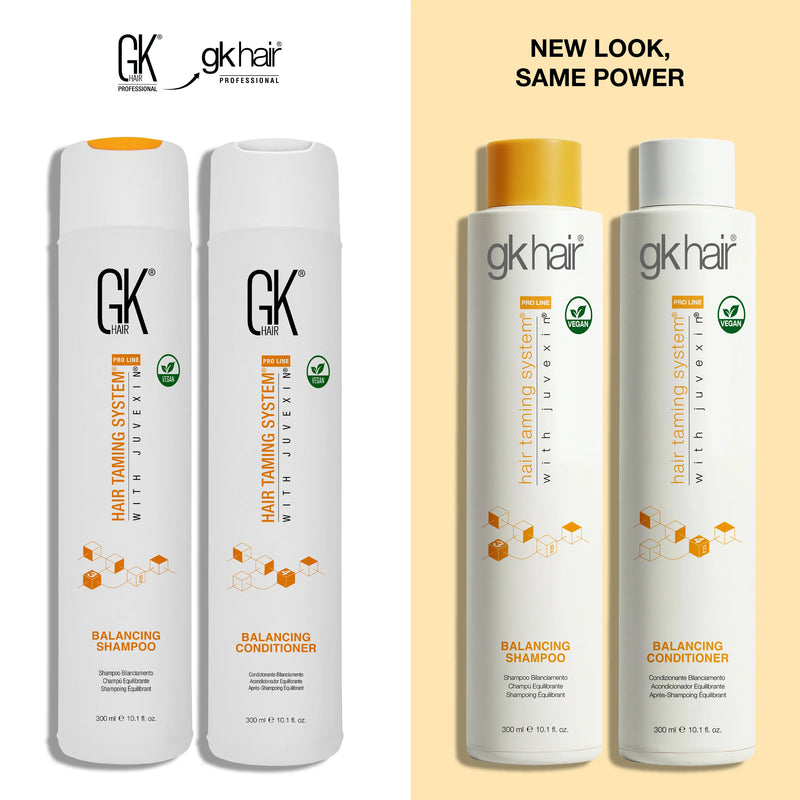
On our site, the Balancing Shampoo has more than 2,000 reviews, and most of them are five-star. Marcia, who has used the shampoo and conditioner for years, says, "It's great for oily hair, treated or not."

3. Keep conditioner on the ends
Conditioners weigh hair down at your roots. Only apply conditioner from your ears down. Our Balancing Conditioner is made for normal to oily hair, and is meant to be applied that way. Also, avoid putting serums, creams, and oils on your roots.
4. Clarify once a week
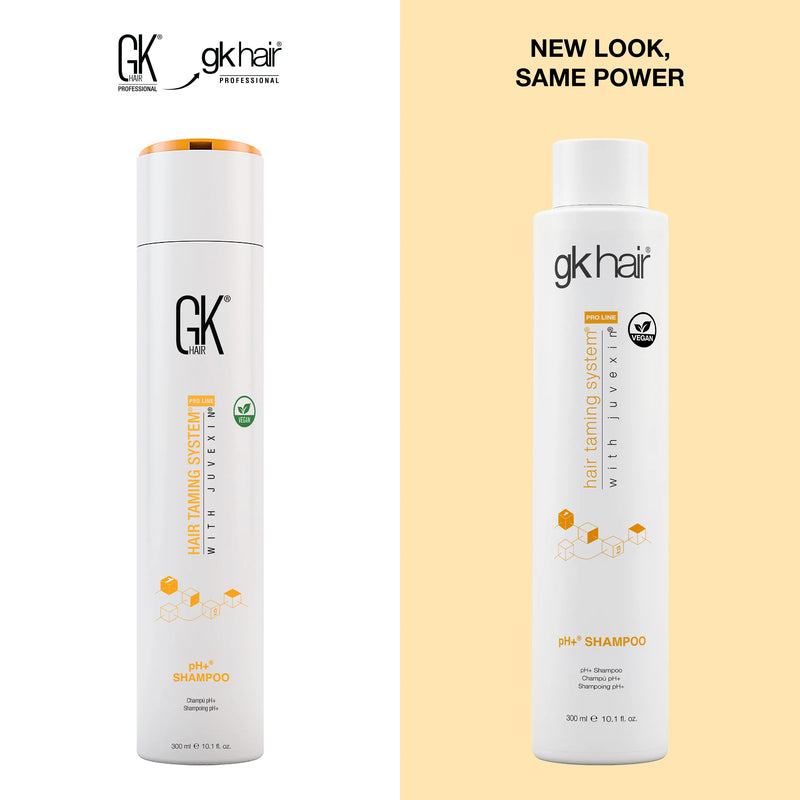
Our pH+ Shampoo removes product buildup, excess oil, and impurities. It is not recommended for daily use. Wet hair and massage into the scalp. Lather and allow to sit for 1-3 minutes. Rinse hair thoroughly. Replace one shampoo with a clarifying shampoo for oily hair.
Stylist's corner
Wash your hair twice. The first shampoo washes away the top layer of oil. The second shampoo will clean your scalp. Massage your scalp with fingertips, not your fingernails. The conditioner should always be applied downwards, starting at your ears.
Oily scalp treatment at home: what helps and what doesn't
Don't overdo any home oily scalp treatment. It should always remain gentle, as there is no cure at home.
| What helps | What doesn't |
|---|---|
| Fingertip massage while you shampoo | Baby powder, which leaves a white cast |
| Washing brushes and pillowcases weekly | Heavy oils on the scalp, which add oil |
| Dry shampoo as a stopgap, rinsed out within a day or two | Harsh scrubbing, which irritates the skin |
Dry shampoo mid-week can help keep oily hair feeling fresh, but use sparingly.
Oily scalp with 4 other symptoms
1. Itchy oily scalp
Itch from an oily scalp can be caused by a buildup or by a yeast called Malassezia. This can thrive on an oily scalp, so keep washing your hair and clarifying weekly. If you're itchy and red, see a doctor.
2. Oily scalp and dandruff
If you are experiencing oily scalp dandruff, your flakes will be more greasy and yellow. This usually points to dandruff or seborrheic dermatitis, not a dry scalp. On days you experience dandruff, use our Anti-Dandruff Shampoo. Use Balancing Shampoo on the days in between. If your flaking persists, find out how to tackle dandruff.

3. Oily scalp dry ends
Having an oily scalp with dry ends means you're using one product for two things. Shampoo the scalp, condition the lengths, and apply serum to the ends only.
4. Dry scalp oily hair
If you have a dry scalp with oily hair, your scalp is tight and flaking under oily hair. Most likely, you're using too strong a shampoo or putting too many products in your hair. Change your shampoo and avoid using heavy products in your hair.
Oily scalp by hair type
Curly hair with an oily scalp
Curly hair on an oily scalp needs moisture on the lengths and cleansing at the scalp. Shampoo the scalp and condition the mid-lengths to ends. Don't apply curl cream to the roots.
Fine or straight hair
Oil travels down fine, straight strands more quickly than other hair. You can wash your hair every day or every other day. Condition only the last few inches, and lift your roots with our VolumizeHer spray.
How to prevent an oily scalp
Here is how to prevent oily scalp flare-ups: a steady hair care routine for oily scalp plus a quick rinse or wash after sweaty workouts.
| When | Roots | Ends |
|---|---|---|
| Mon, Wed, Fri | Balancing Shampoo, twice if lather is thin | Balancing Conditioner from the ears down |
| Sunday | pH+ Shampoo instead of a regular wash | Conditioner on the lengths only |
| Tue, Thu, Sat | Balancing Shampoo if roots are greasy, dry shampoo if not | A few drops of serum |
Keep your oily scalp in check today
Shampoo as often as your roots need if you have oily hair. Use a balancing shampoo and condition your hair. Try to clarify once a week. You will always produce oil from your scalp, so try to maintain the balance. Begin using GK Hair's line of Balance & Oil Control today.
FAQs
Does oily scalp cause hair loss?
No, oil will not make you lose hair. If you are losing hair and have a very oily scalp, it can be due to genetics, aging, or damage to your hair follicles. Talk to your dermatologist if you notice hair falling out. You should also get your scalp checked if it stays itchy, red, or flaky.
Which vitamin deficiency causes an oily scalp?
No vitamin deficiency is an established cause of an oily scalp. Most likely, it's from genetics, hormones, or wash habits. If you feel you may be deficient in a vitamin, speak with your doctor and see if you should take one.
Why does my oily scalp smell?
If you have an oily smelly scalp, it's most likely due to oils, sweat, and product buildup. Oil doesn't really smell by itself, but there are bacteria and yeast on your scalp that feed on this and can produce an odor. Wash your hair more often.
When should you see a dermatologist for an oily scalp?
If home remedies do not work for you, you may want to visit your dermatologist. If your symptoms continue or get worse, or are something new, see your dermatologist, as Healthline says. Also see one if you have itching with redness, flakes that won't clear, or a sudden change in how oily your scalp gets.


Leave a comment