


Maybe a strand of grey or two popping out looks unpleasant, but when grey is intentional, worked into highlights or a well-done ombre, it exudes modern elegance. Grey ombre hair is a gradual transition from a deeper base color to grey, silver, charcoal, ash or smoky-grey ends, creating a seamless blend with either a bold or subtle contrast. What makes this color choice so versatile is the different options it gives you, as you can choose to go all in on one shade or transition through two or three shades, though your hair length influences how many shades you can transition through. However, achieving this polished look can be a little tricky, and grey fades fast.
What is Grey Ombre Hair?
Grey ombre hair is a gradual color transition that blends a base shade into grey, silver, charcoal, ash or smoky-grey ends. A classic grey ombre creates a higher contrast because the base shade is darker than the color used on the midlengths and ends, while a lighter base grey ombre gives a soft, icy, subtle finish because the base shade is similar to the end colors.
| Dark-base grey ombre | Light-base grey ombre | |
|---|---|---|
| Starting color | Black, dark brunette | Blonde, platinum, light brown |
| Typical transition | Dark base → charcoal/ash → grey/silver | Blonde/light brown → ash/silver → grey |
| Contrast | High: grey stands out against the dark base | Low to medium: colors are closer in lightness |
| Overall effect | Dramatic, bold, defined | Soft, icy, subtle |
| Grey appearance | Grey is obvious because it contrasts with the dark hair | Grey can read more like silver, ash or smoky blonde because it is surrounded by lighter tones |
| Blending difficulty | You need a controlled transition so the dark base doesn't create a harsh line | The colors are naturally closer, so the transition can look more seamless |
16 Grey Ombre Hair Ideas to Show Your Colorist
#1: Black and grey ombre hair

This is the classic grey ombre, with a black base transitioning to grey ends.
Base-to-ends placement: Black or near black roots gradually blend through charcoal into medium or soft grey ends.
Best for: Naturally black/very dark hair and anyone who wants a high contrast grey look without taking the grey all the way to bright silver.
How to care: Keep your roots clean and refreshed; grey ends may need periodic retoning to prevent unwanted warmth.
#2: Platinum silver highlights on black hair

Platinum silver highlights on black hair create an ombre effect when silver pieces are more concentrated towards the ends of black hair.
Base-to-ends placement: Fine platinum-silver highlights that grow denser toward the ends.
Best for: Dark-haired clients wanting a high contrast silver effect.
How to care: Platinum sections require careful lightening and ongoing conditioning. Silver toning may be needed to keep the highlights cool.
#3: Dark roots with silver ombre

Base-to-ends placement: Natural black, dark brown or charcoal roots transition through ash or grey into silver ends.
Best for: Someone who wants a dramatic silver finish while maintaining the natural dark root area. Brunettes who want regrowth to look deliberate.
#4: Charcoal (dark grey) ombre

Base-to-ends placement: Dark roots melt into charcoal and deep grey ends, rather than pale silver.
Best for: Dark hair wanting grey with less lift or a subtle, smoky finish with less contrast.
How to care: Less demanding than silver ends, but still needs retoning and conditioning.
#5: Brown to silver ombre

Base-to-ends placement: Brown roots transition through beige/ash tones into bright silver ends.
Best for: Someone who wants a softer starting point than black but still wants a noticeable silver finish.
#6: Smoky grey ombre

Base-to-ends placement: Dark roots melt into smoky charcoal, muted grey and softer grey ends.
Best for: Anyone who wants a soft, muted, slightly mysterious grey rather than an icy metallic look.
How to care: Keep the smoky tone balanced with occasional toning; excessive pigment can make very light ends look dull.
#7: Ash grey ombre

Base-to-ends placement: Dark or medium roots transition through cool ash brown/ash grey into cool grey ends.
Best for: A cool, understated grey look without the brightness of silver.
#8: Icy grey ombre

Base-to-ends placement: Dark roots transition through pale ash grey into very light, icy silver grey ends.
Best for: A high impact, cool toned look and hair that can undergo high levels of lift to support a very pale finish.
How to care: High maintenance; the very light ends need regular toning, gentle cleansing and conditioning.
#9: Reverse grey ombre

Base-to-ends placement: Reverse grey ombre hair flips the traditional dark-to-light gradient by featuring lighter, silver, or natural grey shades at the roots and transitioning into deeper, darker tones like charcoal or black at the ends.
Best for: Someone who wants an unconventional grey ombre look and stronger contrast around the roots. People growing out natural grey.
How to care: A lightened grey root area needs frequent toning, as regrowth can alter the intended gradient. Naturally grey roots need no retoning, just the colored ends.
#10: Natural grey ombre

Base-to-ends placement: Existing natural grey or silver blended into darker grey, charcoal or a deeper color.
Best for: People growing out natural grey who want the transition to look intentional and dimensional.
How to care: Maintenance depends on how much natural grey is present. The ends need conditioning and occasional retoning.
#11: Short grey ombre

Base-to-ends placement: The darker base transitions into grey over a short length, so the gradient is compressed from roots through ends.
Best for: Bobs, lobs and shorter cuts where there isn't enough length for a long, gradual transition.
How to care: The shorter the hair, the less room there is to hide an uneven transition, so color placement must be done carefully.
#12: Medium length silver ombre

Base-to-ends placement: Darker roots gradually transition through grey or ash into silver midlengths and ends across shoulder to medium-length hair.
Best for: Someone who wants enough length to show a visible gradient without committing to very long hair.
#13: Curly silver ombre

Base-to-ends placement: Darker roots transition through grey into silver ends, with the gradient following the curl pattern rather than sitting as a straight horizontal line.
Best for: Curly hair when you want the silver concentrated towards the ends to emphasize curl definition and dimension.
How to care: Lightened curls can become drier and more porous, so conditioning, gentle handling and heat protection are important.
#14: Lilac grey ombre

Base-to-ends placement: Grey or silver transitions into soft lilac/lavender for a pastel silver purple ombre, or lilac is blended through the grey toward the ends.
Best for: People who want grey with a subtle pastel fashion color effect.
How to care: Lilac can fade fast, so color refreshes are needed to keep the pastel visible.
#15: Pink and grey ombre

Base-to-ends placement: Grey/silver transitions into pink towards midlengths or ends, creating a cool grey to pink gradient.
Best for: Someone who wants a softer, more playful alternative to traditional grey and silver.
How to care: Pink can fade faster than the underlying grey, so it needs more frequent refreshing.
#16: Blue silver ombre

Base-to-ends placement: A dark base transitions into silver with blue or blue grey undertones, creating a cooler, slightly metallic finish.
Best for: Someone who wants a cool, icy grey-silver look with a noticeable blue cast.
How to care: Blue pigments can shift as they fade, so controlled toning and color-safe washing help maintain the blue-silver balance.
What is the Difference Between Ombre and Balayage?
Ombre describes color transition; it's about creating a visible horizontal gradient from one color to another, which usually is from darker roots to lighter ends. Balayage, which means "to sweep" or "to paint", is a freehand highlighting technique where color is painted onto selected sections of hair, rather than evenly applied on every strand. Balayage is done without foils and results in softer, well-placed, dimensional highlights.
A stylist can use a balayage technique to create a grey ombre effect, but not every balayage is an ombre, and not every ombre has to be created with balayage.
Love grey ombre but don't think your hair can handle the lift? Here are 15 blonde balayage shades to consider for a softer alternative.
How to Get Grey Ombre Hair
Silver and icy grey generally need a very pale blonde base so the cool pigments can show without competing with strong underlying warmth. Charcoal and smoky greys can be toned on a slightly darker blonde base.
Dark or box-dyed hair lifts through orange and yellow first, and needs more than one salon lightening session to reach that pale base. The lifted ends are then toned with an ash or silver shade.
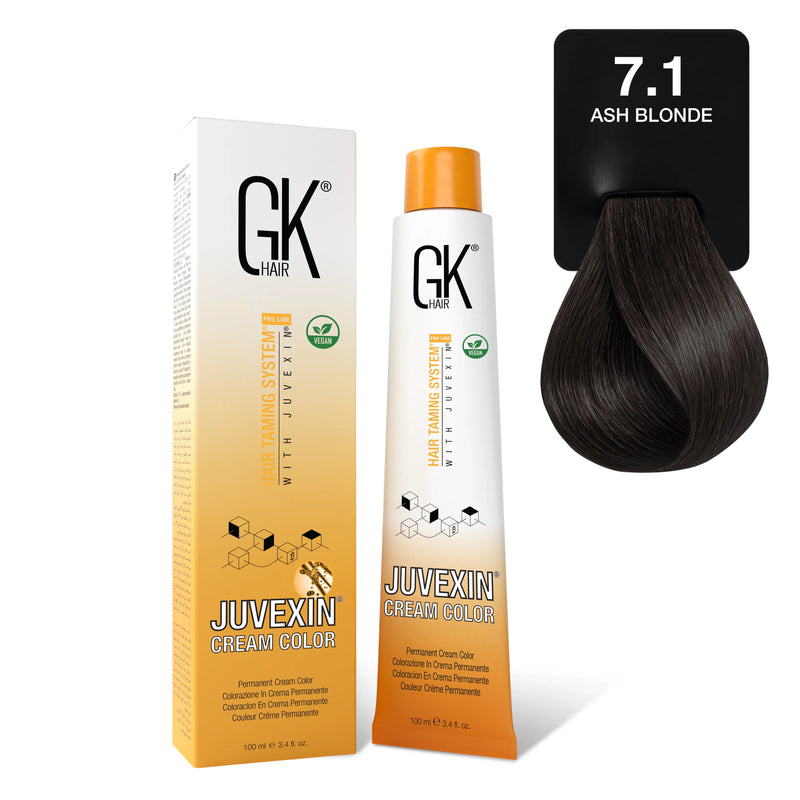
If your hair is very dark or already colored, book a colorist rather than lightening at home. GK Hair, a professional color and care brand sold in 75+ countries, makes its Juvexin Cream Color with Juvexin V2, a quinoa and pea protein blend, and ceramides that help reduce porosity while the grey tone deposits.
Step 1: Assess your hair condition
Do a strand test to know if it can withstand the dye process, especially if you'd need different sessions to lift your base color.
Step 2: Section your hair
Divide hair into 4-8 sections, depending on how dense it is. Sectioning speeds up the lightening and coloring process.
Step 3: Lighten the ombre sections that will color grey
Unless your hair is already pale blonde or platinum, you'll need a pre-lightening session to create the canvas for grey.
The American Academy of Dermatology notes that lifting more than three shades takes higher volumes of peroxide and causes more damage, which is why dark hair is lightened in stages.
Step 4: Create the grey
Once your ends reach the level your chosen grey needs, your colorist mixes the dye formula for that shade.
For example, for an ash grey ombre (#7), your colorist mixes 1 part Juvexin Cream Color 9.1 Very Light Ash Blonde with 1.5 parts 10 Volume Cream Developer and applies it to the lightened sections.
Step 5: Blend the transition
This is the most important step that makes it ombre rather than a harsh color block. Your colorist softens the line where grey meets the base so it reads as a gradient, not a block (see Stylist's Corner).
Step 6: Condition and style
A finished grey ombre needs proper conditioning to moisturize and strengthen strands that've gone through different lightening sessions. Your colorist applies a leave-in conditioner on your hair, which helps seal the cuticle after color, then styles it to your taste.
Stylist's Corner
To create a clean grey ombre, you must avoid applying your lightener in one straight line across your hair. This is the difference between a harsh color block and a well blended transition between the grey and the base. Backcombing pushes some hair toward the roots, so dye doesn't begin at the same level on every strand. Feathering uses lighter brush strokes as the color moves upward, creating a gradual change rather than a visible line. Vertical painting works in a similar way by placing lightener in upward strokes through different sections, so the grey starts at varying heights.
The salon formulas behind these looks
Each dye formula tones ends that are already pale, either lifted to pale yellow or naturally grey. Mix 1 part of any shade of Juvexin Cream Color with 1.5 parts Cream Developer at 8-10 volume (deposit only & demi-permanent) and process for up to 30 minutes.

Silver and icy grey ombres (#2, #3, #8): 10.1 Platinum Ash Blonde
Ash grey and brown to silver (#5, #7): 9.1 Very Light Ash Blonde
Black and grey, smoky grey (#1, #6): 8.1 Light Ash Blonde
Charcoal grey (#4), reverse and natural grey ends (#9, #10): 6.11 Intense Dark Ash Blonde
Lilac, pink and blue (#14 to #16): tone with 10.1 first, then deposit the fashion shade on the ends; refresh lilac with GK Hair Lavender Bombshell Masque

Which Grey Ombre Suits Your Skin Tone and Base Color?
Cool greys complement cool undertones, warm greys go best with warm undertones, naturally dark hair goes well with the classic ombre while light or greying hair suits reverse ombre.
Your base color determines how the ombre transitions; it is the starting point of the gradient, while your skin undertone helps guide the grey, silver, or fashion tone you choose for your ends to harmonize with your complexion.
| Skin undertone/Base color | Grey ombre options to consider |
|---|---|
| Cool undertones | Black and grey, ash grey, icy grey, blue silver, lilac grey ombres |
| Warm undertones | Smoky grey, charcoal grey, brown to silver, natural grey ombres |
| Neutral undertones | Any could work (lucky!) |
| Natural dark hair | Black and grey, platinum silver highlights, dark roots with silver ombre, charcoal grey, smoky grey, brown to silver ombres |
| Light or naturally greying hair | Reverse grey ombre, natural grey, icy grey, ash grey, blue silver, lilac grey ombres |
This table isn't a rigid formula. A cool undertone could wear warm greys, and vice versa, to give a bold, striking and more contrasting look.
Grey Ombre Maintenance: How to Keep It from Turning Yellow?
Grey ombre hair turns yellow as the grey dye or toner fades and lightened hair exposes the underlying warm pigments (pale yellow, if hair was properly lightened). To prevent this from happening, a violet pigment shampoo once or twice a week, a deep conditioner for lightened ends and a toner refresh when you notice grey fading are needed.
1. Use a violet shampoo when warmth appears
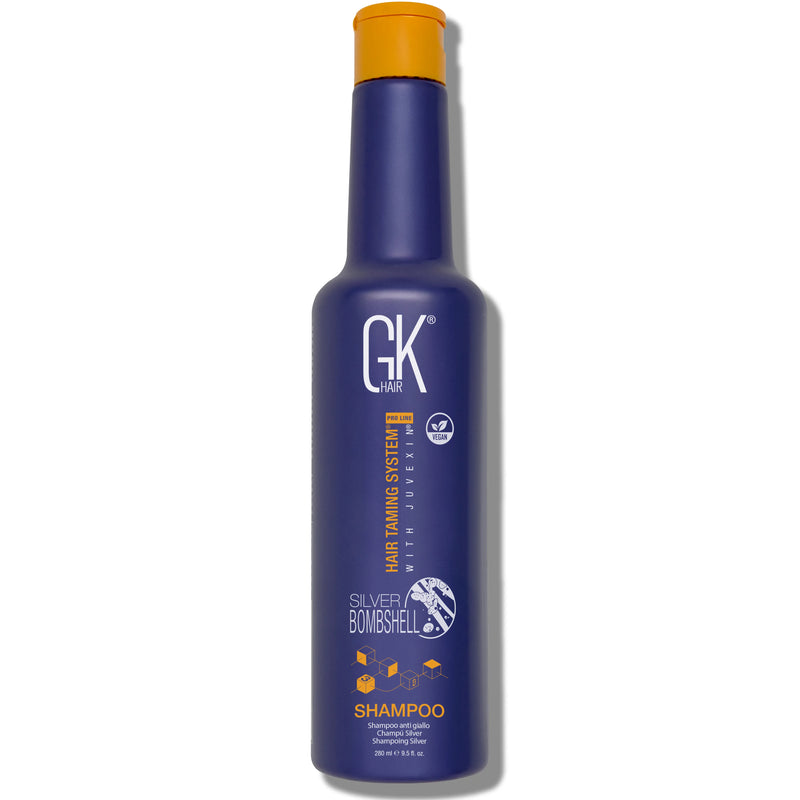
Purple or violet pigments counteract yellow because violet sits opposite yellow on the color wheel. GK Hair Silver Bombshell Shampoo is a violet-pigment purple shampoo that neutralizes unwanted yellow tones in blonde, silver and grey hair. Use it 1-2 times a week or when brassiness starts showing to avoid over toning.
Note that purple shampoo won't work on hair that wasn't lifted enough, that is, left too dark or orange during the lightening process.
2. Keep your lightened ends conditioned
Lightening leaves hair more porous than untreated hair, according to a review in the International Journal of Trichology, so lightened sections need consistent conditioning to stay smooth. Pair GK Hair's Color Protection Moisturizing Conditioner with the Silver Bombshell Shampoo on wash days, and use the Lock Me Color Masque deeper conditioning treatment every other week, best for strengthening hair weakened by bleaching, to maintain softness and protect the appearance of your grey ombre.

3. Protect your grey ombre hair from heat, sun and mineral buildup
The American Academy of Dermatology notes the sun leaves dyed or bleached hair especially dry, faded and brittle, so use ThermalStyleHer before heat styling and limit sun exposure. If you live in an area with hard water, consider a shower filter to protect hair from mineral buildup.

Frequently Asked Questions (FAQs)
Is ombre good for grey hair?
Yes, especially reverse and natural grey ombres which soften regrowth. These ombres offer a low-maintenance way to blend natural roots seamlessly or transition to silver. It adds modern depth, though achieving bright silver ends requires bleaching and regular toning to prevent brassiness.
What is the new trend for grey hair?
Blending instead of covering grey. Colorists use fine highlights, lowlights or a reverse ombre to soften the line between natural grey and colored hair, so regrowth looks intentional.
Is ombre still in style in 2026?
Yes. Ombre hasn't stopped trending in 2026; what's changed is how it's being worn. Instead of the high contrast ombre styles of the early 2010s, the modern day ombre features a soft color melting, low contrast look, which blurs the lines between shades so the transition looks seamless and liquid rather than abrupt.
Can you do grey ombre hair at home?
Yes, but only on hair that is already light or pre-lightened. Dark or colored hair needs a professional to avoid excess damage or brassiness. The difficult part of grey ombre isn't putting grey color on hair. It's getting the base color light enough for the grey/silver to look clean.


Leave a comment