


Knowing what truly repairs hair is the first step to choosing the right hair treatment for damaged hair. Damaged hair can feel like a losing battle, but it responds well to proper care. The real repair happens when you combine two essentials: structural protein restoration and deep lipid moisture restoration. Together, they rebuild strength from the inside out and restore shine on the surface without relying on harsh, stripping chemicals.
What Damaged Hair Has Actually Lost
Damaged hair has lost two things at once: protein from the cortex and lipids from the cuticle. The cortex holds the keratin chains that give hair its strength and elasticity. The cuticle holds the lipid layer that keeps water inside the fiber. Lose one and hair weakens. Lose both and it dries, dulls, and breaks.
This is why single-action products underdeliver. An oil alone smooths the surface but leaves a weakened cortex underneath. A protein treatment alone rebuilds structure but can leave the fiber stiff without lipids to soften it. Effective repair works on both at once, targeting:
- Protein loss from the cortex
- Lipid depletion from the cuticle layer
- Moisture imbalance within the fiber
- Surface porosity caused by damage
Treatments that deliver protein and lipids in a single step address all four problems at once, which is why one well-formulated deep treatment usually outperforms three separate single-purpose products.
What Causes Hair Damage?
Hair damage comes from three main sources: chemical processing, heat styling, and everyday mechanical stress. Each breaks down the hair's protein and lipid structure differently, which is why identifying your specific damage type is the fastest way to choose an effective treatment.
Chemical Damage
Chemical damage occurs when treatments such as coloring, bleaching, perming, or relaxing alter the natural protein bonds in the hair. These services break disulfide bonds, the sulfur-based crosslinks that give hair its long-term strength, leaving microscopic cracks in the structure of the hair. These gaps cause protein leakage and moisture loss, making targeted protein restoration essential.
These processes lift the cuticle, reach the cortex, and weaken the hair's structure unless the lost protein is restored. Look out for common signs like:
- Extreme dryness
- Increased porosity
- Elastic weakness
- Breakage during brushing
- Rough texture
GK Hair formulates every damaged hair treatment to rebuild internal strength rather than coat the surface. Our treatments address chemical damage through Juvexin V2, a non-hydrolyzed plant-based protein derived from quinoa and pea. Delivered to the hair in its natural state, its smaller molecules rebuild the cortex from within while the larger molecules wrap the cuticle in a protective layer. A damaged hair treatment that restores both protein and moisture helps chemically processed hair regain elasticity and shine.
Our Deep Conditioner helps restore lost lipids and fill structural weak points. Best for chemically processed, colored, or heat-stressed hair that needs protein and moisture in one step. Fine hair benefits too. Just alternate it with a lighter moisturizing conditioner so protein does not build up.
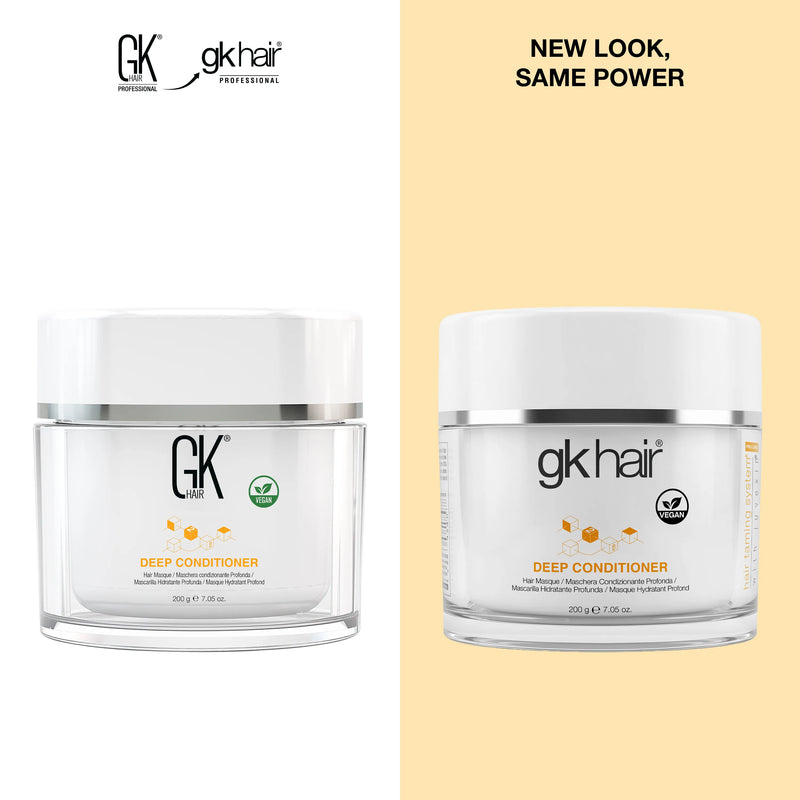
To use the Deep Conditioner on chemically stressed hair, first wash with Moisturizing Shampoo. Then apply the Deep Conditioner and leave it on for 20 minutes. Let hair cool at room temperature for 10 minutes, then rinse well.

Stylist's Corner: Apply Deep Conditioner to towel-dried hair rather than dripping-wet strands. Excess water dilutes the formula and reduces how well the protein-moisture blend absorbs into the cortex, so towel-drying first gets a more even, longer-lasting result.
Thermal Damage
The heat from flat irons, curling wands, and blow dryers denatures hair proteins, causing thermal damage. Wet or damp hair is especially vulnerable: research shows wet keratin denatures at a noticeably lower temperature than dry keratin, which is why stylists blow-dry hair fully before flat-ironing or curling. Here are signs of heat damage:
- Loss of curl pattern
- Stiff texture
- Split ends
- Increased tangling
- Dull appearance
Heat-damaged hair needs protein reinforcement and moisture infusion, but it also needs a barrier before the iron, not only repair afterward. Our ThermalStyleHer Cream is a leave-in heat protectant that shields strands during blow-drying and ironing while Juvexin V2 works on the fiber underneath. Best for hair of any texture that is heat-styled regularly. Pair it with the Deep Conditioner: the cream prevents new thermal damage, and the treatment repairs what is already there. A regular regimen that reinforces weakened strands improves manageability and reduces breakage from heat styling. Our guide on how to fix heat damaged hair covers the full recovery routine.

Our One Control Titanium Flat Iron is worth pairing with a heat-protectant routine. It suits all hair types from fine to coarse. Its extra-wide titanium plates distribute heat evenly across the hair shaft and smooth long, thick hair in fewer passes, so strands see less concentrated, repeated heat exposure than with irons that heat unevenly.

Mechanical Damage
Mechanical damage, often overlooked but very common, is the everyday stress that breaks hair. It results from daily handling such as aggressive brushing, tight hairstyles, towel friction, and even cotton pillowcases. You might start noticing split ends, ragged ends, mid-shaft fractures, flyaways, and thin ends.
The cuticle layer is slowly worn out by mechanical stress. Once this protective layer wears thin, the cortex underneath is exposed. A good hair treatment for damaged hair must therefore include cuticle-smoothing ingredients that reduce friction and improve flexibility. Our guide to choosing hair care products for damaged hair explains what to look for on the label. Prevention measures entail:
- Using wide-tooth combs
- Replacing towels with microfiber
- Using a silk pillowcase
- Using strengthening leave-in treatments
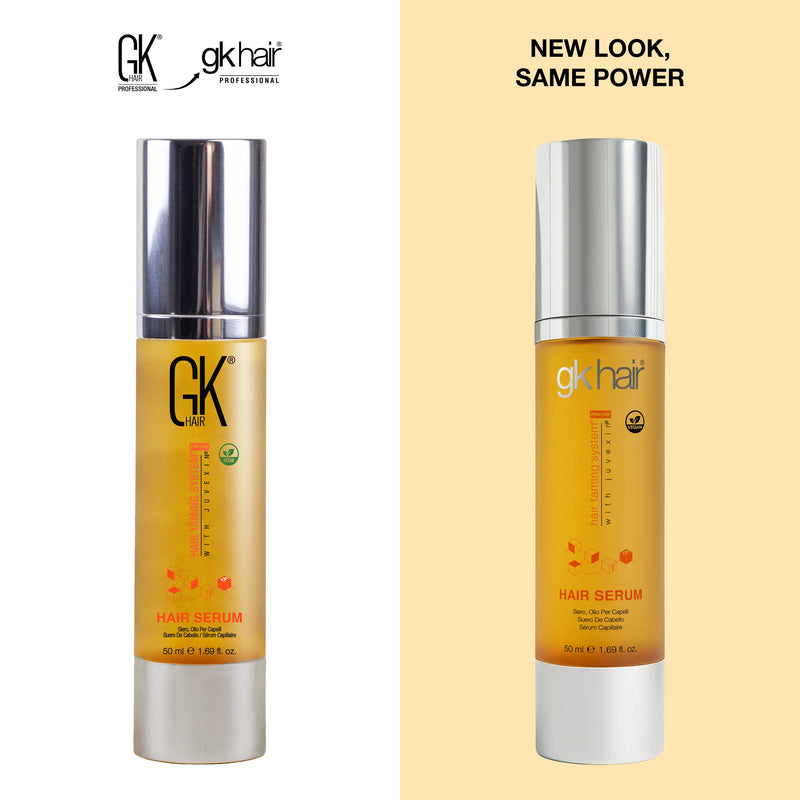
Between full treatments, our Argan Oil Serum smooths the cuticle and cuts down on friction-driven flyaways, while our Leave-In Conditioner Hair Cream detangles and adds weightless conditioning between washes, so brushing meets less resistance. Both are easy, no-rinse additions to a damaged hair routine.
How Damaged Is Your Hair?
You can gauge how damaged your hair is with a simple wet strand test, and where you land on the scale changes what will actually help. Stretch a wet strand gently between two fingers. Healthy hair stretches around a third of its length and springs back. Lightly damaged hair stretches further and returns slowly. Severely damaged hair stretches, stays stretched, or snaps.
- Lightly damaged: hair feels rough at the ends, tangles more than usual, and still holds a style. Moisture-led care with an occasional protein treatment is enough.
- Moderately damaged: hair shows visible split ends, dullness, and breakage when brushing. Alternate protein and moisture treatments and cut back on heat styling.
- Severely damaged: hair feels gummy when wet, snaps under light tension, and shows mid-shaft fractures. Stop all chemical services and heat styling, book a trim to remove the compromised length, and rebuild with protein-moisture treatments before anything else. No treatment restores hair that has lost structural integrity. Removing that length and protecting new growth is the faster route back.
Best Hair Mask for Dry Hair
The best hair mask for dry hair is one that replaces both water and fatty acids in a single application, rather than coating the surface. Look for a protein and oil blend applied to towel-dried mid-lengths and ends, left on for 20 minutes, then rinsed. Dry hair loses moisture fastest at the ends, so concentrate the product there.
Dryness and damage are not the same problem, though they usually travel together. Dry hair has lost the lipid layer that holds water inside the fiber. Damaged hair has lost the protein structure that the lipid layer sits on. A mask that only adds oil leaves the underlying structure weak, and a mask that only adds protein can leave dry hair feeling stiff.
Our Deep Conditioner does both: it pairs Juvexin V2 with jojoba seed oil, so the same jar doubles as a mask for dry hair and a repair treatment for damaged hair. Used once or twice a month, it replenishes the fatty acids and moisture that dryness strips away. Best for dry, dull, or coarse hair that needs moisture without heavy buildup.
How Does Protein Treatment Repair Damaged Hair?
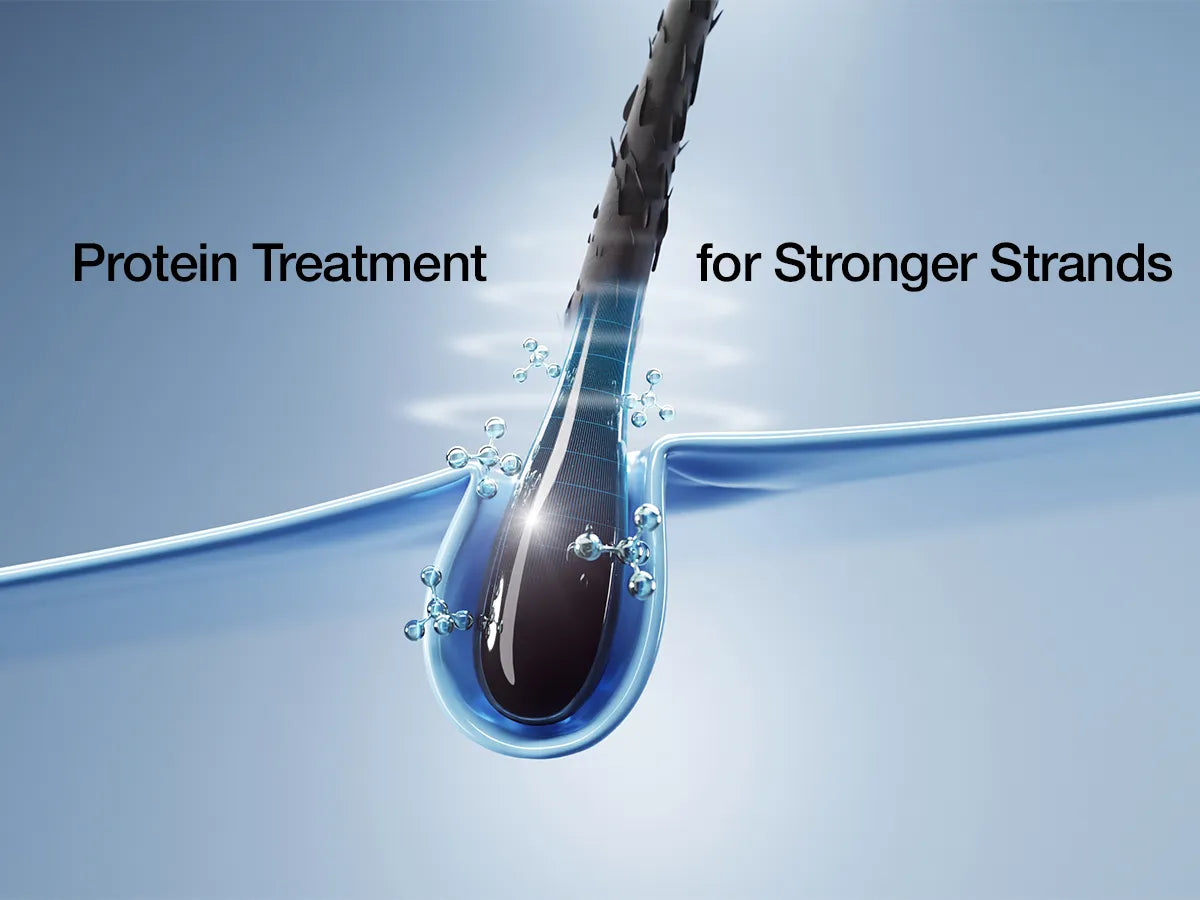
Protein treatment repairs damaged hair by filling the microscopic gaps in the cuticle and cortex, using molecules sized to penetrate and seal the fiber from the inside out. Juvexin V2 is not a generic protein additive but a purpose-built plant protein blend designed to repair hair through physical and chemical interaction with damaged fibers.
GK Hair's published user results for the Deep Conditioner show that 99% noticed more nourished hair and 98% reported healthier hair. The treatment also carries more than 2,100 customer reviews, and GK Hair sells across more than 75 countries.
Damaged hair shafts contain microscopic holes where protein structures have broken down. These holes increase porosity, allowing moisture to escape and making hair weak. Juvexin V2 works through three physical mechanisms:
- Molecular-weight targeting: Juvexin V2 contains both large and small protein molecules. The smaller molecules penetrate the cortex to rebuild strength from within, while the larger molecules wrap around the cuticle to form a protective, moisture-sealing layer.
- Porosity patching: Juvexin V2 fills structural gaps where it attaches, reducing porosity and strengthening the fiber.
- Protective encapsulation: the protein forms a flexible shield that defends against environmental stress.
These processes turn weak, porous strands into stronger fibers, making Juvexin V2 technology a powerful hair treatment solution. It does not make hair stiff. Instead, Juvexin V2 maintains flexibility because it is a protein blend optimized for the hair rather than a rigid surface coating.
Can Damaged Hair Be Fully Repaired?
Damaged hair cannot be fully repaired. A hair treatment for damaged hair can dramatically improve strength and smoothness, but no product can re-fuse a fiber that has physically split. Treatments can temporarily flatten the appearance of split ends and prevent further splitting, but they cannot reverse the separation.
Split ends can only be removed by trimming. However, a quality treatment can:
- Reduce the formation of new splits
- Improve smoothness
- Strengthen weak areas
- Prevent propagation of splits upward
Our treatments strengthen fragile ends and reduce friction damage, which slows how fast new splits form, but they do not rejoin ends that have already split. The most effective approach to long-term health is regular trims every 6 to 8 weeks alongside a routine hair treatment. Damaged ends split upward if they are left in place, so trimming on that cycle removes the compromised length before it travels further up the shaft.
Treatment frequency depends on how porous your hair is. Fine or lightly damaged hair does well with a protein-moisture treatment once a month, while chemically processed or coily hair, which loses moisture fastest, benefits from twice a month. Over-treating fine hair with protein-heavy formulas can leave it stiff, so alternate the Deep Conditioner with a lighter moisturizing conditioner in between.
Which Hair Treatment for Damaged Hair Is Right for You?
The right hair treatment for damaged hair depends on what caused the damage and how far it has gone. Chemically processed hair needs protein first, heat-damaged hair needs protein plus a thermal barrier, and mechanically stressed hair needs surface smoothing and friction control. Match the treatment to the cause rather than layering everything at once.
| Damage type | What your hair needs | Start here | Best for |
|---|---|---|---|
| Chemical (color, bleach, perm, relaxer) | Protein rebuilding plus lipid replacement | Deep Conditioner | Porous, overstretched, breakage-prone strands |
| Thermal (irons, wands, dryers) | Protein reinforcement plus a heat barrier | ThermalStyleHer Cream on top of a Deep Conditioner routine | Frequently heat-styled hair of any texture |
| Mechanical (brushing, towels, tight styles) | Cuticle smoothing and friction control | Argan Oil Serum with Leave-In Conditioner Hair Cream | Any hair type with flyaways and ragged ends |
| Dryness with no chemical history | Moisture and fatty acid replacement | Deep Conditioner used as a mask | Dry, dull, coarse, or coily hair |
| Frizz plus damage, when you want a smoothing reset | Keratin smoothing treatment at home | The Best Coco Keratin Hair Kit | Every hair type, including curly and color-treated hair, seeking months of smoothness |
A Simple Damaged Hair Routine
A damaged hair routine works best when each product does one job and the heavy treatments are spaced out. Cleanse gently, treat on a schedule, and protect daily, in that order.
- Cleanse with the Moisturizing Shampoo.
- Apply the Deep Conditioner to towel-dried hair, leave it on for 20 minutes, let hair cool for 10 minutes, and rinse, once or twice a month.
- Seal the ends daily with the Argan Oil Serum.
- Protect hair between washes with the Leave-In Conditioner Hair Cream, and before every heat-styling session with the ThermalStyleHer Cream.
One common mistake is over-treating: layering several rich products at once in the hope of faster repair. Too much product on damaged hair triggers buildup and leaves it limp and greasy, so keep each step to a single product and let the treatment do the heavy lifting.
Final Thoughts
Damaged hair rarely improves overnight, but a consistent routine of protein-moisture treatments matched to your damage type, regular trims, and daily friction protection compounds week over week. For the most efficient hair treatment for damaged hair, start with the Deep Conditioner and build outward from there according to your damage type. Get the best options from our Hair Treatments collection today!
Frequently Asked Questions
Is it possible for damaged hair to be fully repaired?
No, not completely. Split ends cannot be repaired. Once a strand has split, a trim is the only way to stop the split traveling further up the shaft. The appearance, texture, and strength of severely damaged hair can be improved, but there is no guarantee it will return to its original, healthy state.
What is the best hair treatment for damaged hair?
The best hair treatment for damaged hair restores protein and moisture in the same step. The GK Hair Deep Conditioner does both, pairing Juvexin V2 with jojoba seed oil, used once or twice a month. Add ThermalStyleHer Cream if you heat-style, Argan Oil Serum for daily friction control, and The Best Coco Keratin Hair Kit if frizz needs a smoothing reset.
How do I fix extremely damaged hair?
To fix extremely damaged hair, start by stopping the cause. Pause all heat styling and chemical services, book a trim to remove the length that snaps or feels gummy, then rebuild with a protein-moisture treatment twice a month. Extremely damaged hair improves in feel and appearance, but structurally compromised length has to come off.
Which hair treatment is best for dry, damaged hair?
Dry, damaged hair needs protein and lipids together. The GK Hair Deep Conditioner pairs Juvexin V2 with jojoba seed oil, so it rebuilds the cortex and replaces the fatty acids that dryness strips out. Apply to towel-dried mid-lengths and ends, leave for 20 minutes, let hair cool for 10 minutes, then rinse.




Leave a Comment