


Flakes on a dark shirt. That tight, itchy feeling halfway through the day that makes you want to scratch in the middle of a meeting. If that is you, you are not alone, and you are not stuck with it.
Dandruff is the flaking and itching that happens when your scalp sheds dead skin faster than it should. Some people deal with a light dusting. Some people deal with a snowstorm by 3 p.m. Both count. Below, we break down what is actually going on up there and what to do about it, step by step.
Quick answer: The fastest way to get rid of dandruff is to wash with an anti-dandruff shampoo containing zinc pyrithione or ketoconazole two to three times a week, leaving it on the scalp for three to five minutes before rinsing. Pair it with a wash routine matched to your hair type. Most mild cases clear within two to four weeks.
What Is Dandruff, Really?
Dandruff is a common scalp condition where dead skin cells build up and flake off, usually with itching and sometimes redness. The flakes are bigger and oilier than plain dry skin. It is not dirt, it is not poor hygiene, and washing more is not automatically the answer.
The usual trigger is a yeast called Malassezia that lives on everyone's scalp. On some people it overgrows, irritates the skin, and speeds up how fast the top layer sheds. Scalp oil feeds that cycle, which is why oily scalps often flake worse than dry ones. Those clumped-up dead cells are what you see on your collar.
What Causes Dandruff?
A few things, usually working together. An oily scalp that feeds the scalp yeast is the big one. Stress, cold dry weather, infrequent washing, product buildup, and sensitivity to certain hair products all push it along too.
So when you ask what causes dandruff in your specific case, look at your scalp first. Greasy and flaky points one direction. Tight, dry, and flaky points another. Same symptom, different root, and the fix changes depending on which you have. Here is a quick way to tell them apart.
Dandruff vs Dry Scalp: Not the Same Thing
People lump these together constantly. They are different problems.
Why it matters: a moisturizing dry scalp treatment can calm a dry, flaky scalp in a few washes. Real dandruff needs more than moisture. It needs an active ingredient that goes after the fungus. Treat the wrong one and you spin your wheels for weeks. Figure out which you have before you buy anything.
Why Do I Have So Much Dandruff All of a Sudden?
Usually because something tipped your scalp's oil-and-yeast balance out of whack: a season change, more stress, a new product, or going too long between washes. A sudden flare almost always traces back to one of those, not to anything you did wrong.
Cold months are the sneaky one. Indoor heat dries the air, your scalp overcorrects with oil, and you flake more in January than you ever did in July. If you are asking why do I have so much dandruff right now, walk back the last few weeks. New shampoo? Skipping wash day? Stress through the roof? Start there.
How to Get Rid of Dandruff: Lifestyle Fixes
This is the part that does the heavy lifting. Four moves, split between what you do daily and what you reach for in the shower.
Use a Real Anti Dandruff Shampoo
A good dandruff shampoo is the foundation, full stop. The active ingredient is what controls the fungus, the thing moisturizers alone cannot touch. Clinically, the ingredients that work are zinc pyrithione, selenium sulfide, salicylic acid, and ketoconazole; the American Academy of Dermatology lists these as the active ingredients to look for on the label.
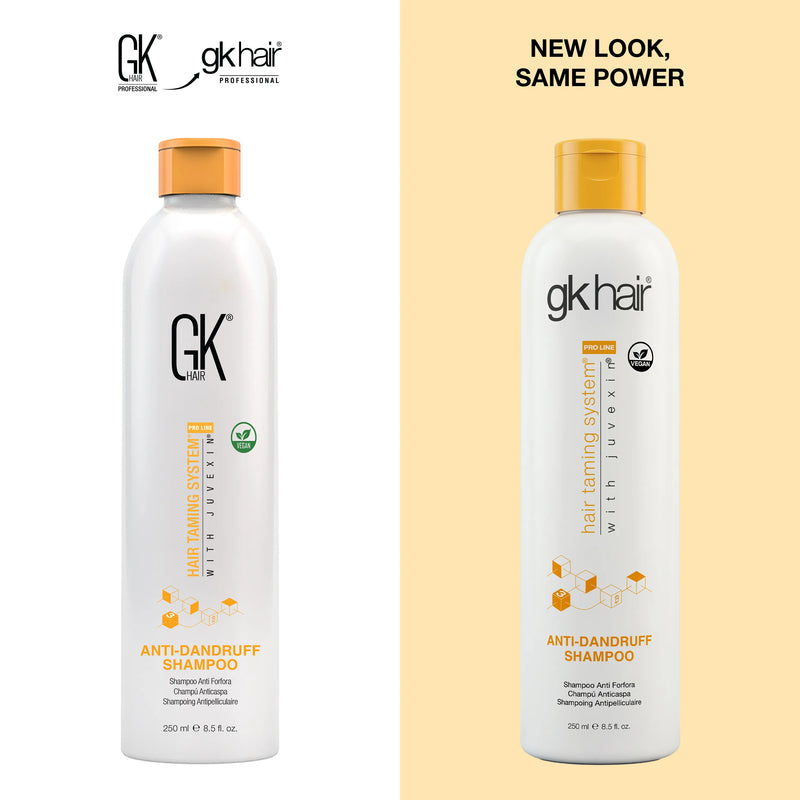
Here is the cause-and-effect: yeast overgrowth irritates the scalp, the scalp sheds faster, you flake. An antifungal active interrupts that at the source, which is why it outperforms a plain moisturizing wash on true dandruff. GK Hair's Anti-Dandruff Shampoo is built around zinc for that antifungal effect and pairs it with Juvexin, our keratin protein blend, so you calm the scalp without stripping the hair dry. Best for: itchy, flaky, oil-prone scalps that need an active, not just moisture.
New to using one? Our full guide on how to use anti-dandruff shampoo for maximum benefits walks through the lather-and-wait step most people skip.
Match Your Wash Routine to Your Hair Type
How often you wash matters as much as what you wash with. Oily scalps flake more and usually need washing more often to clear buildup. Dry scalps need the opposite, fewer washes so they hold onto moisture.
-
Coily, curly, or coarse hair: wash as often as your hair needs with a clarifying duo like GK Hair's Moisturizing Shampoo and Conditioner, then work the dandruff shampoo in once a week so you are not drying out already-thirsty curls.
-
Fine, thin, or straight hair: a daily-friendly wash with a Balancing Shampoo keeps oil in check; drop in the dandruff shampoo twice a week, no more.

Whichever camp you are in, leave the dandruff shampoo on for a few minutes before rinsing. The active needs contact time. Rinsing it straight out is the number one reason people think it "didn't work."
Wash Regularly Instead of Hiding Under Hats
Skipping washes lets oil and dead skin build up, which feeds the flaking. If your scalp runs oily, going several days between washes usually makes dandruff worse, not better. Keeping a regular wash schedule is one of the simplest things that helps, and it costs nothing.
Manage Your Stress
Stress can worsen dandruff and trigger flares, and it is a known driver of temporary shedding too. It is not in your head, it shows up on your head. A nap, a walk, an hour off your phone, whatever actually unwinds you. Your scalp is paying attention to your stress levels whether you like it or not.
Natural Remedies for Dandruff: What the Evidence Says
Shampoo does not have to be medicated to help, and you can try a few options before anything stronger. A quick honesty filter first: some natural remedies have real clinical backing, others are mostly anecdotal. Here is where each one actually stands.
Tea tree oil (evidence-supported). This one has real research behind it. In a randomized controlled trial published in the Journal of the American Academy of Dermatology, a 5% tea tree oil shampoo improved dandruff severity by 41% over four weeks versus 11% for placebo. It has antifungal activity against the yeast behind dandruff. Add a few drops to your shampoo; a little goes a long way.
Coconut oil (mixed evidence). Coconut oil may ease scalp dryness and itch, and lab studies suggest it has some antifungal activity, but the clinical evidence for dandruff specifically is thin. It can also leave hair greasy, so treat it as an occasional rinse-out, not a daily fix. Massage in, leave 30 to 60 minutes, wash out, then follow with GK Hair's Deep Conditioner to put moisture back.
Baking soda (anecdotal). A popular home trick, but the evidence is anecdotal and it can dry the scalp out with repeated use. If you try it, use a thin paste occasionally and rinse well. Skip it if your scalp is already irritated.
For a broader, dermatologist-reviewed rundown of what helps, Healthline's dandruff guide is a solid read.
Stylist's Corner
Here is the trick most people miss: leave your anti-dandruff shampoo on the scalp for a full three to five minutes before rinsing, and apply it to the scalp, not the lengths. The active ingredient needs contact time to do its job. Lather, rinse in 30 seconds and you have basically washed the medicine down the drain before it did anything. GK Hair stylists time it. So should you.
Can Dandruff Cause Hair Loss?
Dandruff does not usually cause permanent hair loss, but it can lead to temporary shedding. The chain is indirect: heavy flaking makes you itch, scratching inflames the scalp and stresses the follicles, and that can increase shedding. Once you calm the dandruff, the scalp recovers and hair typically grows back. If you are seeing circular bald patches or sudden heavy loss, that is likely something else, and a dermatologist should look.
Is Dandruff Contagious?
No. Dandruff is not contagious and you cannot catch it or pass it to anyone. The yeast involved lives on nearly everyone's scalp already; dandruff happens when your own scalp reacts to it, not because of anything you picked up from someone else. Sharing a comb or pillow will not spread it.
How Long Does it Take for Dandruff to go Away?
Most mild dandruff improves within two to four weeks of consistent treatment with the right shampoo. Heavier or stubborn cases can take longer and may need a stronger or prescription formula. The key word is consistent: stop early and the flakes tend to come back, because the underlying yeast was managed, not eliminated.
Can Dandruff be Cured Permanently?
Not exactly cured, but it can be controlled long term. The yeast behind dandruff is a normal part of your scalp and never fully goes away, so think management, not cure. A maintenance wash a couple times a week keeps most cases quiet. Stop entirely and oil rebuilds, the yeast regrows, and the flakes return.
When Should You See a Dermatologist?
See a dermatologist if your dandruff does not improve after about a month of over-the-counter treatment, or if the scalp is very red, painful, swollen, or scaly in patches. Those signs can point to seborrheic dermatitis, psoriasis, or eczema rather than ordinary dandruff. The right move for seborrheic dermatitis treatment is a professional diagnosis and, often, a prescription antifungal or anti-inflammatory, not a tenth bottle of drugstore shampoo. The American Academy of Dermatology draws the same line.
Best Dandruff Shampoo: What to Actually Look for
The best shampoo for dandruff is the one with an active ingredient matched to your scalp, used consistently. Zinc pyrithione and ketoconazole target the yeast; salicylic acid lifts flakes; selenium sulfide slows shedding. The "best" label means nothing if the formula is wrong for your hair.
For most people, a zinc-based formula like ours hits the sweet spot: tough on flakes, gentle enough for twice-weekly use, and it will not leave your hair feeling like straw. If you have color-treated or chemically processed hair, lean toward the gentler, sulfate-conscious options and protect the rest of your strands. Want to browse the full lineup? The Moisture & Hydration collection pairs well with any dandruff routine to keep lengths happy while you treat the scalp.
Don't Wait for the Snowstorm
Catch it early. The minute you spot flakes or feel that itch creeping in, start treating, instead of waiting until your scalp is a full-on flaky scalp situation that takes weeks to walk back. A zinc-based shampoo a few times a week, a wash routine that fits your hair, and a little patience handle most cases.
GK Hair builds Juvexin into our scalp and hair care for exactly this reason: treat the problem without wrecking the hair. Ready to stop the flakes for good? Start with our Anti-Dandruff Shampoo and give your scalp the reset it has been asking for.


It is an informative and educational topic focusing on the ways to get rid of Dandruff Effectively. Thanks for sharing the useful blog. All scalp and hair lovers should go through your topic and will benefit. I learned a lot about dandruff and getting rid of it from your topic. I like your blog, and I also prefer organic products
Leave a Comment