


By 2 p.m. the blowout has quit on you. Roots flat against your scalp, ends doing nothing, and you know you did everything right in the shower.
So what does mousse do for hair that your cream and your gel don't? Mousse is a lightweight styling foam that coats each strand in flexible polymers and sets as the hair dries, which locks in lift and shape before gravity gets a vote. Volume, hold, curl definition, and a bit of heat protection. All from one palmful of foam.
Below: how much to use, whether it works on dry hair, what it does for curly, straight, wavy, and fine hair, and the question people actually type at midnight, which is whether mousse is quietly wrecking their hair.
Quick answer: Mousse does three jobs for hair: it adds volume, holds a style, and defines curl. The foam coats each strand in lightweight polymers that set as the hair dries, so roots lift and frizz stays down without the weight of gel. Many formulas add heat protection too.
What does mousse do for hair?
Mousse adds volume, holds a style in place, and defines curl, all without the weight or the crunch you get from gel. The foam is mostly water, styling polymers, and a propellant. Work it through damp hair, dry it in, and those polymers form a thin flexible film across the cuticle. That film is what keeps the shape you dried in.
The specific jobs:
-
Root lift. The main one. It is why fine hair reaches for mousse before anything else.
-
Curl definition, because the film holds the pattern that would otherwise loosen and drop as your hair dries.
-
Frizz control in humidity (the film slows how fast moisture moves in and out of the cuticle).
-
Heat protection, in formulas built with thermal agents.
-
Grip. Freshly washed hair is slippery and holds nothing; mousse gives the style something to sit on.
So where does that leave gel and cream? Gel dries into a hard shell, which controls flyaways and holds a slick style all day, but touch it and it flakes. Cream smooths and adds shine, which is what coarse or dry hair wants, though on fine hair a heavy hand drags the root straight back down. Mousse sits between the two: enough hold to keep the lift, light enough that your roots barely register it.
What is hair mousse?
Hair mousse is a foam styling product, from an aerosol can or a pump bottle, built to hold a shape without stiffening it. What is mousse for hair made of? Water, styling polymers, and a propellant. Mousse landed in salons in the early 1980s and never really left.
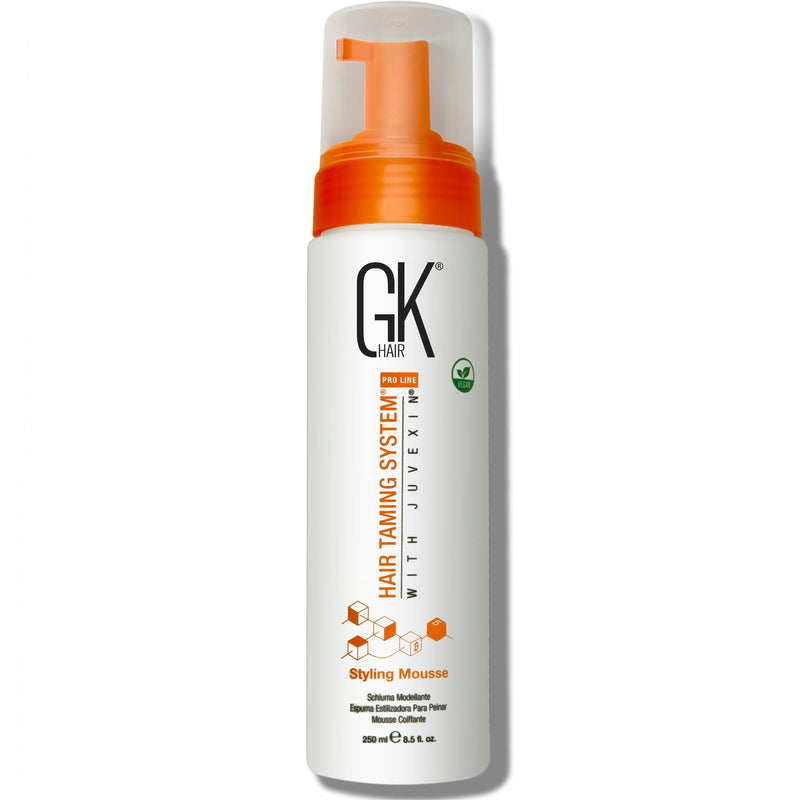
Fine and flat hair has a specific problem: clean strands are slick, they carry no texture, and by midday the weight of your own hair pulls the root down. Gel fixes that by gluing everything in place, which is its own problem. Mousse fixes it by drying into a light film that holds the root up without adding weight. GK Hair Styling Mousse is the one we reach for here. Best For: fine to medium hair that goes flat by lunchtime, and wavy hair that wants definition without stiffness. Medium hold, so it shapes a style without locking it rigid.
How to use mousse?
Clean, damp hair. That is the whole prerequisite.
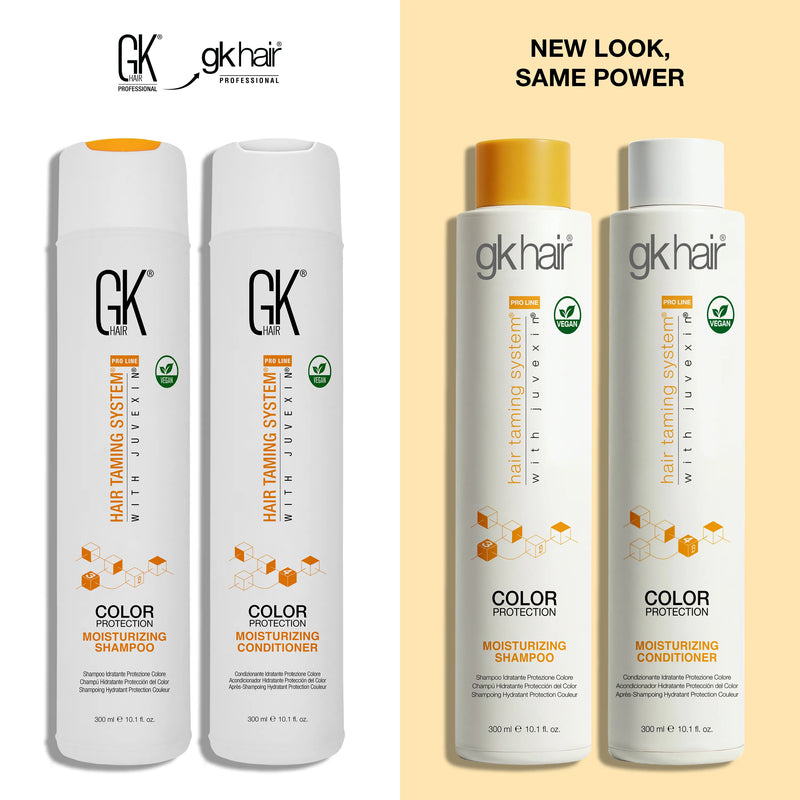
Wash with something that will not leave a coating behind, then towel the water out until your hair is damp rather than dripping. Soaking hair dilutes the foam and most of it slides off with the water. Our Moisturizing Shampoo and Conditioner works well before styling. Best For: dry or color-treated hair that needs slip and moisture before you add any hold product.
Dispense the foam into your palm and rub your hands together once so it spreads. Then get it into the roots first. Roots first, really. Most people start at the mid-lengths out of habit and then wonder where the lift went. Work whatever is left down toward your ends with your fingers, and stop before the last inch if your ends are dry.
Now dry it in. A round brush lifts and smooths at the same time, and there is a full method for it in our guide to blow-drying with a round brush. Diffuser if you are curly: low speed, cupping sections up toward the scalp, moving as little as possible. Then let it cool all the way down before you touch anything. Hair sets its shape as it cools, so brushing a warm blowout undoes half of what you just did.
How much mousse to use?
Scale the amount to length and density, not to how flat your hair feels that morning. Short hair takes a walnut-sized ball of foam. Shoulder length, about a golf ball. Long or thick hair needs two, applied section by section instead of dumped on the crown and dragged around.
Too much is the single most common mistake, and it shows up as stiffness, dullness, and a chalky white cast on dark hair. If yours goes crunchy, you used roughly double what you needed. Start small with GK Hair Styling Mousse and add a second pump only if the first genuinely disappears.

Can you use mousse on dry hair?
Yes, though the result is different. On dry hair, mousse works as a touch-up: a small amount at the roots, worked in with your fingertips, revives lift on second-day hair without a full rewash. It will not reshape a dropped curl the way damp application does, because there is no drying phase for the polymers to set around.
Air drying is the other route if you would rather skip the rewash altogether. Full method further down.
Stylist's corner: GK Hair stylists flip the head upside down for the root application, then dry that root section against the direction it naturally falls before flipping back and smoothing the mid-lengths. Ninety seconds of drying the wrong way is what keeps the lift standing at 6 p.m. Also: do not rake mousse through curls with a comb. Fingers only, praying-hands motion, no combing after the product goes in.
Mousse for different hair types
What does mousse do for hair with a tight curl pattern versus hair that is pin straight? Not the same thing at all, which is why the aisle is full of formulas that look identical and behave nothing alike. Healthline's breakdown of hair types sorts hair into straight, wavy, curly, and coily, and that split is a reasonable starting point for picking a formula. Our styling collection splits along similar lines.
What does mousse do for curly hair?
For curly hair, mousse holds the curl pattern in the shape it dried in and cuts the halo of frizz around it. Curls lose definition as they dry because the strands separate and the cuticle lifts. A film-forming foam holds those clumps together through the drying phase. The result is springier, more defined curls that survive a humid afternoon instead of collapsing into fluff by noon.
Curling mousse for curly hair
A curling mousse is just a mousse formulated with more slip and more hold than the volumizing kind, and the application is different too. Apply it in sections on soaking-wet hair, not damp, with your head tipped to one side. Rake with fingers once, scrunch upward, then leave it.
Pair it with a curl cream when your hair is on the coarse side. CurlsDefineHer layers under mousse well. Best For: curly and coily hair that needs moisture and definition in the same step. And if you like your curls without heat at all, the heatless curls guide uses mousse as the setting step before flexi-rods.

Hair mousse for straight hair
Hair mousse for straight hair is mostly about lift and grip, since there is no curl pattern to define. Straight hair has nothing holding it away from the scalp, so it sits flat. A light mousse at the root, dried in with a round brush, gives you body and a bit of texture without the greasy look that oils and creams leave on slick hair.
Keep it off the lengths. Straight hair shows product fast.
Best volumizing mousse for fine hair
Fine hair is about strand diameter, not how much hair you have, and it is the hair type that benefits most from mousse. The best volumizing mousse for fine hair is a light-hold formula applied at the roots only, in a small amount, then dried in with lift. Heavy hold formulas backfire here: they add weight, and weight is the exact thing collapsing your volume.
Mousse for specific styling needs
Volume mousse
A volume mousse is built around film-forming polymers that stiffen slightly at the root so the hair stands up off the scalp. Apply it to damp roots, dry with the airflow pointing at the scalp, then let it cool. Root lift lives or dies on that cooling step more than on the product.
Heat protectant mousse
Some mousses double as a heat protectant, and the ones that do save you a step before you blow-dry, because the polymer film slows how fast heat moves into the strand. Plenty of them don't, though, so read your can before you skip a dedicated protectant. Ours is built for volume, hold, and frizz control and carries no temperature rating, which means a separate heat protectant like ThermalStyleHer Cream still earns its place in front of a flat iron. Best For: anyone using hot tools more than once or twice a week.
Hydrating mousse
A hydrating mousse adds humectants and conditioning agents to the standard foam base, which matters if your hair is porous. High porosity hair has a raised cuticle that takes water in fast and loses it just as fast, as explained in our guide to hair porosity. That is the hair that ends up dry and rough a few hours after styling. A hydrating formula plus a solid daily hair care routine does more than any single product.
Best mousse for frizzy hair
Frizz happens when the cuticle lifts and humid air gets in. The best mousse for frizzy hair is a medium-hold formula with conditioning agents, applied to wet hair, never to half-dry hair. Distribution is the whole thing. Patchy application means patchy frizz, and the spots you missed are the spots that puff.
Air dry mousse
Air drying with mousse works, and for wavy hair it often works better than a blow-dryer. Soaking wet, generous amount, scrunch upward in sections, then hands off. Twenty minutes in, resist the urge to check. The cast that forms as it dries is supposed to be there; you break it with your fingers once the hair is bone dry, and the definition stays.
Mousse for men vs. women
Hair mousse for men
Hair mousse for men is mostly a texture and hold tool for shorter cuts. A quiff or a pompadour needs the front section standing up through the day, and mousse holds that without the wet, hard look pomade gives. Small amount at the roots of the top section, blow-dry back and up, done. For a tousled, messier look, work it through damp hair with your fingers and let it air dry instead.
Ladies hair mousse
Ladies hair mousse tends to get used across longer lengths, which changes the application more than the formula. Longer hair means more surface area, so you are working in sections and using more product. Blowouts, curl definition, second-day root revival. Formulas marketed to men and women are largely the same chemistry with different scents and can designs, so buy for hold level and hair type instead of the label on the front.
Is mousse bad for your hair?
No. Mousse does not damage hair the way heat or bleach does, because it sits on the outside of the strand and washes out. The two real complaints, drying and buildup, both come from how it is used rather than what is in the can.
About those alcohols. Short-chain ones like alcohol denat. help the foam dry fast and can leave hair feeling dry if you lean on them daily. Fatty alcohols like cetyl and stearyl do the opposite and condition. Same word on the label, different molecules.
Buildup is the other one. Styling polymers are designed to stay put, so daily use without a proper wash leaves a residue that dulls color and blocks moisture.
One of our salon partners had a client convinced mousse had ruined her hair. She was going through most of a can a week and had not clarified in months. Two clarifying washes and the hair was fine. Nothing was wrong with the product.
Use it in the right amount, wash it out properly, clarify every few weeks if you style daily. That covers it.
Mousse vs. foam: what's the difference?
Mostly the label. Foam vs mousse is a marketing distinction rather than a chemical one, and the two words get used interchangeably across the category. Where a real difference shows up, it is in what the brand built the product to do: styling foams skew lighter and more conditioning, mousse skews toward hold.
|
Mousse |
Foam |
|
|
Usual texture |
Denser, more air-whipped |
Lighter, looser, more watery |
|
Typical hold |
Light to firm, varies by formula |
Light, often none at all |
|
Built for |
Volume, hold, curl definition |
Conditioning, leave-in treatment, refresh |
|
Best on |
Fine, straight, wavy, curly hair that needs shape |
Hair that needs slip or moisture, not structure |
|
Read the label for |
Hold level |
Conditioning ingredients |
Anything sold as a "styling foam" is functionally a mousse. Anything sold as a "leave-in foam" usually is not.
Hair with mousse vs. without
Hair with mousse vs without is easiest to see the morning after. Same wash, same dryer, same technique, one side styled with foam and one without:
|
Without mousse |
With mousse |
|
|
Root lift at 6 p.m. |
Mostly gone |
Still standing |
|
Curl definition |
Loosens as it dries |
Holds the drying pattern |
|
Frizz in humidity |
Cuticle lifts freely |
Film slows moisture exchange |
|
Heat exposure |
Direct on the strand |
Buffered by the polymer layer |
|
Second-day hair |
Needs a rewash |
Revives with fingers |
In our own salon work, the gap is widest on fine, straight hair, where the version styled without foam usually loses its lift before lunch. The user numbers say something similar: among people who tried our Styling Mousse, 88% noticed reduced frizz and 91% reported easier styling. Our products are used in 75+ countries, and this one is fortified with Juvexin V2, a plant-based protein derived from quinoa and pea.
The short version
So, what does mousse do for hair? It gives clean, slippery hair something to hold onto, and it is the difference between a blowout that lasts an hour and one that lasts until you take your makeup off. Start with less than you think you need, get it in at the roots, dry it in, let it cool. GK Hair Styling Mousse is where we would start you. Shop the styling collection and match the hold level to your hair type rather than to the promise on the front of the can.
FAQ
How do you use mousse for wavy hair?
Apply it to soaking wet wavy hair, then scrunch upward from the ends toward the scalp in sections. How to use mousse for wavy hair comes down to timing more than product: wavy hair sits between straight and curly, so it needs enough hold to keep the S-pattern from dropping without stiffening the wave. Diffuse on low or air dry. Do not brush afterward.
Do you apply mousse before or after blow-drying?
Before, always. Mousse needs the drying phase to set, because the polymers form their film as the water evaporates. Applied to already-dry hair, it can only add texture and a little root lift.
Can mousse be used on second-day hair?
Yes, and it is one of the better uses for it. Mist your roots lightly with water first, then work a small amount of foam in with your fingertips and either blow-dry the roots for thirty seconds or leave it to dry on its own. Second-day hair already carries texture, so you need noticeably less product than on wash day. Skip the lengths entirely.
Does mousse work the same on thick hair as thin hair?
Not quite. Thick hair needs more product and section-by-section application to get even coverage, and it usually wants a firmer hold. Thin hair needs a fraction of that amount, applied only at the roots, or the weight cancels out the lift you were after.


Leave a Comment