


If you’re clarifying regularly and yet your hair still feels oily by the end of the day, your clarifying shampoo for oily hair may not be the problem. Oily scalps often need consistent cleansing, but using a deep cleanser every day can leave your hair just as unhappy as leaving buildup behind.
Clarifying shampoo helps oily hair by removing sebum, sweat, and styling product buildup that regular shampoo may leave behind. Most oily hair types benefit from clarifying once or twice a week, using a regular shampoo on other days to avoid over-stripping and rebound oil production.
What Is Clarifying Shampoo for Oily Hair?
A clarifying shampoo is useful in controlling excess oil production and removing buildup from styling products, oils and sweat. Its job is to give the scalp a cleaner base than your regular shampoo would. So should those with an oily scalp use clarifying shampoo as their regular shampoo? Not really.
People with oily scalps do need to clarify more frequently, but they shouldn’t use clarifying shampoo as an everyday product. How often to use a clarifying shampoo for oily hair isn’t fixed, because even the American Academy of Dermatology recommends washing your hair according to how quickly it gets greasy or dirty.
So you have fine, straight hair that tends to show grease more quickly than curly or coily hair? Wash more frequently. Or you want to start a treatment? Then you need to start on a clean base.
Why Oily Hair Benefits from Clarifying
If you’ve washed your hair and still felt that coated, sticky feeling down your scalp, it’s simply that the shampoo you used didn’t take care of the grease. There could be more sitting on your scalp than your regular shampoo is designed to remove. If this is you, you should read clarifying vs. regular shampoo, explained. The combination of excess oil and product residue is exactly what a clarifying shampoo for oily hair is made to handle.
Once that’s taken care of, your scalp feels fresher and the root sits lighter. This comes in especially handy if you use styling products like creams, oils and sprays regularly. But the best clarifying shampoo for oily hair is hardly ever labelled as such. So how do you know one?
A clarifying shampoo for oily hair should not leave your hair feeling extra squeaky. That feeling is common with heavy lather, but lather alone doesn’t cut it. It may be satisfying for a few minutes, but your hair lives with the consequences for far longer.
Signs You’re Dealing With Oil and Buildup
There are a few clues worth watching for:
- Your hair feels heavy or limp even after washing
- Styling products sit on the hair instead of working properly
- Your styling products are heavy, or you use them frequently
- Your regular shampoo doesn’t leave your scalp looking or feeling clean

How to Choose the Best Clarifying Shampoo for Oily Hair
Once you’ve decided that you need to clarify, don’t just grab any cleanser on the shelf. If your scalp is oily, the lengths of your hair may be telling a different story. Curly hair, for example, often pairs an oily scalp with dry ends. So your choice should be a gentle clarifying shampoo for oily hair that matches both your scalp and your hair condition.
Go for Sulfate-Free Formulas
Everyone should consider using a sulfate free clarifying shampoo for oily hair, because it delivers deep cleansing without stripping the hair aggressively. Colored hair needs buildup removed without stripping dyes, so a clarifying shampoo for colored hair is a great choice here. A sulfate-free formula takes care of grease and oils in one wash rather than pushing you into frequent washing that adds up and damages the hair.
Use Gentle Formulas
Not all sulfate-free formulas are gentle. Your shampoo may lack sulfates and still contain other harsh ingredients that damage hair. Ingredients like formaldehyde can irritate a sensitive scalp, and fragrances are common allergens in cosmetics that can cause serious skin reactions.
Mind Your Hair Type Compatibility
When selecting a clarifying shampoo for an oily scalp, choose one that controls excess oil and works well with your hair type. As it clarifies, it shouldn’t strip essential moisture or wash away colour from colour-treated hair, unless you’re deliberately using a clarifying shampoo to remove hair dye.
For an effective solution that still minds your hair, try GK Hair pH+ Shampoo. Clarifying shampoos generally do a good job on grease, oils, dirt and buildup, and this one does it without going too far.
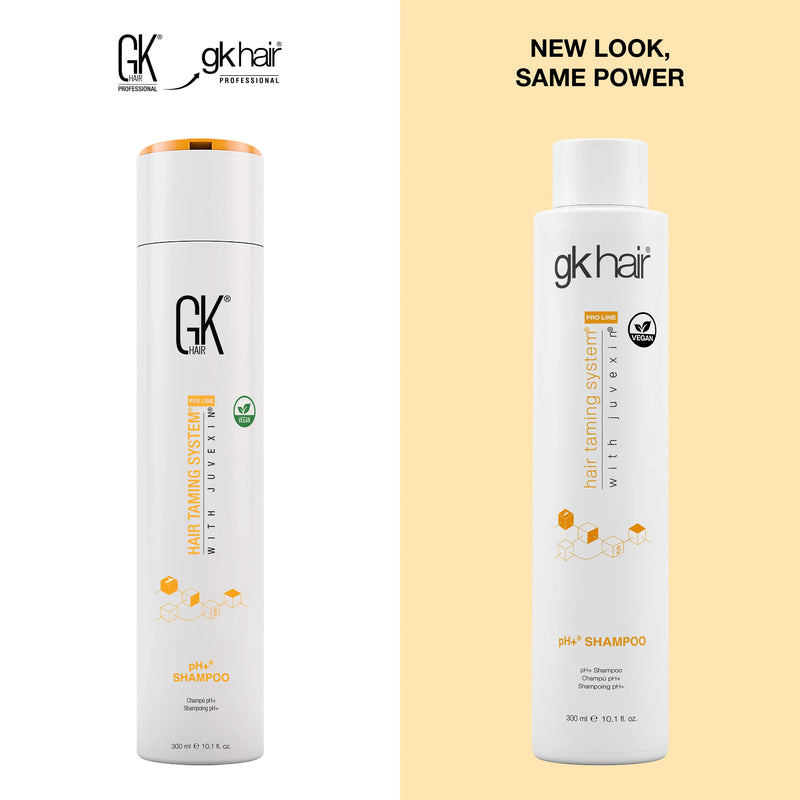
Best for: relieving your scalp from heavy buildup and excess oil without stripping aggressively.
Best Clarifying Shampoo for Different Oily Hair Needs
Oily hair shows up in more situations than you’d think. The rest of your hair may be saying the opposite of what your scalp is saying, so you have to treat your hair according to what it actually needs.
Clarifying Shampoo for Fine Oily Hair
Fine hair cannot hide oil the way thick hair can. Once there’s oil at the root, the whole head lies flat, because the strand density is too low to hold volume. A clarifying shampoo for fine, oily hair can cleanse the scalp properly without leaving the rest of the hair dry.
Clarifying Shampoo for Oily Hair for Men
Men with short hair often notice oiliness at the root first. Use a clarifying shampoo for oily hair men if your scalp gets sweaty, you frequently use creams and pomades, or your daily activity leaves your scalp coated. Many people manage oily hair by using their regular moisturizing shampoo daily and clarifying occasionally.
Clarifying Shampoo for Curly Hair
If you have curly hair, the situation is usually oil at the scalp while the lengths are begging for moisture. Concentrate cleansing where the oil is, and use a conditioner throughout the lengths. When you use a clarifying shampoo for curly hair alongside our Moisturizing Conditioner, the routine makes more sense and your curls go from rough to moisturised.
Stylist’s Corner
Our stylists recommend applying conditioner immediately after clarifying for that soft, glossy, moisturised feel. Clarifying leaves hair briefly more fragile and exposed, so following straight up with a mask heads that off.
How to Use Clarifying Shampoo Without Drying Your Hair
Using a clarifying shampoo isn’t much different from using your regular shampoo, you’re just more intentional about it. It’s easy to work into your normal routine with the right formula in hand.
1. Wet Your Hair
Start by saturating your hair with water. This helps the product circulate throughout your hair, making it easier to wash without using excess product.
2. Apply the Shampoo
Focus the shampoo on your scalp, not the lengths of your hair. Pour a pea-sized amount into your palm and apply it to the target scalp area. Your scalp is where the oil is produced, so that’s where cleansing matters most.
3. Rinse Out Thoroughly
Rinse the product out with lukewarm water. Take your time and be sure you’ve completely rinsed out the shampoo and everything it dissolved. Don’t move on until the water runs clear and there are no suds or trace of oil left.
4. Apply the Conditioner
Remember how the shampoo stayed on the scalp? The conditioner is the opposite: it belongs on the lengths. After the shampoo has removed oil and dirt, let the conditioner add moisture back for slip, shine and softness.
If you’re unsure how to fit this into a routine you already have, our clarifying shampoo guide breaks down how and where this step belongs.
For best results, choose a clarifying shampoo that keeps your hair clean for up to a week without stripping it. Then add a leave-in conditioner to provide moisture and lock it in through the day.
Our GK Hair Clarifying Shampoo Recommendation
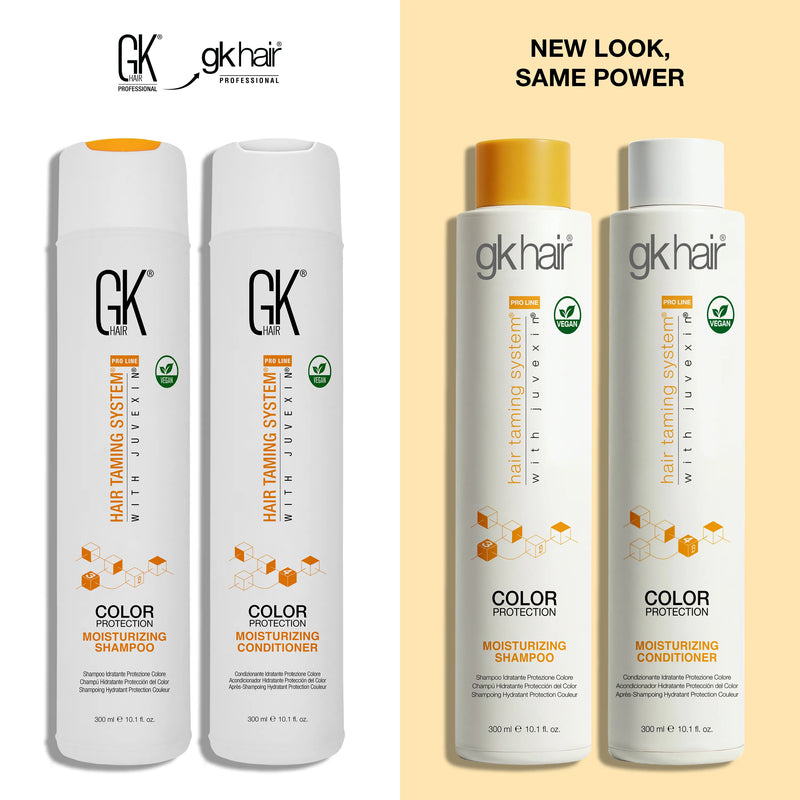
Clarifying shampoo can be a simple addition that makes a big difference to your routine, or the reverse if you choose wrongly. Oily hair can turn dry, brittle and prone to breakage, leaving you with more problems than you started with. For anyone dealing with oily roots, whatever your hair type, our pH+ Shampoo is the one to reach for.

It’s built around Juvexin V2 technology, a keratin protein infusion that works into your strands as it washes. It also contains aloe vera and pro-vitamins. Professionals reach for it as a pre-treatment wash in salons, since it delivers a deep clean before any treatment begins.
We recommend using pH+ Shampoo once or twice a week for oily scalps rather than daily. If you have low porosity hair that collects product easily, knowing how to use a clarifying shampoo for low porosity hair will help you avoid wasting product without getting results.
How Often to Use Clarifying Shampoo for Oily Hair
It depends on how quickly your scalp becomes oily, how much product you use, and what your regular shampoo is already doing. Starting with once or twice weekly is practical, even if you’re dealing with significant buildup and oily hair.
Even if the calendar says it’s time, don’t add another clarifying wash just to stay on schedule. Follow what your scalp is telling you. If your scalp gets oily enough that you need to wash more often, use your regular shampoo on non-clarifying days. To be sure, check how often to use clarifying shampoo for different hair types.
Daily Use vs. Weekly Use
Whether a daily clarifying shampoo for oily hair makes sense depends on whether your roots are greasy every day. Daily washing itself isn’t a problem for oily scalps. For an oily scalp, use your regular shampoo for the everyday clean and save the clarifying shampoo for when oil and buildup are heavier.
Common Mistakes to Avoid When Using Clarifying Shampoo for Oily Hair
Overusing the Clarifying Shampoo
Many people are tempted to use clarifying shampoo frequently because their hair feels “super oily.” However, overuse can remove some of the hair’s protective lipids, which may leave the ends feeling dry, rough, or more prone to frizz.
If your scalp gets oily again quickly after clarifying, try reducing how often you wash rather than cleansing more aggressively. Sebum production is influenced by factors like genetics, hormones, and scalp condition, so washing more frequently does not always solve excess oil concerns.
Choosing Harsh Formulas
The more cleansing power, the more risk of damage. If your formula leaves your hair squeaky, it may be damaging the hair, especially if it is fine, coloured or dry.
Ignoring the Signs
Sometimes it isn’t just an oily scalp. The grease could point to a scalp condition that needs a dermatologist’s care. It’s also worth understanding detox vs clarifying shampoo so you’re not mixing the two up.
Conclusion
Using clarifying shampoo sounds easy until you’re actually battling grease. A good clarifying shampoo helps you control it, but the right routine reduces how often it happens in the first place. Your routine needs to keep the scalp’s pH balanced, or oil production climbs. Browse our moisturizing shampoo and conditioner and the rest of the range to build the routine around it.
Frequently Asked Questions
Is clarifying shampoo good for oily hair?
Yes. Clarifying shampoo removes the excess oil and product buildup that make hair greasy and heavy. Oily scalps may require frequent washing, but not always with a clarifying shampoo. Use your regular shampoo on normal days and schedule clarifying once or twice weekly.
What is the best drugstore clarifying shampoo for oily hair?
When looking for the best drugstore clarifying shampoo for oily hair, focus on the ingredient list rather than what the front of the bottle promises. If your hair is coloured, very fine, curly or fragile, an aggressive cleanser will be too harsh to count as the best fit. Price can help narrow your choice, but quality wins every time.
Can you use clarifying shampoo every day if you have oily hair?
Daily washing can be beneficial for some people, but doing it with a clarifying shampoo comes at a cost. Use a regular shampoo if your scalp gets oily easily, and clarify only when buildup is heavy and residue is excessive.
What is the best shampoo for extremely oily hair?
Extremely oily hair may need a dermatologist’s input, since there could be an underlying condition. Once that’s ruled out, build a routine that works for you: start with an effective moisturizing shampoo and conditioner duo, then add your clarifying shampoo twice a week.


Dejar un comentario