


A clarifying shampoo can fade hair dye, but it is not a color remover, and the difference matters more than most guides admit. The same deep-cleansing action that lifts unwanted color is also what fades the color you paid to keep, which is why two people can search for the same product with opposite goals. One wants the dye gone. The other wants to clarify buildup without losing a fresh color. This article addresses both, because the honest answer to each depends on the same underlying chemistry.
If mineral buildup is the issue instead, understanding chelating vs clarifying shampoo can help identify the right approach.
Quick answer: A clarifying shampoo can fade hair dye, but it usually cannot remove it completely. Its deep-cleansing formula and slightly higher pH lift surface color, which works well on semi-permanent dye and only partially on permanent dye. For full color removal, a professional color remover is more effective. To clarify without stripping color, use it sparingly and rinse cool.
Does Clarifying Shampoo Remove Color?
Yes, to a degree, and understanding that degree is the whole point. A how a clarifying shampoo actually works is a stronger cleanser than your everyday shampoo. It is formulated to strip away the buildup that ordinary washing leaves behind: styling product residue, hard-water minerals, excess oil, and environmental deposits. That same deep-cleansing power, combined with a slightly higher pH that lifts the outer layer of the hair, also loosens and carries away color molecules. So a clarifying shampoo does strip some color. What it does not do is reach every dye equally, and that is where most disappointment, or relief, comes from.
However, not every cleansing product works the same way. Understanding detox vs clarifying shampoo can help you choose the right option for your buildup concerns.
If excess oil and buildup are the main concerns rather than unwanted color, a clarifying shampoo for oily hair may be a better solution.
The decisive factor is not the shampoo. It is the type of dye sitting in your hair.

Semi-Permanent Versus Permanent: The Distinction That Decides Everything
If you remember one thing from this article, make it this. Whether a clarifying shampoo can meaningfully fade your color depends almost entirely on how that color was deposited.
Semi-permanent and temporary dyes coat the outside of the hair strand rather than penetrating it. Because they sit on the surface, a clarifying shampoo can lift them fairly well, and you can expect visible fading over a handful of washes. Permanent dye is a different matter. It is deposited deep inside the hair shaft through a chemical reaction that alters the hair's structure, so a surface cleanser can only chip away at it. A clarifying shampoo will soften and gradually fade permanent color, but it will not erase it. For complete removal of permanent dye, a dedicated color remover or a professional treatment is both more effective and safer for the health of your hair.
This single distinction explains nearly every question people ask. Does clarifying shampoo strip color? Yes, surface color readily and deep color slowly. Will it remove your box-dyed permanent brunette in one wash? No.
How Long Does It Take, and What Does Before and After Look Like?
Fading with a clarifying shampoo is gradual by design, not dramatic. Most people see noticeable change over roughly three to five washes, though the exact number depends on three things: the type of dye, how recently it was applied, and your hair's porosity. Freshly applied and more porous or damaged hair releases color faster. Dark, well-set, or long-established color resists.
So a realistic before and after is a softening and lightening over a week or two of repeated washes, not an overnight reversal. If you are picturing a single wash that takes you back to your natural shade, a clarifying shampoo is the wrong tool, and forcing it with more frequent or more aggressive washing mostly buys you dryness rather than speed.
This is especially important for curly textures, where maintaining moisture balance matters. Learn more about choosing a clarifying shampoo for curly hair.
Stylist's Corner
Resist the urge to clarify daily to rush the fade. Repeated high-pH cleansing in a short window is what turns a manageable color change into straw-like, breakage-prone hair. Space sessions out, deep condition between them, and if you are not close to your goal after a few rounds, that is your signal to see a colorist rather than push harder at home.
How to Clarify Color-Treated Hair Without Stripping the Color
Here is the other audience: people who love their color and simply want to remove buildup, and who reasonably worry that a clarifying shampoo will undo a fresh dye job. The concern is valid. A clarifying shampoo can fade color you want to keep. But you do not have to choose between clean hair and lasting color if you adjust how you use it.
A color safe clarifying shampoo, or a careful technique with a standard one, comes down to reducing how much color the wash carries away. Use a clarifying shampoo for color treated hair only occasionally, not in your regular rotation. Dilute it or mix it with your regular shampoo to soften its strength. Concentrate it on the roots, where buildup actually collects, rather than dragging it through the dyed mid-lengths and ends. And rinse with cool water, which helps the cuticle lie flat and hold color in, the opposite of what you would do when trying to fade. Followed this way, a clarifying shampoo for colored hair can lift buildup while costing you only minimal color.
Following the correct washing method is equally important. Learn how to use clarifying shampoo correctly to minimize unnecessary dryness and buildup.
Other Ways People Remove Hair Dye at Home
Two DIY methods circulate widely, and both work to a point, but they deserve honest framing because both can damage hair.
Our guide to DIY clarifying shampoo explains how these approaches compare with formulated options.
Vitamin C tablets are the gentler option. Crushed and mixed into shampoo, then left on for around twenty minutes, the mild acidity helps oxidize and loosen dye. It works best on semi-permanent color and fades gradually rather than dramatically.
Baking soda mixed with an anti-dandruff shampoo is the more aggressive route. The combination is a strong, high-pH cleanser, and anti-dandruff formulas often contain selenium sulfide, which is known to fade color. It can strip color, particularly recent semi-permanent dye, but as Healthline notes, baking soda's high alkalinity has no moisturizing properties and can leave hair dry, frizzy, and brittle, and it can irritate a sensitive scalp. If you try it, use it sparingly, deep condition immediately afterward, and avoid it entirely if your hair is fine, dry, or already fragile. In many cases, letting color fade naturally or using a clarifying shampoo on its own is the gentler path to the same place.
The Best Way to Approach It With GK Hair
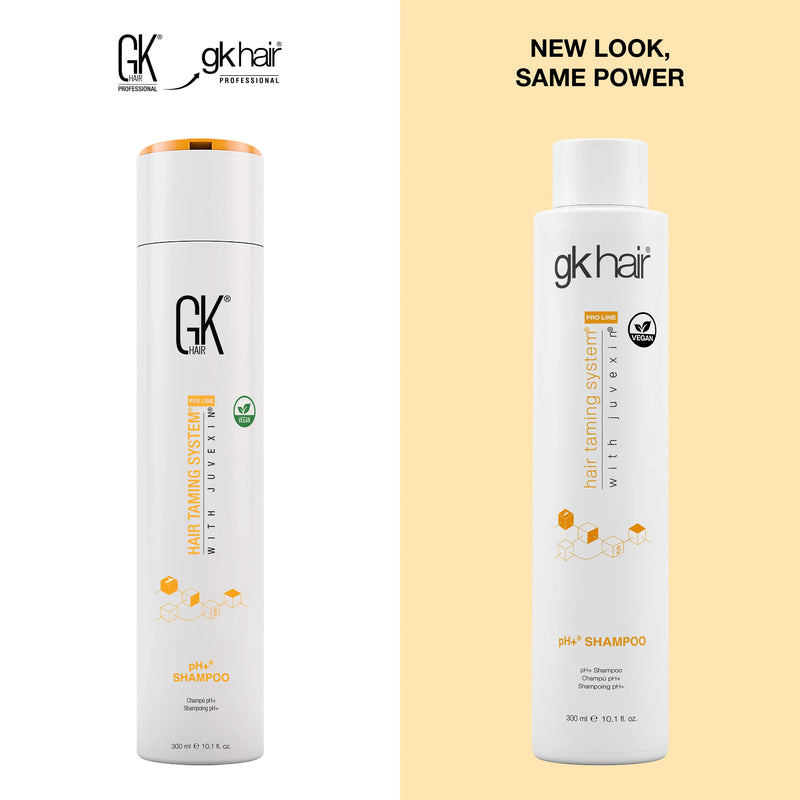
GK Hair's clarifying shampoo is the GK Hair pH+ Shampoo, a deep-cleansing formula built with Juvexin V2, aloe vera, and pro-vitamins. It is designed to strip away buildup and rebalance the hair's pH, and it is meant for occasional, targeted use rather than daily washing. Best for: removing product and mineral buildup, prepping hair before a treatment, and supporting a gradual fade of surface color. It is honest to call it a clarifier rather than a color remover; on semi-permanent color it can assist a fade, while on permanent color it will only ever soften, not erase.

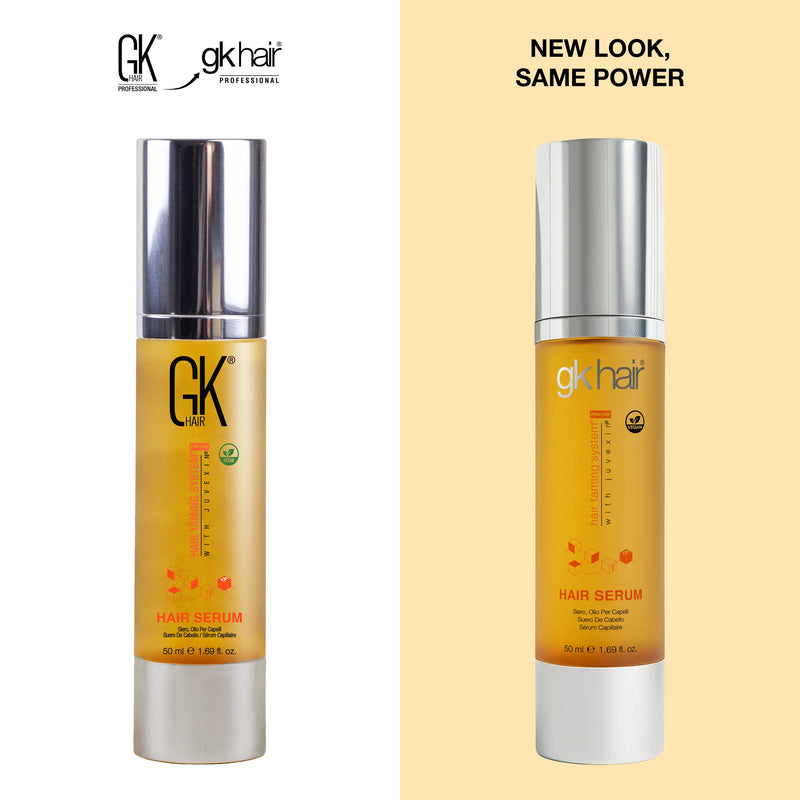
Whichever goal brings you here, the step that protects your hair is the same: restore moisture afterward. Follow a clarifying wash with GK Hair Moisturizing Conditioner, and when hair feels especially stripped, treat it with the our Deep Conditioner. A few drops of GK Hair Argan Oil Serum on the mid-lengths and ends help seal in shine after the cuticle has been opened. You can find the deeper-cleansing essentials in the Balance and Oil Control collection, and if you want the full background on the product category, our guide on what clarifying shampoo is and how it works covers it in detail.
If your hair struggles to absorb moisture, you may also benefit from understanding how clarifying shampoo for low porosity hair should be used.
The Bottom Line
A clarifying shampoo is a capable tool for fading hair dye and an essential one for removing buildup, but it is not a substitute for a professional color remover, and the outcome rests on whether your color is semi-permanent or permanent. If you want color gone, expect a gradual fade and protect your hair with moisture along the way. If you want your color to last, clarify gently, rinse cool, and keep it occasional. For a deep, pH-balancing cleanse either way, explore the Balance and Oil Control collection, and when in doubt about a bigger color change, a professional colorist is the safest path.


Is this applied to wet or dry hair?
Leave a Comment