


Chelating vs clarifying shampoo is not just a matter of two names for the same deep-cleaning product. Chelating shampoo binds mineral deposits, while clarifying shampoo lifts oil and product residue. A clarifying wash may appear to work because it removes visible buildup, but that surface clean does not necessarily touch the minerals left behind by hard water. That is chemistry, not marketing.
Chelating Shampoo vs Clarifying Shampoo: Quick Answer
Chelating vs clarifying shampoo are not interchangeable. Chelating shampoo contains agents — typically EDTA or phytic acid — that bind mineral ions (calcium, magnesium, iron, copper) and rinse them from the hair shaft. Clarifying shampoo uses surfactants to remove oil, sebum, and product residue. They address different types of buildup through different chemistry.

What Each Shampoo Removes
- Chelating shampoo tackles: calcium and magnesium scale from hard water, deposits of iron and copper, and the green tint that can result from excessive pool exposure.
- Clarifying shampoo targets: sebum, dry shampoo buildup, hair gel and mousse buildup, silicone from conditioner, and everyday styling residue.
Key Differences at a Glance
This table breaks down chelating vs clarifying shampoo so you can see at a glance which one fits your hair concerns.
| Feature | Chelating Shampoo | Clarifying Shampoo |
|---|---|---|
| Primary mechanism | Binds metal ions through chelation | Dissolves oil and film through surfactant action |
| Best for | Hard water and mineral buildup | Product buildup, excess oil, and silicone residue |
| Key ingredients | EDTA, citric acid, phytic acid, sodium gluconate | Anionic surfactants, including sulfates and sulfonates |
| Effect on hard-water minerals | Removes them directly | Weak unless a chelator is also present |
| Typical use frequency | Every 1 to 4 weeks | Every 1 to 2 weeks |
| Feel after use | Clean without necessarily feeling squeaky | Can feel stripped if overused |
What Is a Chelating Shampoo and How Does It Work?
Chelating shampoo, which uses EDTA together with other chelating agents, helps remove the minerals that have collected on the hair. Hard water can leave a thin layer of minerals that makes your hair look dull and feel hard, and can cause it to resist conditioning.
What Clarifying Shampoo Actually Does
A clarifying shampoo’s primary function is different from that of a chelating shampoo. It aims at removing oil, sebum, dry shampoo, silicone, and styling residue that have built up over time. It is effective in making the hair feel lighter immediately, especially if your hair is overloaded with residue. If you have not washed your hair for several days, you will most likely get a good result by using an ordinary shampoo followed by the clarifying wash, but the presence of EDTA, even in a very low amount, should not automatically be considered a hard-water treatment.
Chelating Shampoo for Hard Water
Chelating shampoo outperforms clarifying shampoo for hard water because it removes mineral deposits directly, instead of relying on surfactant strength to remove them the way a standard shampoo does. Surfactants dissolve oils; they cannot break the ionic bond that anchors mineral scale to the hair shaft.
A study found that hair exposed to hard water showed noticeably lower tensile strength compared with hair kept in deionized water, which gives a measurable basis for treating mineral buildup as its own problem rather than a cosmetic one.
Our in-depth article on clarifying shampoo for hard water, which covers water-hardness detection methods and helps you set the proper hair-care routine, is the best reference if hard water is the problem.
Does Clarifying Shampoo Help With Hard Water?
Yes, but only to a limited extent. If hard water is leaving your hair looking and feeling dull, then a clarifying shampoo is only half of the solution. It will wash off oils and product residue, but the mineral buildup needs a chelating ingredient to help release it. If that ingredient is absent or listed only as a minor one, a dedicated chelating shampoo will be a far better reset for this kind of problem.
When Should You Use a Chelating Shampoo Instead of a Clarifying Shampoo?
When in doubt, clarify first, then chelate if the problem persists.
Colour-treated hair is a particularly strong candidate for chelating shampoo, since mineral deposits can block dye molecules from penetrating the cortex evenly, causing patchy uptake and faster fade that a clarifying wash alone will not prevent.
- If you are preparing for a keratin, colour, or relaxer service, use a chelating shampoo the day before the appointment. Mineral scale can interfere with chemical uptake and shorten how long the result lasts.
- If you have not detected any particular type of residue, perform a strand test: clarify, then look at the strand after drying. If the coating is still present, there is a good chance that minerals are responsible, and chelation is the next step.
These tests are faster at identifying the issue than comparing every clarifying vs chelating shampoo label on the shelf.

Chelating Shampoo Ingredients Explained
Common Chelating Agents
EDTA and its related forms, disodium EDTA and tetrasodium EDTA, are the most commonly used chelating agents in shampoo formulas. Citric acid and sodium gluconate provide subtler chelating action, although they rely heavily on pH and are far less efficient than EDTA in the range used in shampoos.
Phytic acid and sodium phytate are effective replacement chelators with a better eco profile. If citric acid is the only chelating agent listed, it is more likely functioning primarily as a pH adjuster than as a dedicated mineral binder. Its stability constants for calcium and magnesium binding are significantly lower than EDTA’s at the pH range typical of shampoo formulations, making it a weaker hard-water treatment when used alone.
EDTA is used frequently because it is broad-spectrum: it can bind calcium, magnesium, iron, and copper.
Why Ingredients Matter
For a shampoo to effectively eliminate deposits caused by minerals, it must include a genuine chelating agent in a sufficiently high concentration. Regardless of how catchy the marketing phrases are, the underlying science remains the same.
To find out whether a product performs chelation, look for EDTA, phytic acid, or citric acid. If any of these names appear among the first few ingredients, it suggests they make up a meaningful portion of the formulation. Ingredient order only gives an estimate, not a precise concentration, so a chelator listed further down is unlikely to be doing much.
How Often To Use Chelating Shampoo?
An effective reset does not mean pushing the treatment too far. Chelating shampoos can be strong, so daily use should generally be avoided. Use them sparingly as part of your hair-wash routine rather than making them a habit.
Use chelating shampoo once to four times a month, depending on your water and hair type. If your hair begins to feel rough, becomes static-prone, or looks dry at the ends, switch to a nourishing, moisture-focused routine.
Frequency Guidelines
- Very hard water or visible mineral scale: every one to two weeks.
- Moderately hard water: every two to three weeks.
- Occasional pool or well-water exposure: every three to four weeks, or right after repeated exposure.
Avoiding Overuse
Hair that feels dull sooner than normal, becomes more static-prone, or feels drier may be showing early signs that you are overdoing it. Overcleaning can strip beneficial lipids along with the minerals you are trying to remove.
Can a Shampoo Be Both Chelating and Clarifying?
Yes. Certain formulas include both an efficient surfactant and a chelating agent at a functional concentration, removing oil-based and mineral-based buildup in one wash. The disadvantage is usually balance: a hard-water-targeted product can generally carry higher chelator levels than a combination formula that has to do both jobs at once.
Dual-Purpose Formulas
A shampoo containing a strong anionic surfactant plus a chelator like EDTA at meaningful concentrations can genuinely do both tasks. Check where each component sits in the ingredient list before assuming a “does it all” product performs equally on both fronts at full strength.
Where GK Hair’s Clarifying Shampoo Fits In
GK Hair pH+ Shampoo is specially formulated as a clarifying shampoo, using a strong surfactant system to remove oil, styling residue, and product buildup before conditioning or a smoothing treatment.

The formula includes disodium EDTA and citric acid for extra mineral-removal support, but pH+ Shampoo is not a chelating shampoo with a high chelator concentration, and we do not intend to advertise it as such.
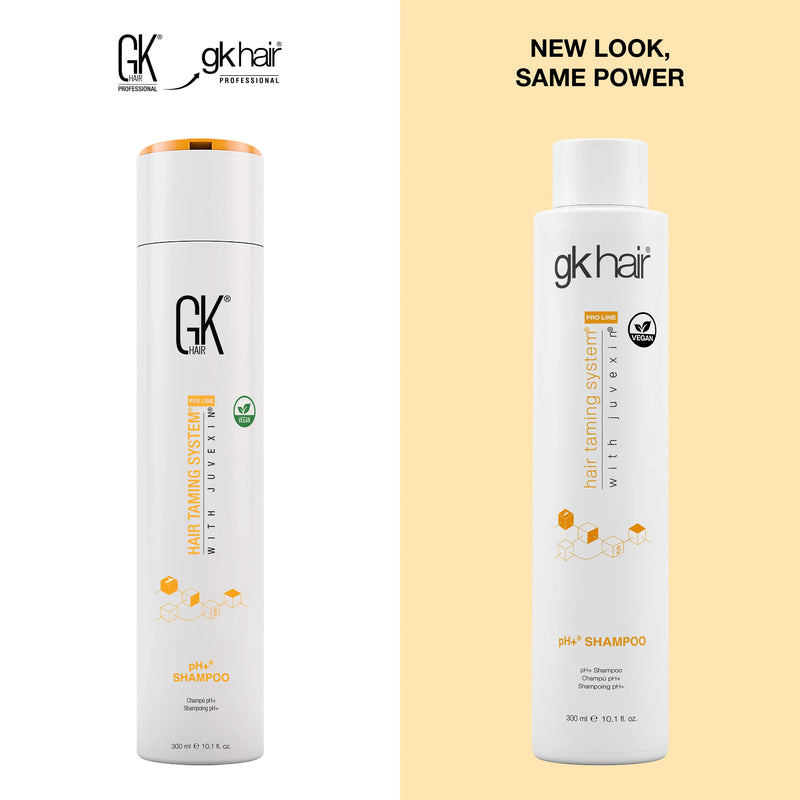
Best for: all hair types dealing with everyday product buildup, oil, and residue, especially as prep before a keratin or smoothing service.
If the main source of your hair troubles is hard-water mineral buildup rather than product residue, you will most likely achieve better results with a shampoo formulated around a higher chelator concentration.
To get a broader idea of how clarifying shampoo performs against everyday shampoo, see our comparison post on clarifying vs. regular shampoo.
Stylist’s Corner
Our stylists recommend pairing any chelating wash with a Juvexin-based conditioner or hair treatment to restore softness and reduce roughness after mineral removal. Juvexin is a non-hydrolyzed keratin protein blend that penetrates the hair cortex rather than simply coating the cuticle surface.
Follow-Up Hair Care
Always follow a chelating wash with a moisturizing conditioner or deep-conditioning treatment. Our stylists routinely observe increased tactile roughness immediately after a chelating wash, which signals that minerals built up on the cuticle have been released. Follow up with a conditioner or treatment before styling.
Frequently Asked Questions
These common questions about chelating vs clarifying shampoo can help you double-check your choice before changing your routine.
Should I use a chelating shampoo or clarifying shampoo?
Use chelating shampoo if you have had contact with hard water or chlorine. Use clarifying shampoo if the problem is excess oil, sebum, or styling products. If you cannot pinpoint the reason for the buildup, try clarifying shampoo first. If your hair still feels coated afterward, minerals may be involved.
What is the best chelating shampoo?
Chelating ingredients such as EDTA, phytic acid, or citric acid listed near the top of the ingredient list may indicate a stronger mineral-removal formula than ingredients buried near the bottom. A formula tailored to hard water generally gives better results than a general clarifying shampoo with only a small amount of chelating ingredient added.
When should you not use a clarifying shampoo?
Do not use a clarifying shampoo for a couple of days after colouring or a chemical treatment. The same strong cleansing that removes heavy buildup can also pull out fresh colour and leave already processed hair feeling drier, especially if your hair is naturally dry or brittle.
What does chelating shampoo do to your hair?
Chelating agents bind directly to calcium, magnesium, iron, and copper deposits on the cuticle and, in some cases, within the hair fiber. They form stable complexes that rinse away with water. This may help address dullness, stiffness, and colour resistance associated with hard water, but it does not remove oil-based buildup as effectively as a clarifying shampoo.
Can you use chelating and clarifying shampoo together?
Yes, and in certain situations it is even advisable to do them one after the other. A typical approach is to clarify first to get rid of oil and product residue, then use a chelating shampoo on the next wash to remove the minerals. Using both in the same session is generally unnecessary and can over-strip the hair. Stick to one wash type per session and always follow with a moisturizing conditioner.
Stylist’s Corner
Our stylists always use chelating shampoos for clients known to have been exposed to hard water before offering smoothing procedures. Using chelating agents the day before a keratin service helps prepare and open the hair for protein treatments, which in turn leads to longer-lasting results. If you notice your highlights fading sooner than expected, ask your stylist to check your water hardness before assuming a product issue.
For an even clearer picture of your deep-clean options, our detox vs. clarifying shampoo guide explains what each one does best and which hair concerns they are designed for.
Match the Wash to the Buildup
Do not judge by the label alone; choose between a chelating vs clarifying shampoo based on the issue your hair is actually facing. Hair that struggles to hold colour, feels very stiff, or is not responding to the products you apply may be affected by hard water. In that case, authentic chelating agents are the relevant treatment.
If you are dealing with excess oil or a stubborn film that is hard to remove, clarifying shampoo is what you should look for. GK Hair pH+ Shampoo tackles that job well. For heavy mineral buildup, we would rather point you toward a proper chelating treatment for hair than overclaim what one bottle can do.
Begin with pH+ Shampoo when product residue is the likely issue, and choose your next wash based on what your water is actually doing to your hair.


Dejar un comentario