


If you’ve spent years fighting frizz, humidity, and hair that just does whatever it wants regardless of what you try, you already know that particular kind of tiredness. A keratin treatment is one of the most reliable ways to calm frizz and cut down styling time, whether your hair is wavy, curly, or chemically damaged from color and heat. It won't make your hair immune to humidity forever, but done right, it gets close enough that most people stop thinking about frizz altogether.
What Is Hair Keratin Treatment and Why Your Hair Needs It
Keratin is a protein. Your hair, as well as your nails and outer skin layer is made of it. A keratin treatment, sometimes called a protein treatment or smoothing treatment, is a professional or at-home service that infuses hair with keratin protein. Keratin provides structure and strength to your strands, and when your hair has all of its keratin intact it feels smooth.
The problem is that keratin breaks down. Heat and chemical treatments strip your hair of its keratin over time. Even just washing and brushing your hair wears away the protein chains that make up each strand. When that wears down, the cuticle (the outermost layer of your hair) raises and splits. That lifted cuticle is what causes frizz. It catches moisture from the air, swells, and does exactly what you don't want it to do.
Keratin hair straightening treatment restores that lost protein. It coats and smooths the cuticle, sealing it down with heat so the strand can behave the way it should. It’s less of a straightening treatment and more of a long-term smoothing and strengthening process. Straightening and smoothing are two different things, but they often go hand in hand.
Stylist's Corner
Not all frizz comes from the same place. Fine hair tends to become frizzy due to moisture. Thick or coarse hair is often dehydrated. Knowing which one you're dealing with helps you pick the right treatment and set realistic expectations.

Is Keratin Treatment Safe?
Yes, keratin treatments are safe when you choose a formaldehyde-free formula. Many keratin treatments these days, GK Hair included, use formaldehyde-free keratin treatment but still deliver full smoothing and frizz-control effects. Mild, temporary sensitivity to scalp is possible but serious irritations are rare when the formula and application are matched to your hair and scalp condition.
Possible Side Effects
Some people may experience some mild scalp tingling, dryness or temporary loss of hair in the days following treatment. Formulas containing formaldehyde-releasing agents can cause eye, nose, throat irritation from inhaling the fumes during application. That’s why ventilation is important in salons. These effects are typically short-lived and far less common with formaldehyde-free formulas like GK Hair's.
How Keratin Treatments Work
Aside from the name, it’s actually a pretty simple process. A liquid keratin formula, usually mixed with a smoothing agent, is applied to clean, dry or slightly damp hair in thin sections. The formula penetrates the hair shaft and starts bonding to the existing protein structure.
Then heat is applied with a flat iron, usually set between 400 and 450 degrees Fahrenheit, to seal everything in. The heat activates the bonding agents and essentially flattens the cuticle from the outside in. Some formulas use a mild chemical called glyoxylic acid to do this without formaldehyde; older formulas relied on formaldehyde or formaldehyde-releasing agents, which are still used in some professional treatments today, though much more regulated now.
The result is a strand that's smoother, more uniform, and, depending on the formula, significantly straighter. The cuticles that were once frayed and raised are now flat against the hair shaft. Moisture from the air has a harder time getting in, and styling time reduces.

Types of Keratin Treatment
Like all hair treatments, there are different types that work better for some hair types than others and the differences matter depending on your hair type, your lifestyle, and what you're actually hoping to achieve.
Brazilian Keratin Treatment
When most people think of keratin this is what they picture. It's a full smoothing and straightening treatment, typically done in a salon, and it gives the most dramatic results. The formula is applied to the whole head, blow-dried in, then flat ironed. Results last three to six months, sometimes longer.
Brazilian blowout is known for being more customizable. It can be tailored to preserve natural waves or curls while still reducing frizz. Some Brazilian formulas contain formaldehyde or compounds that release it when heated. This is why ventilation in the salon matters, and it's also why some people specifically look for formaldehyde-free alternatives.
Keratin Express Treatment
This treatment delivers salon quality, smooth, silky hair without spending hours at the salon. It is a quicker process than traditional keratin treatments, offering immediate results that last for weeks. It doesn’t penetrate nearly as deep or last as long (think four to eight weeks) but it’s ideal for beginners or maintaining smoothness between treatments. Keratin express treatments are also gentler so they work well for people with fine or fragile hair.
Formaldehyde Free Keratin Treatment
As the name implies, this treatment uses alternative bonding agents to smooth and seal hair. Glyoxylic acid, tannins, sugarcane extracts, and amino acids are the most common alternatives. They're generally gentler and safer for use during pregnancy (though always worth checking with a doctor first), and they work very well for most hair types. The results aren’t always quite as impressive as the traditional Brazilian treatments, but the difference is often marginal.
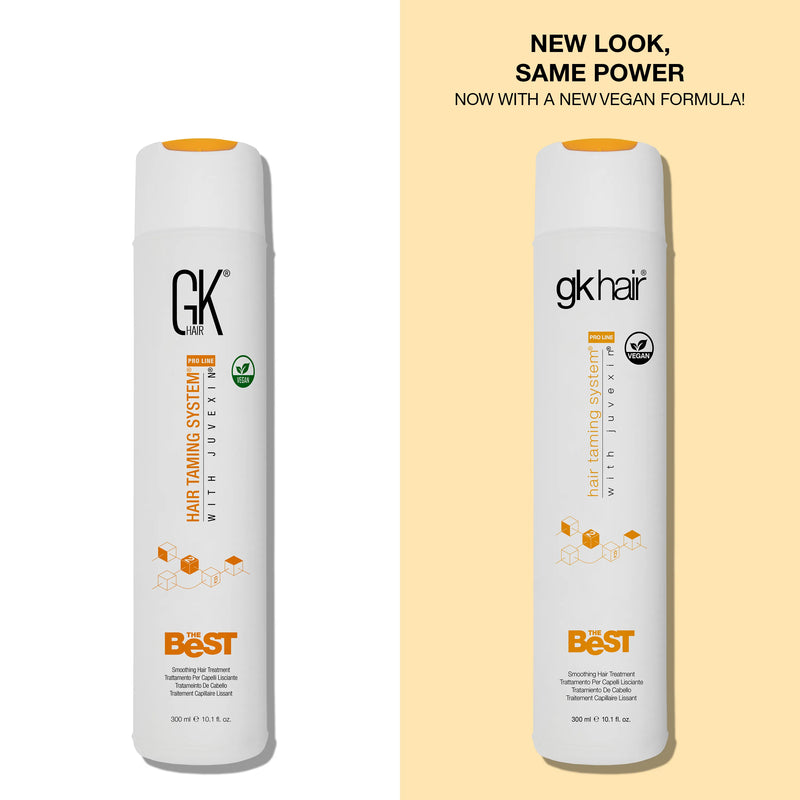
GK Hair's The Best Keratin Treatment is one of the most well-regarded formaldehyde-free treatment options available. It's widely used in salons and contains no parabens, sulfates, or formaldehyde, so it's a go-to for clients who want serious results without the nasty chemicals.
At Home Keratin Treatment
At-home keratin treatment kits have gotten much easier to navigate. They don’t offer quite the same salon-grade results, but they also aren’t a complete waste of your time. While professional keratin smoothing treatments applied in-salon provide longer-lasting, more penetrative (and therefore more effective) options for fighting frizz, there are also at-home keratin hair products that can offer smooth, semi-permanent results. These formulas are milder, the results more subtle, and the application requires a bit more patience when you're doing it yourself. The upside: the cost is a fraction of a salon visit and you can do it on your own schedule.

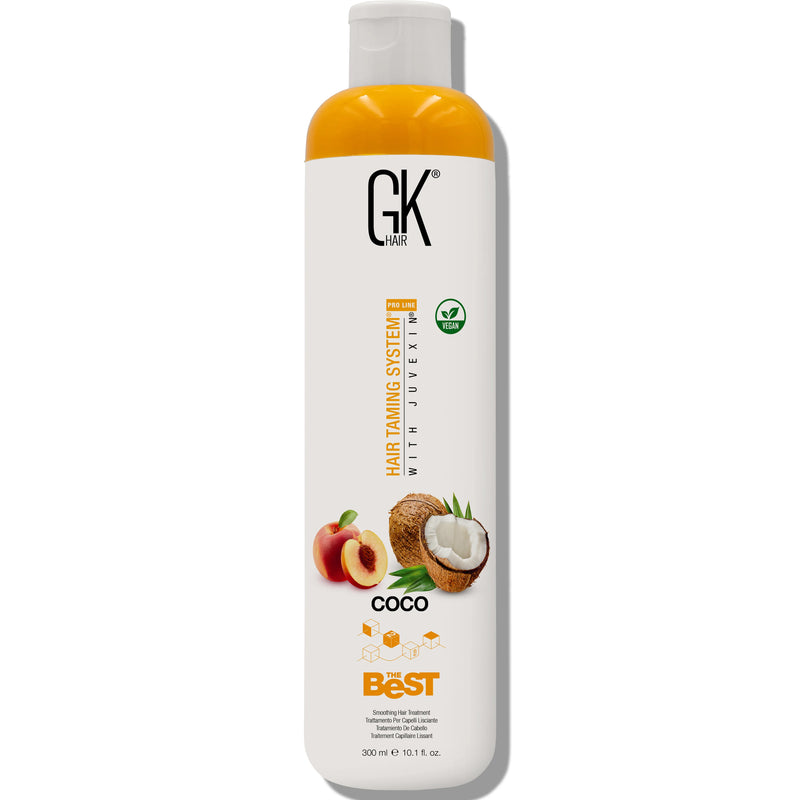
GK Hair's The Best Coco Hair Treatment is not your regular hair smoothing treatment, it is an intensive hydrating treatment and answer for curly, stubborn hair textures. It is supercharged with the most potent complex to untease tangles and block frizz. Packed with the iconic fusion of vegan Juvexin and coconut oil, this versatile hair treatment provides a multitude of solutions for achieving healthy hair. It's designed to be manageable at home, delivers real frizz control, and smells genuinely good.
At-Home vs. Professional Keratin Treatment: Which Is Right for You?
If you’ve never gotten a keratin treatment for curly hair, we recommend you start in a salon. If you're maintaining results or working with mild frizz, an at-home kit is a perfectly reasonable option.
Who Should (and Shouldn't) Get a Keratin Treatment
This part doesn't get talked about enough. Keratin is great for a lot of people but will do very little for others. And being honest about that upfront is more useful than just selling the dream.
Who should get a keratin treatment
-
Hair that’s frizzy, wavy, curly and you’d like to tame for easier management
-
Those who have thick or coarse hair and spend hours daily trying to style/manage
-
Anyone who’s damaged their hair from heat or previous chemical services
-
Those that experience humidity/frizz often
-
Curly hair types that want loose, more defined curl patterns instead of completely straight hair
Who should approach with caution or skip entirely
-
Straight/fine hair (kills your curl and can make your hair flat)
-
Pregnant women (especially if using treatments that contain formaldehyde, though those without are typically safe)
-
Sensitive scalps/scalp conditions
-
If you’ve had a relaxer done in the last two weeks (minimum)
-
Recently bleached hair or hair that is very porous may react unpredictably
Stylist's Corner
Always do a strand test if you're unsure. Apply a small amount of the product to a hidden section, process it, and see how your hair responds before committing to a full treatment. This is especially worth doing with bleached or color-treated hair.
What to Expect: The Salon Process Step-by-Step
If this is your first time going in for a keratin treatment, you might be wondering what exactly happens during the process. Here, we’ll walk you through each step.
1. Consultation
The stylist will take a look at your hair and help you pick the right formula. Keratin is not one size fits all, so be sure to let them know if you’ve had any other chemical services done in the past.
2. Before Your Appointment
Come in with clean hair history in mind. Avoid washing your hair the day of your appointment so natural oils protect your scalp, and tell your stylist about any relaxers, henna, or box color used in the last two weeks. If you're getting color done too, book it as a separate visit at least a few hours (ideally a week) before your keratin treatment.
3. Deep cleansing
A clarifying shampoo removes product buildup and opens up the cuticle of the hair so the formula can penetrate. This step should not be skipped as the treatment needs a clean base to adhere to.
4. Blow-dry
Hair is dried completely so that the formula can be applied evenly.
5. Formula application
Treatment is applied to dry hair from root to tip in thin, manageable sections.
6. Processing time
Depending on the formula, you’ll usually sit under a dryer or dryer for 20-45 min to allow the keratin to bind with the hair.
7. Flat iron sealing
This is the most important step. The stylist uses a flat iron to seal the protein to your hair shaft. He/she works through the hair in small sections, pressing each one multiple times at high heat (usually 400°F to 450°F) to seal in the treatment.
8. Finish
Hair is left down and straight, ready for the waiting period covered in the aftercare section below.
Keratin Treatment Benefits
Keratin treatments do more than just calm frizz, though that’s usually the reason people try one in the first place. Here are the benefits of keratin treatment:
-
Frizz control: It’s the whole reason most people look into a hair keratin treatment in the first place, and it delivers. Hair just stops fighting the second someone steps outside.
-
Less styling time: This one’s underrated. Going from forty minutes with a blow dryer to fifteen changes a person’s entire morning, not just their hair.
-
Strength, not just smoothness: A keratin treatment for hair fills in what heat and color damage strip away over time, so strands hold up instead of looking fine for a few days then falling apart.
-
Better color retention: Sealing the cuticle helps lock color in too, which nobody really mentions upfront but matters a lot if you just paid for highlights.
-
Manageable curl: With a keratin straightening treatment, it’s not necessarily about going straight. Sometimes people just want looser curls that don’t take an hour to shape every single day.
-
Less reactive to humidity: Maybe the biggest one, if people are honest with themselves. Rain, sweat, whatever, hair doesn’t swell up and frizz the way it used to.
-
Results that actually hold: The real test is what happens after the keratin treatment first wash, since that’s usually when people start to see whether it’s actually working or just temporary smoothness.
Keratin Treatment and Colored Hair
This is one of those questions people ask about constantly, and honestly, it makes sense why.
Colored hair has already been through some chemical process and putting another process on top of it just feels like asking for trouble.
Can You Do a Keratin Treatment on Colored Hair?
Yes, you can do a keratin treatment on colored hair in most cases. Dyeing your hair is a chemical process, like getting keratin done, but the two don’t have negative side effects when used together. In fact, keratin actually seals in color and helps improve the overall look of hair damaged from coloring. The treatment seals the cuticle, which can also help lock in your hair color and extend the vibrancy of your hair dye.
However, there is a big difference between hair that was colored last week and hair that was colored two years ago. Bleached-out blonde hair won’t react the same as healthy brunette hair. If you’ve over-processed your hair you’ll want to be extra careful and take your time before treating it. The more processed the hair is, the more careful you need to be.
Does Keratin Treatment Fade Hair Color?
Yes, keratin treatment has the potential to fade hair color, particularly in the first wash after keratin treatment. The combination of high heat from the iron and the processing can cause hair color to shift, especially with red hair and other vivid shades. This is more noticeable with freshly colored hair than with older color.
To reduce color fading: avoid getting the keratin treatment done immediately after coloring your hair, use a color-safe shampoo when washing your hair after treatment, and wait the full 72 hours to wash your hair after getting the treatment done.
Should You Color Before or After a Keratin Treatment?
Do your color service first, then get your hair keratin treatment done later. The reason keratin treatments are done this way is because it allows the pigment to oxidize before smoothing. Doing the keratin process first will usually cause patchiness or color inconsistency. Keratin creates a barrier on the hair shaft that disrupts how the color bonds, causing uneven or patchy results.
Ideally, if you’re getting both done in the same visit, your stylist should always color your hair first and then wait at least a few hours before administering the keratin. Many stylists like to wait a full week in between. The point is, if you plan to do both, talk to your stylist about it before you get there, and make sure there’s ample time between the two procedures and nothing gets rushed.
How Long Should You Wait to Color After a Keratin Treatment?
We recommend waiting two to four weeks after getting keratin before dyeing your hair. This will ensure the treatment has enough time to set and process properly, and coloring too soon can mess with that process. Plus, waiting will ensure your new color has a healthier surface to adhere to.
Best Practices for Bleached Hair
Bleached hair needs the most careful approach. When you bleach hair, you’re breaking down the protein structure of the hair itself. So when you add a chemical treatment on top of that, it’s not automatically bad, but you do need to be careful.
-
Always strand test first (regardless of your hair condition)
-
Look for a gentler formula (we recommend formaldehyde-free with tons of conditioning ingredients)
-
If your hair is already breaking/snapping, take care of that before keratin
-
Don’t expect your results to be as dramatic or long-lasting as they would on unbleached hair
Our acai hair treatment is specifically designed to be safe and effective for bleached or fragile hair. Acai is known for its antioxidant conditioning benefits, so it brings that alongside the keratin smoothing to help compensate for some of what bleach takes out of the hair structure.
Stylist's Corner
Professional stylists recommend repositioning the treatment as recovery, not damage. Clients using GK Hair The Best report 68% improved texture confidence within 72 hours, provided hair integrity was restored first.
Keratin Treatment After Care
Aftercare is equally as important as the treatment itself. How you care for your hair afterward determines how long you’ll enjoy your smooth hair. This is the part most people underinvest in.
The First 72 Hours After Treatment
You’d want to keep your hair 100% dry and straight for at least the first 24-72 hours after treatment. Do not wash your hair, put it in ponytails, or use any hair accessories, even tucking your hair behind your ears can cause a crease. Basically, you want to avoid creating any new creases or curls in your hair until after the first few days.

Switch to a Sulfate-Free Shampoo
Avoid shampoo with sulfates in them at all costs after getting keratin. Sulfates are what makes your shampoo foam and lather up so nicely. They’re also very effective at stripping keratin from your hair shaft. Using regular shampoo after keratin is the quickest way to wash away results before they’ve even had a chance to develop. Make the switch before your first post-treatment shampoo and don’t look back.
Avoid Chlorine or Saltwater When Possible
Swimming in chlorinated water or saltwater can zap your keratin treatment. It accelerates the breakdown of the formula, especially with repeated exposure. If you swim regularly, you may want to purchase a silicone swim cap to wear in the water. Rinse hair immediately after if you do get in the water.
Limit Your Heat Styling
You honestly don’t need to run your flat iron over your hair every day after getting keratin. Yes, your hair will be smooth as butter the first week. But if you’re used to getting your hair twice straightened daily, you’re just going to cut your treatment results in half by continuing to do so. Use heat protectant and keep the temperature at a reasonable level if you must flat iron/blow dry your hair. If you must use a flat iron make sure you’re using a thermal protectant first and keep the temperature reasonable.
How Long Does Keratin Treatment Last?
For a professional treatment done in a salon, most people see results for three to six months.
For a professional treatment done in a salon, most people see results for three to six months, although how long keratin treatment lasts ultimately depends on your hair type and aftercare.
Fine hair tends to be on the shorter end of that range, particularly if it's washed frequently. Coarser or less porous hair can hold the treatment closer to five or six months.
The things that reliably cut results short:
-
Daily washing
-
Sulfate shampoo
-
Chlorine exposure
-
Heavy heat styling
-
Hard water
When keratin treatment starts wearing off, it won’t happen overnight. Frizz and waves come back gradually, which is often nature’s way of telling us it’s time to get another treatment. There’s no harsh line where things suddenly revert back to square one.
Best Hair Products for Keratin Treatment
The Best Keratin Hair Treatment
A professional grade formula used by salons around the world. GK’s signature smoothing formula is formaldehyde-free, works for all hair types (including color-treated hair), and is completely free of parabens and sulfates. This is the stuff your stylist needs in their toolkit.
The Best Coco Hair Treatment
If you are looking for a vegan smoothing solution for your hair this is the best place to start. The at-home version of the same smoothing concept. This keratin formula is formulated to provide healthy hair solutions with the best ingredients available. It contains Vegan Juvexin, also called Juvexin V2, which is a blend of Pea and Quinoa. It helps in maintaining the natural brilliance of hair by protecting it against environmental damage. This hair treatment complements your vegan hair care, and helps in smoothing the hair from the inside out by giving a dose of moisture and hydration.
The Best Acai Hair Treatment
Another one of our smart vegan keratin formulas designed with fragile hair in mind. Still delivers the smoothing, but the acai provides antioxidant conditioning it needs to stay smooth and strong.
Nanoplastia Hair Treatment
If you’re nervous about using a “keratin treatment” because your hair has been chemically damaged in the past, try Nanoplastia. This treatment works by depositing nanoparticles inside the hair shaft to repair it from within. It provides professional-level smoothing through a different route. Good for people who want to avoid conventional keratin ingredients, or as a maintenance option between full treatments.
Pick whichever one that makes the most sense for your hair type, budget, and where you are in the treatment cycle. All four are different takes on the same core principle: hair that’s been abused by chemicals/environment deserves something that works with it rather than against it.
Frequently Asked Questions
What is a keratin treatment?
A keratin treatment is a professional or at-home hair smoothing service that infuses the hair with keratin protein, then seals it using heat. The result is reduced frizz, smoother texture, and, depending on the formula, straighter hair that lasts for weeks to months.
What does a keratin treatment do to your hair?
This treatment fills in gaps in the hair's protein structure and seals the outer cuticle flat using heat. The result is reduced frizz, smoother texture, and hair that's significantly easier to style. Some people experience reduced curl/wave after treatment depending on formula and hair type.
Is keratin treatment good for hair?
Yes, in most cases. Since it means you don’t have to use daily heat to achieve styling results, which in turn reduces ongoing damage. Keratin treatments also add protein back to hair that’s been stripped away through chemical treatments or heat services. The main caveat is that formulas containing formaldehyde carry some health considerations that are worth discussing with your stylist before booking.
Does keratin treatment damage hair?
Typically not. Using the wrong formula on a sensitive scalp or repeated application without letting your hair recover can damage hair. A well-chosen formula applied correctly is generally not damaging. Risk goes up with formaldehyde-containing treatments on sensitive scalps, with formulas applied too frequently, or when the hair is already severely compromised before the treatment. The flat iron heat involved is the most common source of avoidable damage if it's used at too high a temperature or on hair that wasn't ready for it.
How much does a keratin treatment cost?
Professional salon treatments typically run between $150 and $500 or more, depending on several factors. The total keratin treatment cost varies based on hair length, formula, and salon pricing. At-home kits range from $20 to $100. The cost difference is significant, and so is the difference in results, which is why the comparison table above is worth looking at carefully before deciding.
Brazilian blowout vs keratin treatment: what's the difference?
A Brazilian blowout and keratin treatment are often confused, but a Brazilian blowout is technically a brand name, not a category. Keratin treatment is the broader term for the type of service. Some Brazilian blowout formulas allow immediate washing, while most keratin treatments require a 24 to 72-hour wait. Each brand has varying formula strength, application methods, and results.
What should I expect from keratin treatment before and after?
Expect smoother-looking shinier hair with less frizz and an overall texture that’s easier to style. Keratin treatment before and after results vary depending on your hair type and starting condition, but the treatment often relaxes the curl pattern, making wavy hair look straighter. For tight curls, your hair may still curl but will usually be easier to manage and less defined. Results look best in the first few weeks and gradually soften over time.
Wrap Up
Keratin treatments work. That's not a marketing claim, it's just what the hair science and the client results consistently show. But they work best when you go in with honest expectations, choose the right formula for your hair, and follow up with aftercare. GK Hair's The Keratin Treatment are trusted in professional salons across 75+ countries, making them a reliable choice whether professional or at-home. Choose based on your hair type and budget, and adjust from there.


Leave a comment